Egypt: Sokhna-Marsa Matrouh High-Speed Rail Line to Launch in July 2027
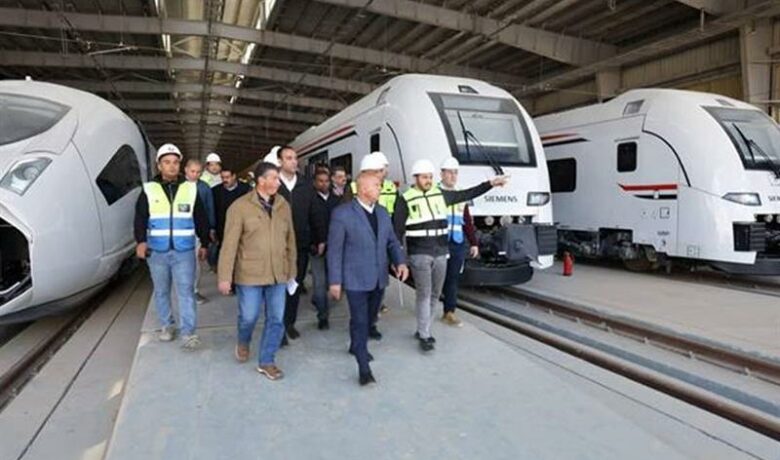
Egypt is setting its sights on intermodality with the planned July 2027 launch of its first high-speed rail line connecting the Red Sea to the Mediterranean. This 660-kilometer project aims to streamline freight flows and accelerate passenger transit along the strategic Ain Sokhna–Marsa Matrouh corridor.
In Egypt, the Rail & rail freight sector is reaching a decisive milestone. Egyptian Minister of Transport Kamel Al-Wazir officially announced on September 30 that commercial operations for the first line of the electric high-speed network will commence in July 2027.
A Strategic Rail and Logistics Corridor Between the Red Sea and the Mediterranean
Designed as a dedicated logistics corridor connecting Red Sea and Mediterranean ports, this 660 km infrastructure project features 21 stations. Passenger trains will operate at speeds up to 250 km/h for express services and 160 km/h for regional lines.
Operational parameters outline rolling stock tailored to mixed-use demand:
-
15 high-speed trains dedicated to long-distance passenger travel.
-
34 regional trains serving intermediate urban centers.
-
14 freight locomotives assigned to cargo transport.
Operationally, travel time between Cairo and Marsa Matrouh will be reduced to 2 to 2.5 hours, while the complete transit from Ain Sokhna to Marsa Matrouh will take between 3 and 3.5 hours. Heavy and light maintenance operations will be centralized at a 2.5 million square meter depot in Hadayek October, supported by three secondary facilities in the New Administrative Capital, Borg El Arab, and Marsa Matrouh.
This line is part of a broader 2,000-kilometer master plan spanning three lines, designed to interconnect Egypt’s main industrial, agricultural, and port hubs.
Why It Matters
Reduced Transit Times: The direct link between Ain Sokhna Port and Alexandria Port bypasses road bottlenecks and secures supply chain efficiency.
Expanded Freight Capacity: Deploying 14 dedicated freight locomotives enables a large-scale modal shift from road to rail for containerized cargo.
Industrial and Economic Connectivity: The network links the New Administrative Capital, the 6th of October industrial zone, and North Coast tourist hubs, consolidating national logistics architecture.
Regional Integration and Trade Dynamics
This rail development coincides with an extension into the Sinai Peninsula via a 500-kilometer section connecting Fardan to Taba. Coupled with the Suez Canal underpasses, this infrastructure reinforces cross-border freight connectivity between the Nile Valley, the Delta, and eastern trade gateways.
The rollout of this high-speed line marks a major step forward for supply chain fluidity in Egypt, positioning the country as a multimodal logistics hub across North Africa and the Middle East.