TRANSPORT MONTH FOCUS ON THE SUPPLY CHAIN PROFESSIONALS WHO KEEP GOODS, BUSINESSES AND THE ECONOMY MOVING
 As South Africa marks Transport Month, supply chain industry body SAPICS says that attention should extend beyond roads, rail and ports to one of the most important assets in South Africa’s logistics system: people. This includes the supply chain professionals who keep goods, businesses and the economy moving, the organisation states.
Addressing the country’s supply chain skills deficit is becoming increasingly critical as the sector responds to infrastructure constraints, private-sector participation, digitalisation, automation and more complex global trade requirements. SAPICS has highlighted the need for appropriately skilled and qualified people across supply chain roles.
“South Africa’s logistics challenges are often discussed in terms of infrastructure, congestion, rail performance, port efficiency and the cost of moving goods. These are critical issues. But even the most ambitious infrastructure investment will fall short if South Africa does not have enough skilled professionals to manage, optimise and transform the increasingly complex supply chains that depend on that infrastructure.
“Supply chains don’t just get goods from A to B – they have the power to save lives, protect the environment and grow economies,” SAPICS states. “Virtually everything that we use or touch every day has reached us through supply chains. They connect everything and make our societies and economies function. Without them, goods and services – including essential medicines and healthcare – would not reach the people and communities who need them.
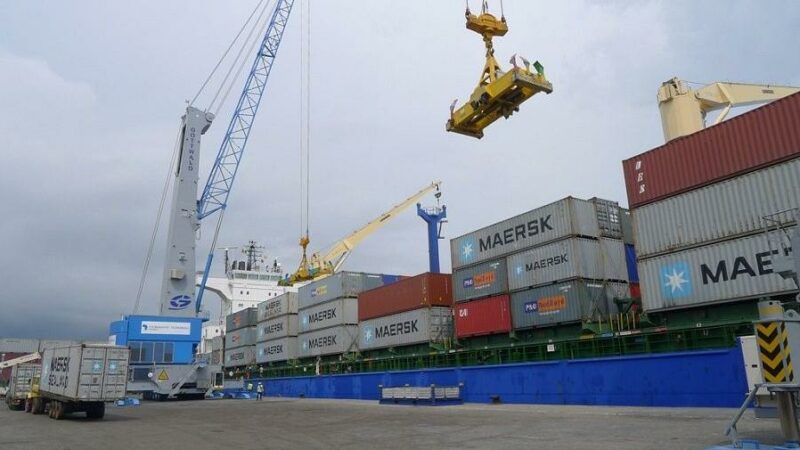
“A ship docking at a harbour, a freight train hauling minerals, a truck delivering to a distribution centre and a scooter dropping off a grocery order at a home may appear to have little in common. They may in fact be links in the same supply chain.”
South Africa’s supply chains are currently undergoing significant transformation and the people managing them navigate extraordinary challenges every day, SAPICS states. At one end of the spectrum, the country needs an efficient freight system capable of moving large volumes over long distances. At the other, rapidly growing e-commerce is creating a proliferation of smaller, faster and more frequent deliveries into increasingly congested urban environments. The supply chain manager sits in the middle of this – connecting the strategic freight network with the last mile.
As the supply chain landscape evolves, so too must the professionals who operate within it, making SAPICS’s role increasingly important. This year, the not-for-profit organisation is celebrating 60 years of elevating, educating and empowering the supply chain community across Africa. This is done via membership, events, education courses, workshops and the annual SAPICS Conference, which is Africa’s premier event for the supply chain profession.
This year’s conference in Cape Town saw 600 supply chain professionals convene to learn, share knowledge and network. An update on Transnet’s recovery was delivered by the event’s opening keynote speaker, Transnet Group Chief Executive Michelle Phillips. Her report that the organisation’s turnaround plan is working and already delivering tangible results was welcomed by the supply chain community impacted by the SOE’s challenges – including severe rail bottlenecks and port inefficiencies.
Phillips told SAPICS Conference attendees that Transnet plans to spend more than R129 billion over the next five years, with its “Reinvent for Growth” programme built around three pillars: Fix and Optimise, Transform and Grow. Phillips reported that freight rail volumes were stabilising, container volumes were improving at key terminals and private-sector partnerships were gaining traction. Transnet Freight Rail volumes are forecast to increase by approximately 4.7% between 2026/27 and 2027/28, she said.
Every improvement in the country’s freight network changes the decisions facing supply chain managers, SAPICS says.
At the other end of the chain, are their last mile challenges. South Africans are expected to spend approximately R159 billion online in 2026, according to the latest Online Retail in South Africa study by World Wide Worx, Mastercard, Peach Payments and Ask Afrika. Online retail is forecast to grow by 22.5% this year. That growth has profound implications for supply chain managers.
The traditional retail supply chain was designed around moving relatively large quantities to relatively few destinations: manufacturer to distribution centre, distribution centre to store. E-commerce is changing that. From modern control towers and data-driven decision-making to on-demand deliveries, smaller drop vehicles and scooters, the rise of dark hubs and stores that are increasingly functioning as distribution centres, supply chains are being reshaped. SAPICS notes that supply chain professionals’ skills and capabilities must evolve with the last-mile shifts, including the testing new speed to market standards being set by e-commerce and consumer demands.
This topic was in the spotlight at the 2026 SAPICS Leaders Forum, reflecting SAPICS’s commitment to ensuring that the supply chain profession keeps pace with the forces reshaping the industry. Held annually in Johannesburg, as part of the Leaderex event, the gathering brings together supply chain management leaders to explore the profession’s latest challenges and opportunities.
Through education, professional development, networking, knowledge sharing and industry engagement, SAPICS provides a platform for supply chain professionals to continually refresh and expand their knowledge and capabilities. In a sector being transformed by technology, e-commerce, geopolitical disruption, sustainability pressures and new operating models, skills cannot remain static, SAPICS stresses. “Continuous learning is essential to ensure that South Africa has supply chain professionals equipped not only to manage today’s challenges, but to anticipate and lead what comes next.”
For more information:
Email: info@sapics.org.za
ABOUT SAPICS: http://www.sapics.org
Since 1966, SAPICS has worked to elevate, educate and empower the community of supply chain professionals in South Africa and across the continent. This is done via membership, events, the annual conference and education courses and workshops through Authorised Education Providers and others.
SAPICS is registered in South Africa as a not-for-profit company. Its mandate is to ensure that any profits made are used towards the continual development and overall benefit of individuals and organisations in the supply chain management profession.
The annual SAPICS Conference is the leading event in Africa for supply chain professionals and is now in its 49th year.