
Libya: Webuild Contract Terminated as Coastal Highway Project Moves to New Tender
Transport – Libya. Libya’s Emsaed–Ras Jedir coastal highway project is entering a new phase following the termination of Italian construction company Webuild’s contract for the Emsaed–Al Marj section. Authorities are preparing a new tender and a revised route, while the €5 billion Italian financing commitment remains critical to the project’s progress.
Contract terminated after years of delays
Libya’s Authority for the Implementation and Management of the Emsaed–Ras Jedir Highway announced on November 5, 2026, that it had terminated its contract with Webuild for the project’s first section, between Emsaed and Al Marj.
According to information reported by the Libyan News Agency (LANA) and published by Madar, the company failed to meet the contractual obligations set out in the agreement signed in 2013. The decision follows four years of negotiations between the parties.
The termination clears the way for a new tender. However, the project will no longer follow its original route in full. Authorities have decided to revise part of the alignment to account for other road infrastructure projects already under construction.
Revised route focuses on connections around Benghazi
The updated configuration includes the addition of the Al Marj–Suluq section and the removal of the Emsaed–Tobruk segment. A fast road linking the latter two cities is already under construction, making a second infrastructure connection along the same route less necessary.
The revised alignment will run through Al Qaara, Al Kharruba, Suluq and Benghazi, with a connection to the coastal road at Suluq.
The project’s engineering consultancy is expected to complete the plans for the Al Kharruba–Suluq section. This step will be required before the new tender can be prepared and the scope of construction works finalised.
For road freight operators, the revised alignment could change transport conditions across eastern Libya. Better connections around Benghazi could support cargo movements between the region’s economic centres and key border crossings.
Italian financing remains a major constraint
On the western Ras Jedir–Al Aziziya section, the construction schedule also depends on Italian funding.
The Libyan authority says the first request for an advance payment has been submitted to the Italian side. Contractor Todini is awaiting payment from the Italian government before proceeding.
As the full advance is unlikely to be available before the end of 2026, authorities are considering splitting the payment to launch subsection 4.3.
The next stages include signing the contract for the Al Aziziya–Al Khums section and launching a tender for the Al Khums–Tawergha segment.
Italy has committed to financing the wider project with $5 billion. According to the Libyan authority, $4.5 billion should already have been made available since the agreement entered into force in 2009, based on an annual commitment of $250 million.
Why this matters
- Road freight continuity: The Emsaed–Ras Jedir highway is intended to improve connections between Libya’s main coastal cities and economic centres.
- Reduced transport bottlenecks: Better integration with existing road infrastructure could facilitate cargo movements towards border crossings and logistics platforms.
- Investment visibility: The termination of Webuild’s contract and delays in Italian financing highlight the contractual and financial risks facing major infrastructure projects in Libya.
A strategic link for North African trade corridors
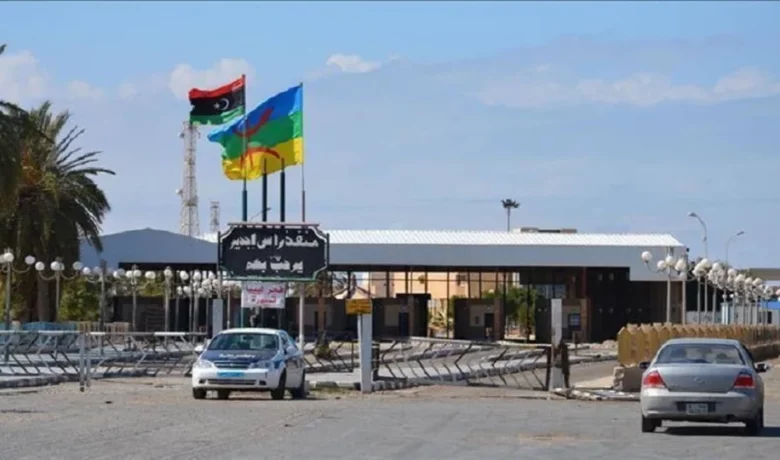
The Emsaed–Ras Jedir highway forms part of a broader effort to improve east–west road connectivity across Libya. Its western endpoint, Ras Jedir, is a strategic border crossing into Tunisia.
Upgrading this route could facilitate cross-border trade, support road freight operations and strengthen commercial links between Libya and neighbouring Maghreb markets.
However, these benefits will depend on the authorities’ ability to secure financing, award new construction contracts and maintain continuity across the different project sections.
The revival of Libya’s coastal highway ultimately depends on two factors: the timely award of new contracts and the effective release of Italian financing.