South Africa: Transnet Freight Rail puts rail reform at the centre of mining logistics strategy
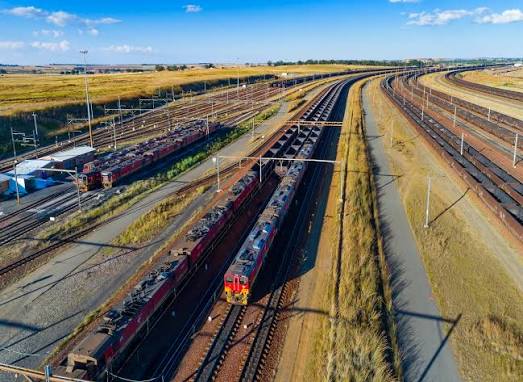
Transnet Freight Rail CEO Russell Baatjies will use African Mining Week 2026 in Cape Town to outline South Africa’s freight rail reform, infrastructure modernization and private-sector participation agenda as the country seeks to expand mining exports and strengthen regional logistics corridors.
South Africa’s freight rail network is entering a new phase as the government and Transnet seek to address infrastructure bottlenecks that have constrained mineral exports and affected the competitiveness of the country’s mining sector.
Baatjies will speak at African Mining Week (AMW) 2026, scheduled for October 14–16 in Cape Town, during a panel on “Regional Connectivity: Financing Africa’s Mineral Infrastructure.” His intervention is expected to focus on rail modernization, private operators and the role of logistics corridors in supporting mining and cross-border trade.
Private operators enter South Africa’s freight rail network
A key milestone came in May 2026, when Transnet signed rail access agreements with 11 Train Operating Companies (TOCs) covering coal, manganese, containers, fuel and general freight.
The agreements are expected to add around 24 million tonnes of annual freight capacity, with potential growth to 52 million tonnes over the next five years.
The reform supports South Africa’s objective of increasing annual rail freight volumes from approximately 180 million tonnes to 250 million tonnes by 2030.
For mining companies, the opening of the network to private operators could provide additional traction capacity and reduce dependence on a single rail operator. The impact, however, will depend on infrastructure availability, network reliability, locomotive access and the ability to coordinate multiple operators on the same corridors.
Rolling stock becomes a strategic bottleneck
Transnet is also seeking to address access to locomotives and wagons. In June 2026, the company launched the procurement process for The Leasing Company, a rolling-stock leasing platform intended to provide established and emerging TOCs with access to rail assets.
The initiative is designed to improve rolling-stock utilization while lowering one of the barriers to entry for private freight operators.
This is particularly relevant for mineral corridors where additional rail capacity cannot be achieved simply by allowing new operators onto the network. Locomotives, wagons, signalling systems, track capacity and terminal infrastructure must increase in parallel.
Financing the modernization of South Africa’s rail network
Transnet is simultaneously mobilizing financing to strengthen its infrastructure and financial position.
The company has secured or is benefiting from major financing commitments, including a €300 million loan from Agence Française de Développement, a €350 million loan from the European Investment Bank, a $278 million facility from the New Development Bank and a $1 billion loan from the African Development Bank.
A R94.8 billion government guarantee package is also supporting Transnet’s long-term recovery and investment programme.
The scale of this financing reflects the strategic importance of freight rail to South Africa’s export economy. Mining commodities such as coal, manganese, chrome, platinum group metals and iron ore depend heavily on reliable rail connections to ports.
Rail capacity becomes critical to critical-minerals investment
The reform agenda is unfolding as South Africa seeks to attract major investment into its critical-minerals sector. The country aims to mobilize R2 trillion for the development of the industry, while substantial untapped iron ore resources remain a potential source of future investment.
But increasing mining production without improving the logistics system could create additional bottlenecks between mines, rail terminals and ports.
This makes rail capacity a central component of the country’s broader mining strategy. Improved freight performance would not only support exports but could also strengthen South Africa’s position within regional mineral value chains.
Mining companies seek more predictable export logistics
Transnet has also been working directly with mining companies to improve export capacity. Strategic agreements with Exxaro Resources, United Manganese of Kalahari, Hotazel Manganese Mines and Tshipi é Ntle Manganese Mining are intended to align rail logistics with expected production and export requirements.
For mining operators, the priority is less about additional infrastructure announcements than about predictable cargo flows: available train paths, sufficient rolling stock, reliable turnaround times and efficient port connections.
A regional issue, not only a South African reform
The changes underway at Transnet have implications beyond South Africa’s borders. The country’s rail and port system is connected to wider Southern African supply chains and serves as an important gateway for mineral exports.
At AMW 2026, the discussion around regional connectivity will therefore extend beyond Transnet’s own network. Private participation, infrastructure financing and corridor integration could determine how effectively Southern Africa moves minerals from producing regions to international markets.
Why it matters for logistics in Africa
- Capacity:the targeted increase to 250 million tonnes of annual rail freight by 2030 would significantly alter the country’s logistics capacity.
- Private investment:open access and rolling-stock leasing create new entry points for freight operators and investors.
- Mining competitiveness:reliable rail and port connections are increasingly critical to unlocking new mineral production and supporting Africa’s mineral value chains.
The test for South Africa’s rail reform will ultimately be operational: whether additional operators, financing and rolling stock translate into more reliable trains, higher volumes and shorter logistics bottlenecks across the country’s mining corridors.