Abidjan: Five 332-Tonne Locomotives Transported for Metro Line 1
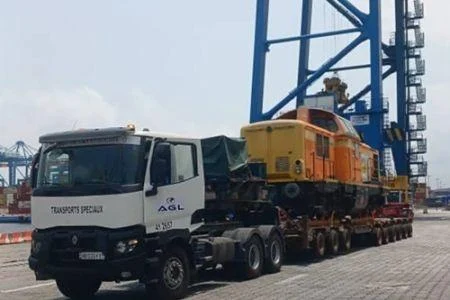
Côte d’Ivoire: AGL Moves Five Locomotives for Abidjan Metro Line 1 Project
Meta description: AGL Côte d’Ivoire transported five locomotives weighing 332.28 tonnes from Abidjan Port to Abobo Sagbé for Metro Line 1.
Primary keyword: Abidjan Metro Line 1 logistics
Secondary keywords: urban mobility Côte d’Ivoire, exceptional transport, Abidjan Port, railway logistics, heavy lifting, multimodal transport, rail infrastructure, project logistics
Five locomotives transported from Abidjan Port to Abobo Sagbé
Urban mobility — Côte d’Ivoire: AGL Côte d’Ivoire transported five locomotives for the construction of Abidjan Metro Line 1, in an operation carried out from August 2 to 4, 2026. The movement required specialized heavy-haul equipment, exceptional road transport and heavy lifting capabilities.
The five locomotives had a combined weight of 332.28 tonnes. They were moved from the Port Autonome d’Abidjan to the railway project site at Abobo Sagbé, where they were subsequently placed on the rail network.
AGL Côte d’Ivoire carried out the operation for COLAS RAIL, managing the logistics chain from the unloading of the locomotives at the port through to their arrival at the railway site.
The operation relied on two hydraulic trailers and road tractors designed for exceptional loads. A 400-tonne-capacity crane was also deployed for lifting and handling operations.
Exceptional transport required specialized coordination
Moving railway locomotives through an urban environment requires detailed preparation because of their weight, dimensions and handling requirements.
Before the operation, teams conducted a route survey to identify constraints related to road clearance, load capacity and maneuvering requirements. The assessment was necessary to determine how the equipment could safely travel between the port and the Abobo Sagbé site.
The operation included lifting the locomotives, loading them onto the hydraulic trailers, carrying out technical and safety checks, transporting them under escort and unloading them at the receiving site.
Port teams, authorities, security forces and technical personnel involved in the railway project were required to coordinate the different stages of the operation. Securing and supervision procedures were also implemented before the convoy moved.
For major railway infrastructure projects, this type of operation provides a critical logistics link between port infrastructure and construction sites located within urban areas.
Why It Matters for African Corridors
- Port-to-project connectivity: Abidjan Port provides an entry point for heavy railway equipment required for major infrastructure projects.
- Specialized transport capacity: Moving 332.28 tonnes required dedicated lifting, handling and exceptional transport resources.
- Rail infrastructure supply chain: Delivering locomotives to the project site supports the deployment of railway equipment required for the Abidjan Metro project.
- Urban logistics coordination: Heavy cargo movements inside a major metropolitan area require route planning, traffic management and coordination with security and technical authorities.
Abidjan Metro creates new urban logistics requirements
The Metro Line 1 project is being developed within a metropolitan area where rising mobility demand is accompanied by increasingly complex construction logistics.
Moving heavy railway equipment from the port to construction sites requires operators to account for traffic conditions, road access, safety requirements and urban constraints. These factors can influence the organization and timing of exceptional transport operations.
The Abidjan case also highlights the role of West African ports in supplying railway and infrastructure projects. Efficiently connecting port facilities, specialized road transport and construction sites is an operational component of infrastructure investment.
For logistics operators, such movements require more than heavy-haul equipment. They depend on route planning, lifting capacity, technical supervision, safety procedures and coordination between multiple stakeholders.
From port handling to rail deployment
The movement of the five locomotives illustrates the operational chain required to transfer railway equipment from an international gateway to an urban infrastructure project.
At the Port Autonome d’Abidjan, the equipment enters the logistics chain through port handling operations. It is then transferred to specialized road transport before reaching Abobo Sagbé, where the locomotives are placed on rail.
This sequence creates a port–road–rail connection supporting the supply of a major urban transport project.
For Côte d’Ivoire, the operation also demonstrates the importance of specialized logistics capabilities as railway investment expands. The ability to handle oversized and heavy equipment can become an important requirement for projects involving railways, metro systems, industrial facilities and other large infrastructure assets.
An operational link in Abidjan’s mobility infrastructure
The transportation of five locomotives from Abidjan Port to Abobo Sagbé demonstrates the role of exceptional transport in Côte d’Ivoire’s urban mobility projects.
The combination of port handling, heavy lifting, specialized road transport and rail deployment forms a continuous logistics chain around the Abidjan Metro Line 1 project.
Beyond the individual shipment, the operation illustrates a broader requirement for African infrastructure projects: ensuring that ports, transport networks and construction sites can work together to move specialized equipment safely and efficiently.
Investors’ angle
For infrastructure investors, the operation highlights the supporting logistics ecosystem required around large railway projects. Specialized heavy-haul capacity, port access, road connectivity and project-site logistics are operational factors that can influence the execution of major transport infrastructure programs.