

Angola: 255 km of Roads Under Construction in Malanje to Improve Freight Transport.
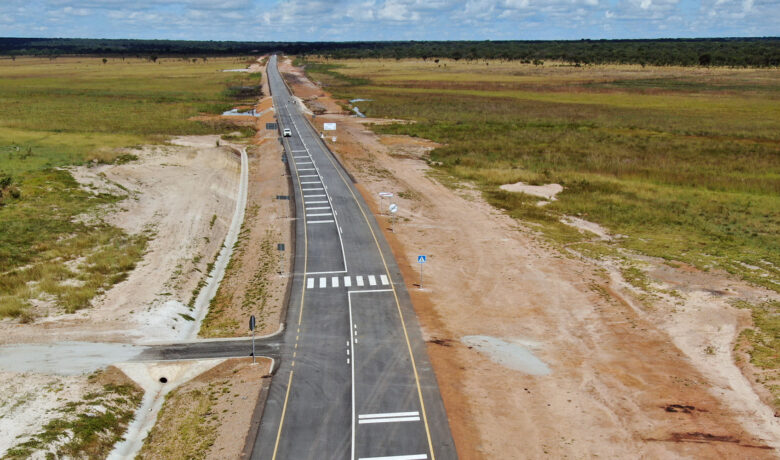
Angola launched a project on 5 October 2026 to construct and asphalt 255 km of roads in Malanje Province. Valued at more than 211 billion kwanzas, equivalent to approximately US$230 million, the project aims to connect five municipalities, improve access to agricultural areas and facilitate road freight transport to markets.
A US$230 Million Road Infrastructure Investment in Malanje
The Angolan government officially launched construction and asphalting works on 255 km of roads in Malanje Province following a handover ceremony held on 5 October 2026 in the municipality of Cahombo.
Valued at more than 211 billion kwanzas, or approximately US$230 million, the project will establish road connections between Quéssua, Kiwaba Nzoji, Cahombo, Bange ya Ngola and Marimba. It will also improve access to the Muculu-a-Ngola area, where some road sections will receive asphalt surfacing for the first time.

According to Angola’s Ministry of Public Works, Urban Planning and Housing, the project will involve both domestic and foreign companies and is expected to create 1,010 direct jobs.
The implementation period is set at 24 months. Public Works Minister Carlos Alberto dos Santos indicated that the shorter sections are expected to be completed within one year, while the longer stretches could take up to two years, partly due to weather-related disruptions during the rainy season.
Implications for Road Freight Transport and Agricultural Logistics
Beyond infrastructure development, the project addresses a key operational challenge: improving connections between production areas and commercial markets.
Malanje Province has significant agricultural, livestock and forestry activities. In these sectors, road conditions can directly affect delivery times, vehicle operating costs and the efficiency of transporting goods.
Improved road access could facilitate the movement of transport operators, producers and commercial businesses between the five municipalities involved. It could also help reduce access difficulties in certain production areas, depending on the quality and extent of the completed infrastructure.
For road freight operators, the benefits will depend on year-round road accessibility, the ability of the infrastructure to accommodate heavy goods vehicles and the continuity of maintenance after the project is completed.
Infrastructure Development to Support Economic Diversification
The road programme forms part of Angola’s broader policy to develop transport infrastructure and diversify its economy. Improvements to the domestic road network could help strengthen trade between municipalities and improve connections between rural production areas and commercial centres.
The project is also expected to facilitate access to a planned memorial dedicated to the rulers of the Ndongo and Matamba kingdoms. This heritage-related component could support tourism and related economic activities in the region.
However, the project’s economic impact will depend on several factors, including whether construction is completed on schedule, the final condition of the roads, ongoing maintenance and the development of the economic activities they serve.
Available information does not specify the expected reductions in journey times or logistics costs, nor does it provide forecasts for freight volumes. These indicators will be important in assessing the investment’s actual contribution to the local economy.
Why It Matters
- Potential reduction in transport costs: Better road surfaces could reduce vehicle wear and tear, repair expenses and traffic-related operating constraints.
- Improved access to agricultural production areas: Farmers could benefit from more reliable access to markets, subject to road conditions and the availability of collection and distribution services.
- Stronger local trade connections: Linking five municipalities could facilitate freight movements and improve access for businesses and economic operators.
- Tourism development potential: Better access to the planned memorial dedicated to the rulers of Ndongo and Matamba could support heritage tourism and related services.
A Road Project Whose Impact Will Depend on Implementation
With 255 km of roads scheduled for construction and asphalting at a cost exceeding 211 billion kwanzas, Angola is undertaking a major infrastructure programme aimed at improving connectivity across Malanje Province.
For the transport and logistics sector, the key challenge will be to translate this investment into measurable operational benefits: better access to production areas, more reliable driving conditions and more efficient goods distribution.
Compliance with the 24-month implementation schedule, management of weather-related constraints and long-term road maintenance will be critical to ensuring the project’s durability and its contribution to the province’s economic competitiveness.