Liberia: Railway Regulation Bill Paves the Way for Multi-User Rail Infrastructure
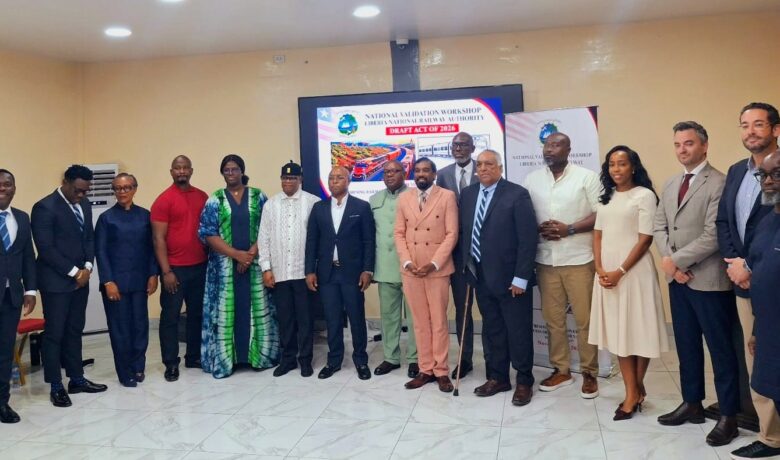
Rail & Rail Freight — Liberia: Stakeholders have validated the 2026 bill establishing the Liberia National Railway Authority (LNRA), marking a step towards a regulatory framework governing access to the country’s railway infrastructure. The proposed authority is expected to oversee multi-user access, particularly for mining-related freight operations.
A National Authority to Regulate Railway Network Access
Liberia has taken another step towards restructuring its railway sector. On November 4, 2026, government representatives, mining companies, railway operators, civil society organisations and development partners completed the validation of the 2026 bill establishing the Liberia National Railway Authority (LNRA).
The validation exercise took place at the Ministry of Mines and Energy headquarters in Monrovia. The proposed legislation aims to establish a national institution responsible for regulating and supervising access to Liberia’s railway transport infrastructure.
Among the companies involved were ArcelorMittal Liberia, an existing railway user, and Ivanhoe Atlantic (HPX). Representatives of the Liberia Chamber of Mines, government officials, legal experts and other industry stakeholders also participated.
The proposed authority is expected to define the conditions under which different operators can access and use railway facilities. Its responsibilities would include establishing transparent access rules, defining operational oversight mechanisms and ensuring fair treatment of railway users.
A Regulatory Framework for Shared Mining Rail Infrastructure
Liberia’s railway infrastructure plays an important role in supporting the country’s mining and mineral export activities. Iron ore transportation requires reliable connections between mining areas and export facilities, making railway access a strategic issue for mining companies.
The creation of the LNRA is intended to provide a framework for managing shared infrastructure rather than leaving access arrangements entirely dependent on individual operators.
For mining companies, a multi-user railway system could improve freight coordination, reduce the need for duplicated infrastructure investments and create opportunities to optimise mineral transportation.
However, the operational benefits will depend on how the future authority defines access conditions, infrastructure usage arrangements, regulatory responsibilities and the allocation of available capacity.
The draft legislation also seeks to establish the LNRA’s administrative structure and institutional responsibilities.
Legislative Approval Still Required
The November 4 validation marks an important stage in the legislative process, but it does not mean that the authority is already fully operational.
Following the stakeholder consultations, the proposed legal instrument will undergo further processing before being submitted to President Joseph Nyuma Boakai. It is then expected to be transmitted to the National Legislature for examination and adoption.
The Liberia Law Reform Commission provided technical and legal support during the validation process. Its representatives worked alongside the LNRA team to review key provisions and address outstanding issues raised by stakeholders.
The adoption timetable will be important for mining companies and potential investors seeking greater clarity on railway access conditions, operational responsibilities and infrastructure-sharing arrangements.
Why It Matters
-
Infrastructure access: A multi-user regulatory framework could allow several mining operators to use shared railway facilities under clearly defined conditions.
-
Logistics costs: Shared infrastructure may reduce the need for separate railway investments and improve the organisation of mineral freight flows.
-
Mining investment: Clearer access rules could improve regulatory predictability and support investment decisions across Liberia’s mining and logistics sectors.
Regional Implications for West African Mining Corridors
Liberia’s proposed railway reform reflects a broader challenge facing mineral-producing countries in West Africa: how to develop transport infrastructure that can serve multiple operators and export projects.
Shared railway networks can improve the competitiveness of mineral exports by connecting production areas to ports more efficiently. However, their effectiveness depends on infrastructure capacity, transparent access rules, tariff arrangements and coordination between operators.
For Liberia, the LNRA could become a key institution in organising mining freight flows and strengthening the country’s position in regional mineral supply chains.
The next milestone is parliamentary approval. The adoption of the 2026 railway regulation bill will determine the legal basis for the LNRA and the conditions under which different operators can access Liberia’s railway infrastructure.