
Ethiopia–Djibouti: China Grants $15 Million to Strengthen Railway Corridor Maintenance

Ethiopia and China have signed a $15 million grant agreement to improve maintenance operations on the railway linking Addis Ababa to Djibouti. The funding will cover spare parts, maintenance equipment and technical training, with the aim of reducing service disruptions along a strategic route for Ethiopia’s international trade.
$15 Million to Improve Railway Reliability
Rail & Freight — Ethiopia–Djibouti. On November 5, 2026, the governments of Ethiopia and China signed a $15 million grant agreement in Addis Ababa to support the operation and maintenance of the Ethio-Djibouti railway.
The agreement was signed by Tiguist Fisseha, Ethiopia’s State Minister of Finance, and Liu Xiaoguang, Minister Counsellor at the Chinese Embassy in Ethiopia. The funding is provided through the China-Aid Fund.
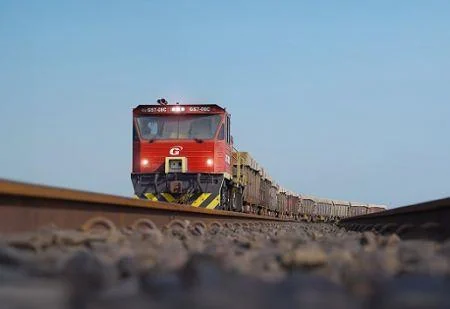
The programme focuses on equipment required to maintain railway services. It includes mechanical and electrical spare parts for electric locomotives, specialised railway track components and accessories for railway stations.
Part of the funding will also cover small-scale machinery for routine track inspections and maintenance. These resources are intended to help technical teams carry out more regular interventions and reduce infrastructure failures linked to wear and tear.
Railway Maintenance: A Critical Issue for Trade Flows
Beyond equipment supply, the agreement includes a technical capacity-building component. Chinese experts are expected to travel to Ethiopia to provide practical assistance, train railway personnel and strengthen local maintenance capabilities.
The operational stakes are significant. A reliable and properly maintained railway infrastructure helps improve train scheduling, reduce service interruptions and secure freight delivery times.
For landlocked Ethiopia, the railway connection to Djibouti is a major logistics outlet to international markets. It links the country’s economic hinterland to the Port of Djibouti, the main gateway for Ethiopian external trade.
Locomotive failures, spare-parts shortages and delayed track maintenance can disrupt railway operations. Such disruptions may also shift some freight volumes back to road transport, potentially increasing logistics costs and delivery times.
The Chinese grant therefore focuses not only on supplying equipment but also on strengthening Ethiopia’s ability to maintain its railway infrastructure locally.
Why This Matters
- More reliable freight flows: Locomotive availability and infrastructure conditions directly affect the regular movement of goods between Ethiopia and Djibouti.
- Better cost control: Improved preventive maintenance can reduce equipment downtime and unexpected freight transfers to road transport.
- Stronger local technical capacity: Training Ethiopian railway personnel could reduce reliance on external technical support for routine maintenance operations.
Regional Implications for East African Logistics Corridors
The Ethio-Djibouti railway plays a significant role in trade across the Horn of Africa. Its operational performance directly affects Ethiopia’s access to port facilities and international maritime networks.
In a region where several landlocked countries depend on transit corridors for imports and exports, railway infrastructure availability is a key competitiveness factor.
Improving maintenance capacity could also strengthen the integration of rail freight with road transport and port operations, supporting more efficient multimodal logistics chains.
Maintenance: A Key Factor in Corridor Performance
With this $15 million grant, China and Ethiopia are prioritising maintenance, equipment availability and technical skills to strengthen the Ethio-Djibouti railway. The ability to maintain the infrastructure over the long term will be critical to ensuring reliable freight flows and improving Ethiopia’s logistics competitiveness.