Egypt Invests €690 Million in Strategic Rail Freight Corridors to Boost Logistics Efficiency
Egypt has launched a €690 million railway modernization programme covering the Alexandria–6th of October and Belbes–10th of Ramadan corridors. The initiative aims to improve freight flows between industrial zones, dry ports, and the country’s major seaports.
Rail Modernization Targets Egypt’s Key Logistics Corridors
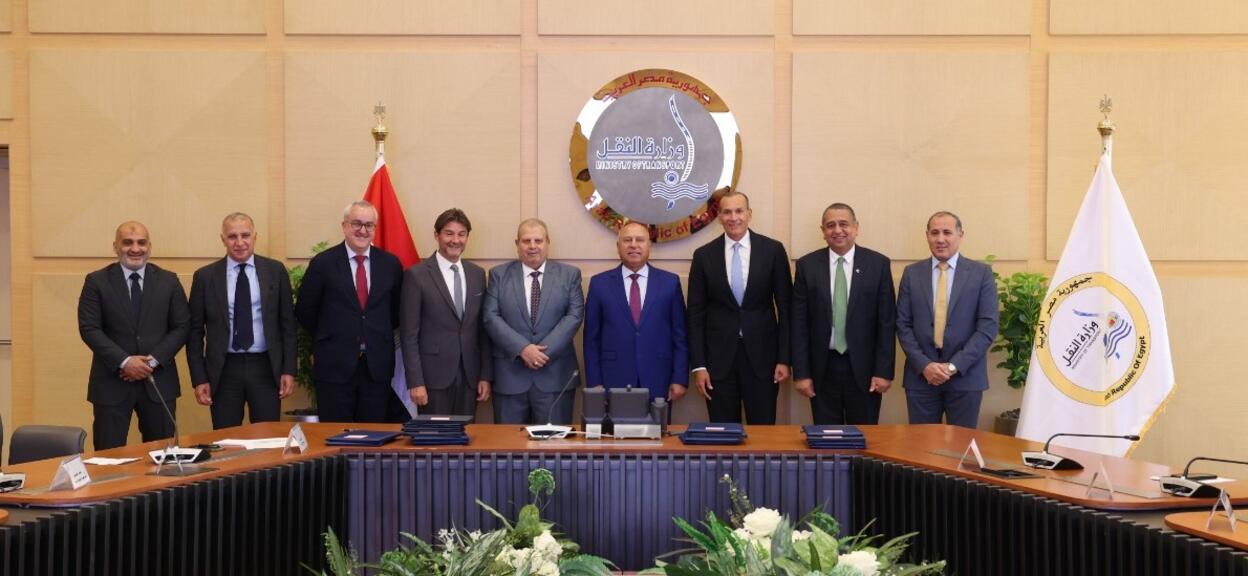
Rail & Freight – Egypt. Egyptian National Railways (ENR) has signed four railway modernization contracts worth a combined €690 million with a consortium led by Alstom alongside Rowad Modern Engineering and Concrete Plus.
The projects focus on two critical logistics corridors: the 6th of October–Alexandria corridor and the Belbes–10th of Ramadan (B10) railway line. Both routes play a strategic role in connecting industrial production hubs with dry ports and Egypt’s major maritime gateways.
The programme forms part of the country’s broader effort to strengthen transport infrastructure and logistics connectivity.
Alexandria–6th of October Corridor to Increase Freight Capacity
The largest contract, valued at €550 million, covers the modernization of the 6th of October–Alexandria corridor.
The project includes:
- Complete signalling modernization;
- Deployment of ETCS Level 1 digital railway systems;
- Upgraded telecommunications infrastructure;
- Enhanced power supply systems;
- Rehabilitation of railway tracks and civil infrastructure.
According to project data, the upgrades are expected to reduce journey times by nearly 80 minutes while significantly improving network capacity, operational reliability, and safety.
The corridor is particularly important because it links the 6th of October Dry Port, located west of Cairo, with the Port of Alexandria, Egypt’s largest Mediterranean seaport.
Improved Access to the 10th of Ramadan Industrial Hub
The second project involves the Belbes–10th of Ramadan (B10) line, with an investment of approximately €140 million.
The railway serves one of Egypt’s largest industrial zones, home to manufacturing, logistics, and distribution activities serving both domestic and export markets.
Once upgraded, the corridor is expected to improve freight movements and strengthen rail connectivity between eastern Cairo logistics platforms and key industrial facilities.
Supply Chain Benefits Expected Across Egypt
The modernization of both corridors is designed to address several operational challenges:
- Reducing congestion across major logistics routes;
- Shifting more freight traffic from road to rail;
- Improving transit reliability and scheduling;
- Strengthening links between industrial zones and ports;
- Supporting domestic and international trade growth.
The programme also includes an estimated 50% local content component, involving Egyptian engineering expertise, contractors, and locally sourced materials.
Why It Matters
1. Stronger Supply Chains
The upgraded corridors will improve connectivity between industrial centres, dry ports, and maritime gateways.
2. Lower Logistics Costs
Enhanced rail capacity and reliability can reduce transit times and ease pressure on road transport networks.
3. Greater Export Competitiveness
More efficient access to Alexandria Port and key logistics hubs will facilitate trade flows to regional and international markets.
Regional Perspective
Egypt continues to expand its multimodal logistics strategy by integrating seaports, dry ports, industrial zones, and rail infrastructure. Similar investments are being pursued across Africa as governments seek to improve logistics performance, attract industrial investment, and strengthen regional trade corridors.
With €690 million committed to strategic rail infrastructure, Egypt is accelerating the modernization of its freight transport network. Improved connections between Alexandria, dry ports, and major industrial hubs are expected to enhance supply chain performance and reinforce the country’s position as a regional logistics and trade gateway.