Zimbabwe: NRZ Negotiates $115 Million to Revive Rail Freight Capacity
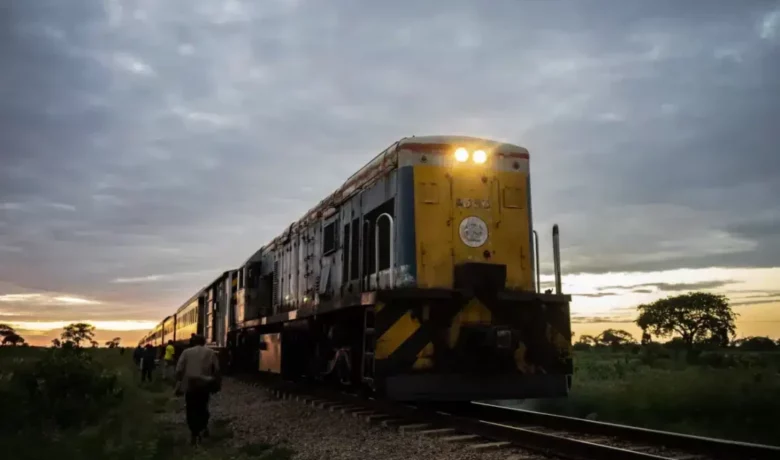
Zimbabwe’s rail and freight sector could receive a $115 million financing package being negotiated by the National Railways of Zimbabwe (NRZ) with Afreximbank. The funding would support the acquisition of locomotives and wagons and the rehabilitation of selected sections of the railway network.
$115 Million Rail Financing for Zimbabwe
The National Railways of Zimbabwe (NRZ) is negotiating $115 million in financing from Afreximbank to strengthen its freight transport capacity. The operation includes the acquisition of 10 locomotives and 315 wagons, as well as rehabilitation work on parts of the railway network.
The financing comes after years of underinvestment that have weakened the operator’s operational capacity. According to John Mangudya, chief executive of Mutapa Investment Fund, which now oversees NRZ, the funding would help restore rolling stock and improve the railway’s ability to handle freight.
Zimbabwe Rail Freight Capacity Has Fallen Sharply
NRZ has experienced a major decline in freight volumes. Annual traffic fell from around 12 million tonnes in the 1990s to just 2 million tonnes in 2025.
The decline has reduced the railway’s ability to handle bulk cargo. Road transport has consequently taken a larger share of mineral and other bulk shipments moving to export markets and ports.
For shippers, this situation increases pressure on transport costs and road infrastructure. Restoring adequate rail capacity could allow part of these heavy freight flows to shift back to rail.
Mining Sector Drives Rail Freight Recovery
The mining sector is emerging as a potential source of new rail volumes. Lithium is one of the key commodities supporting this shift.
In July 2026, NRZ announced the start of lithium concentrate rail shipments to the Port of Maputo in Mozambique, working with private-sector partners. The route provides mining companies with an alternative to road transport for exports.
NRZ has also been working with private companies to rebuild freight volumes. A partnership with Zimasco, a ferrochrome producer, recently enabled the deployment of three refurbished locomotives and 100 refurbished wagons.
Why It Matters
- Capacity: The planned 10 locomotives and 315 wagons would increase available capacity for bulk and heavy freight.
- Logistics costs: Shifting part of mineral traffic from road to rail could reduce pressure on transport costs and road infrastructure.
- Regional corridors: The rail connection to Maputo strengthens Zimbabwe’s access to regional export routes.
NRZ Modernisation Requires More Investment
The proposed $115 million would cover only part of NRZ’s estimated investment needs. According to John Mangudya, around $600 million would be required for a broader modernisation of the railway operator.
The Afreximbank financing would therefore represent an initial step rather than a complete solution. Additional funding will be required to rehabilitate more track sections and renew ageing rolling stock.
Regional Outlook
The recovery of rail freight in Zimbabwe is part of a wider logistics challenge in Southern Africa. Improving rail connections with Mozambique and the Port of Maputo could provide mining companies with an alternative to road transport and diversify export routes.
For logistics operators, the key issue will be turning investment in rolling stock into reliable freight capacity, with competitive transit times and costs capable of attracting and retaining mining cargo.
The $115 million financing being negotiated by NRZ with Afreximbank could restore part of Zimbabwe’s rail freight capacity, but it remains below the estimated $600 million required for wider modernisation. Rolling-stock availability and network rehabilitation will be critical to rebuilding rail capacity and supporting mineral flows along regional corridors.