Senegal Launches YONU JAM Programme to Modernize Intercity Transport with 200 New Buses
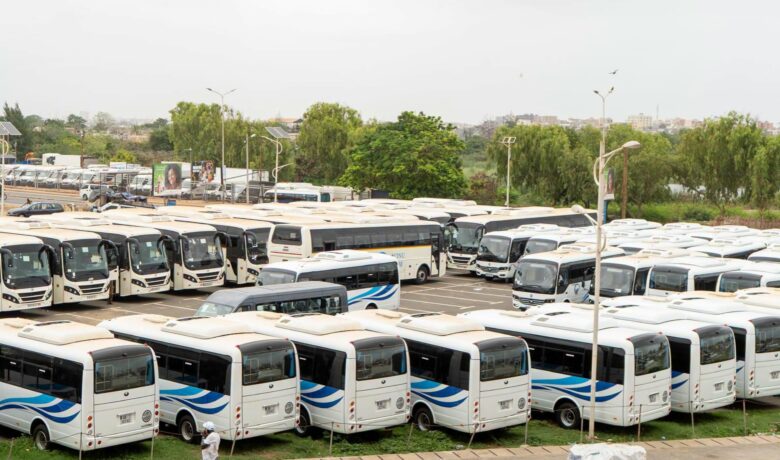
Senegal has launched the YONU JAM Programme, a nationwide initiative aimed at modernizing intercity passenger transport and improving regional connectivity. Led by the Ministry of Land and Air Transport in partnership with the Association for the Financing of Urban Transport Professionals (AFTU), the programme begins with the deployment of 200 new buses to strengthen transport services across the country.
A New Phase in Senegal’s Public Transport Modernization
The YONU JAM Programme was officially launched at the National Arena in Pikine during a ceremony chaired by Minister of Land and Air Transport Abdoul Ahad Ndiaye.
The initiative forms part of the government’s broader strategy to modernize Senegal’s road transport system, improve passenger safety and deliver more reliable and better-organized intercity transport services.
The programme is being implemented in partnership with the Association for the Financing of Urban Transport Professionals (AFTU), the Land Transport Development Fund (FDTT), Coris Bank, and the National Civic Service.
200 New Buses to Strengthen Regional Connectivity
The highlight of the launch was the commissioning of 200 new intercity buses dedicated to regional passenger services.
The fleet expansion represents an investment of CFA12 billion, financed with the support of Coris Bank, while the vehicles were supplied by Yutong and Tata Motors.
The new buses complement the 200 vehicles introduced since 2024, bringing the programme’s operational fleet to 400 buses.
The additional capacity is expected to improve the frequency, reliability and safety of passenger transport between Senegal’s regions while providing higher-quality transport services for travellers.
Supporting Economic Development Through Better Mobility
Beyond fleet renewal, the YONU JAM Programme seeks to establish a more structured and efficient intercity transport network capable of supporting the country’s economic and social development.
Road transport remains the dominant mode of mobility in Senegal, connecting cities, rural communities and economic centres. More efficient passenger transport services can facilitate labour mobility, improve access to education and healthcare, stimulate domestic commerce and strengthen regional integration.
Improved transport connectivity also contributes indirectly to logistics performance by enhancing access to markets and supporting more balanced territorial development.
Aligned with Senegal’s 2050 Development Vision
According to the Ministry of Land and Air Transport, the programme implements recommendations issued during Senegal’s National Transport Forum and supports the country’s Senegal 2050 National Agenda.
Through YONU JAM, the government aims to develop a safer, more modern and better-organized intercity transport system capable of meeting growing mobility demand while supporting long-term economic transformation.
Why It Matters
Modern and reliable public transport is a key component of sustainable mobility and regional economic development.
By expanding its intercity bus fleet, Senegal is investing in transport infrastructure that improves regional connectivity, facilitates the movement of people and supports national economic integration. The programme also reflects a broader trend across Africa, where governments are increasingly prioritizing the modernization of public transport systems to improve service quality, strengthen transport networks and contribute to more efficient mobility and logistics ecosystems.