Lagos Expands Rail Master Plan to 11 Lines as LAMATA and CCECC Launch Railway Training Centre Initiative
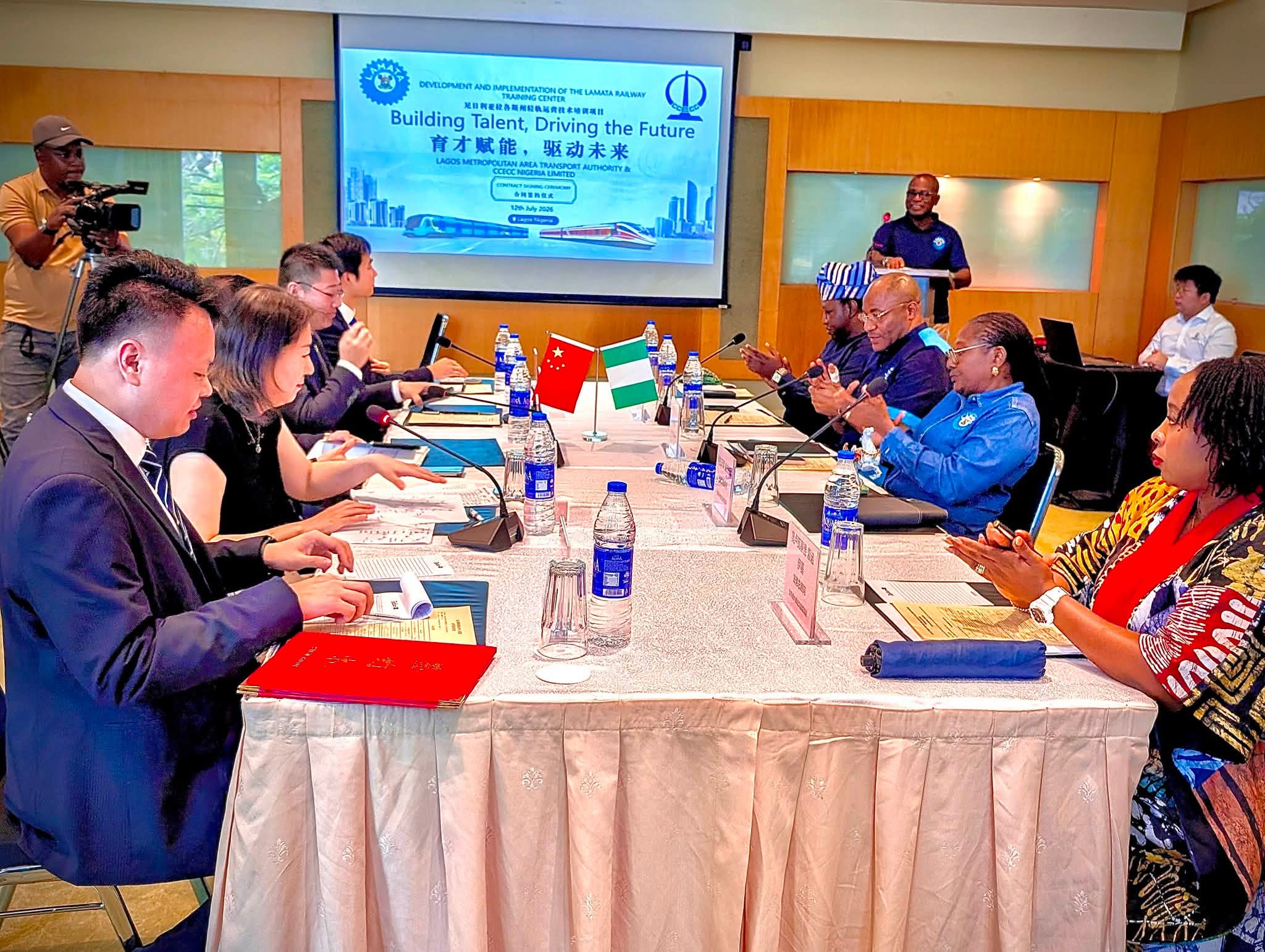
The Lagos Metropolitan Area Transport Authority (LAMATA) has partnered with China Civil Engineering Construction Corporation (CCECC) to establish a Railway Training Centre that will develop the skilled workforce needed to operate and maintain the city’s expanding rail network. The initiative comes as Lagos updates its Strategic Transport Master Plan, increasing its rail network from six to 11 lines.
Lagos is strengthening the human capital required to support one of Africa’s most ambitious urban rail programmes. The Lagos Metropolitan Area Transport Authority (LAMATA) has signed a strategic agreement with China Civil Engineering Construction Corporation (CCECC) to establish a state-of-the-art Railway Training Centre, a move designed to build local technical expertise as the state accelerates the expansion of its mass transit system.
The agreement coincides with a major revision of the Lagos Strategic Transport Master Plan (STMP), which expands the rail component from the originally planned six rail lines and one monorail to 11 rail lines and one monorail, reflecting the growing mobility needs of Nigeria’s commercial capital.
Building local capacity for a larger rail network
Speaking at the signing ceremony, LAMATA Managing Director Abimbola Akinajo said the training centre would become a critical pillar of the state’s long-term rail development strategy by ensuring that future infrastructure is operated and maintained by highly skilled Nigerian professionals.
According to Akinajo, Lagos has already made significant progress in workforce development through the operation of the Lagos Rail Mass Transit (LRMT) Blue and Red Lines.
Since commercial operations began, more than 400 personnel have been trained, including train drivers, operations staff and customer service professionals. She noted that the Blue Line has already achieved more than 90% local staffing, with foreign technical specialists supporting only highly specialised functions.
“The expansion of the Strategic Transport Master Plan requires a structured, internationally certified railway training institution capable of supporting signalling, operations, rolling stock maintenance and customer service,” she said.
She added that developing indigenous railway expertise would improve the long-term sustainability of Lagos’ rail system while creating employment opportunities for Nigerian youth and supporting the country’s broader economic development.
Supporting Africa’s largest urban rail ambitions
The proposed Railway Training Centre will provide internationally aligned technical education covering railway operations, infrastructure maintenance, signalling systems and rail management.
CCECC, which constructed both the Blue Line and Red Line, said the project reflects the growing need for specialised railway professionals as Lagos continues to expand its urban rail infrastructure.
Responding on behalf of the company, CCECC Vice President Sun Xiangchun described vocational education as a key driver of industrial development and said the initiative aligns with the China-Africa Vocational Education Plan, jointly endorsed by the governments of China and Nigeria.
According to Xiangchun, the training facility will combine classroom instruction, simulation-based learning, practical technical training and professional competency assessments to develop internationally competitive railway personnel.
“The establishment of a professional and integrated railway training centre is not only timely but essential for the sustainable development of Lagos’ rail transit system,” he said.
Human capital becomes central to rail expansion
As African cities invest heavily in rail infrastructure, skills development is increasingly recognised as a strategic component of transport investment.
While financing and construction often dominate rail development programmes, the availability of qualified engineers, signalling specialists, rolling stock technicians and operations managers has become equally important for ensuring reliable service delivery and reducing long-term dependence on foreign expertise.
For Lagos, the training centre is expected to support the operational needs of what will become one of the continent’s largest urban rail networks, while strengthening Nigeria’s domestic railway industry.
Why it matters
- Rail infrastructure: Expanding the Strategic Transport Master Plan to 11 rail lines significantly increases Lagos’ future urban rail capacity.
- Workforce development: The new Railway Training Centre will strengthen local expertise in railway operations, maintenance, signalling and asset management.
- Industrial development: Building indigenous technical capacity will reduce reliance on foreign specialists while creating skilled employment opportunities in Nigeria’s growing rail sector.
Regional perspective
Across Africa, countries are increasingly pairing rail infrastructure investments with technical education and workforce development programmes. As urban rail systems expand in cities such as Lagos, Cairo, Casablanca and Addis Ababa, the availability of locally trained engineers and railway professionals is becoming a critical factor in ensuring operational efficiency, infrastructure resilience and the long-term sustainability of public transport networks.
The partnership between LAMATA and CCECC illustrates that successful railway development extends beyond infrastructure delivery. By investing in technical education alongside network expansion, Lagos is laying the foundations for a self-sustaining rail ecosystem capable of supporting the operation and maintenance of an 11-line network. As Nigeria continues to modernise its urban transport infrastructure, developing local railway expertise will be essential to maximising the long-term economic and operational benefits of these investments.