Korea–Africa: KITA and the AfCFTA Launch a New Business Platform to Accelerate Trade and Industrialisation
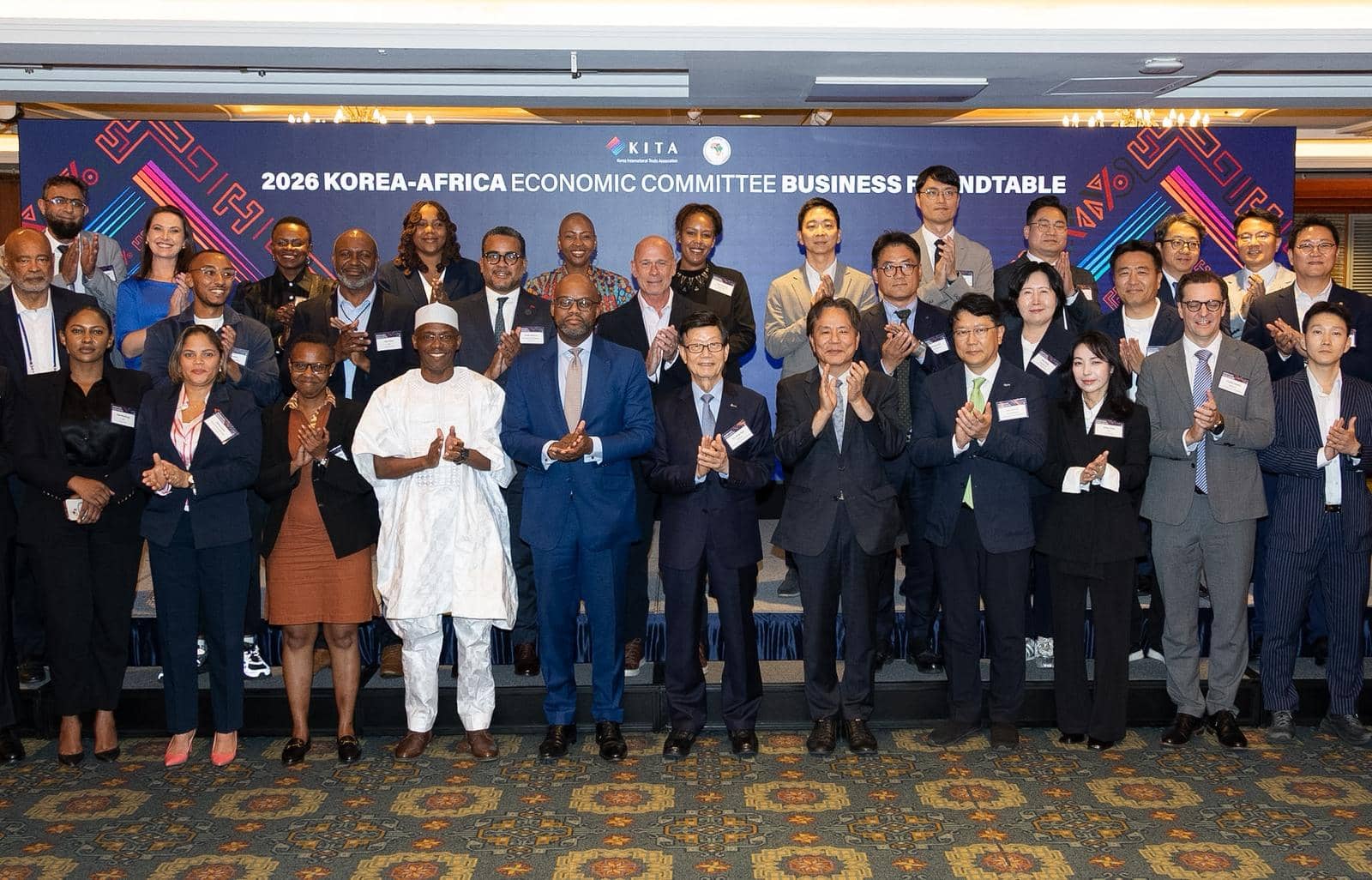
Economic relations between the Republic of Korea and Africa have reached a new milestone as the Korea International Trade Association (KITA) and the Secretariat of the African Continental Free Trade Area (AfCFTA) officially inaugurated the first business roundtable of the Korea-Africa Economic Committee (KAEC) in Seoul. The new platform is designed to strengthen trade, investment and industrial partnerships between the two regions.
The inaugural meeting marks the culmination of a process launched during the Korea-Africa Business Summit in 2024, where KITA and the AfCFTA Secretariat signed a Memorandum of Understanding (MoU) to institutionalise economic cooperation. Since then, both organisations have held regular consultations to establish a permanent dialogue between Korean and African businesses.
A Partnership Focused on Strategic Industries
The meeting brought together 35 companies and institutions representing leading economic players from both regions. The Korean delegation included major industrial groups such as Hyundai Motor Group, POSCO International, and Samsung SDI, while the African delegation featured organisations including the Pan African Chamber of Commerce and Industry (PACCI), power utility Eskom, and the OPAIA Group.
Discussions focused on several strategic sectors expected to drive future economic cooperation, including:
- Manufacturing;
- Transport and logistics infrastructure;
- Energy and decarbonisation;
- Digital trade;
- Industrial development and regional value chains.
The shared objective is to build partnerships that support Africa’s industrialisation while creating new growth opportunities for Korean companies seeking to expand into one of the world’s fastest-growing markets.
AfCFTA: A Catalyst for Investment
According to KITA Chairman Jin Sik Yoon, the complementary strengths of the Korean and African economies offer tremendous potential.
“If Korea’s industrial competitiveness is combined with Africa’s growth potential, we will be able to create a future-oriented model of cooperation that draws global attention.”
He added that the Korea-Africa Economic Committee will continue facilitating exchanges between business leaders while identifying concrete cooperation projects across key industrial and commercial sectors.
Speaking during the roundtable, AfCFTA Secretary-General Wamkele Mene stressed that the new platform reflects a shared commitment to building practical, mutually beneficial partnerships.
“The establishment of the KAEC reflects our shared commitment to building practical and mutually beneficial partnerships between Africa and the Republic of Korea. As Africa advances the implementation of the AfCFTA, we welcome deeper cooperation in trade, investment, industrialisation, technology, and infrastructure that supports sustainable economic growth and creates opportunities for businesses and people across both regions.”
For Korean investors, the AfCFTA provides access to an integrated market of more than 1.4 billion consumers, offering unprecedented opportunities to develop regional value chains and support Africa’s industrial transformation.
Building More Resilient Supply Chains
One of the highlights of the meeting was a presentation by Dr. Mun Su Kang, Research Fellow at the Korea Institute for International Economic Policy (KIEP), entitled “Tasks for Korea-Africa Economic Cooperation.”
The presentation identified several areas where Korea and Africa possess complementary strengths, including:
- Manufacturing industries;
- Transport and energy infrastructure;
- Energy transition and decarbonisation;
- Digital technologies and e-commerce.
It also highlighted the strategic importance of developing resilient and reciprocal supply chains that combine Africa’s industrial ambitions, natural resources and growing consumer market with Korea’s advanced manufacturing capabilities and technological expertise.
New Opportunities for Africa’s Logistics Sector
Beyond industrial investment, the partnership is expected to generate significant opportunities for Africa’s logistics industry. Increased trade flows between Korea and Africa will require stronger transport corridors, modern ports, improved rail and road infrastructure, and more efficient logistics services.
Digital trade also emerged as a key priority, with both sides exploring cooperation on supply chain digitalisation, cargo traceability, customs facilitation and smarter cross-border trade systems.
Institutionalising Long-Term Cooperation
KITA and the AfCFTA Secretariat announced their intention to institutionalise the Korea-Africa Economic Committee through regular meetings and continuous business exchanges, alternating between Africa and the Republic of Korea.
As the AfCFTA continues to reshape the continent’s economic landscape, this new platform has the potential to become a major catalyst for investment, infrastructure development and the creation of competitive regional value chains linking Africa and Asia.
By bringing together Korea’s industrial expertise and Africa’s expanding market, the KAEC could play a pivotal role in strengthening long-term economic cooperation and supporting sustainable growth on both sides.