Kinshasa: TRANSCO Adds 30 Mercedes-Benz Buses to Strengthen Urban Transport Capacity
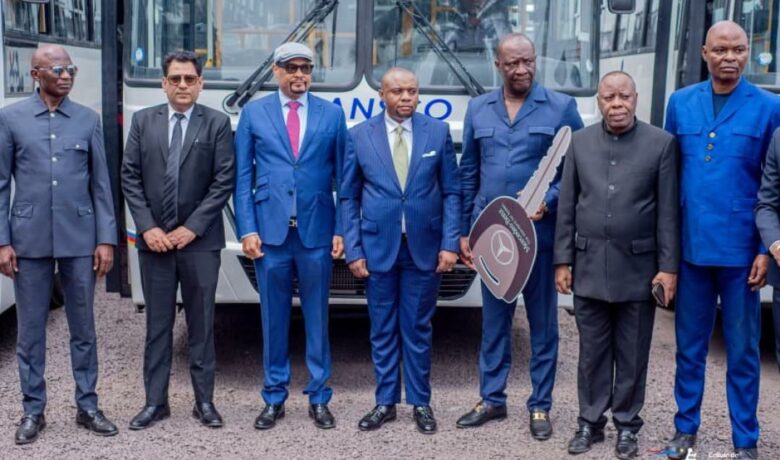
Urban mobility in the Democratic Republic of Congo: public transport operator TRANSCO received 30 new Mercedes-Benz buses in Kinshasa on 25 August 2026. The delivery brings the number of buses received under its partnership with Suprême Automobile to 180 out of 230 planned units.
30 new buses to increase TRANSCO’s capacity in Kinshasa
The new vehicles were received at TRANSCO’s second depot in Kinshasa in the presence of Transport Minister Jean-Pierre Bemba Gombo and TRANSCO Managing Director Jérémie Kilubu Matondo.
The operator plans to put the 30 buses into service within 48 hours of delivery. The immediate objective is to increase available fleet capacity on Kinshasa’s urban routes, where public transport demand remains high.
The latest batch is part of a wider fleet renewal and expansion programme. With 180 buses already delivered and 50 still expected, the partnership will add 230 vehicles to TRANSCO’s fleet once completed.
For daily operations, the additional buses should provide more vehicle availability on the network and help reduce the pressure created by fleet shortages. The impact will depend on route allocation, vehicle availability, maintenance cycles and the ability to keep the new units in regular service.
Urban mobility in the DRC: fleet capacity remains a key constraint
The arrival of new buses comes as TRANSCO is also working on the digitalisation of its operations. The objective is to move parts of its operational processes from physical systems to digital tools.
The operator is also considering the acquisition of minibuses for secondary routes that are less accessible to standard-size buses. This would allow TRANSCO to use different vehicle capacities according to route characteristics and passenger demand.
From a supply chain perspective, fleet expansion also creates additional requirements for spare parts, preventive maintenance, depot capacity, driver allocation and fuel management. The operational performance of the new fleet will therefore depend not only on the number of buses delivered but also on their utilisation and maintenance.
Why it matters
- More available capacity: 30 additional buses can increase the number of vehicles deployed on Kinshasa routes and improve service coverage.
- Operational continuity: additional fleet capacity provides more flexibility when buses are undergoing maintenance or are temporarily unavailable.
- Network segmentation: minibuses planned for secondary routes could complement larger buses and improve access to areas with lower road capacity or passenger volumes.
A wider urban transport challenge in Central Africa
Kinshasa’s transport pressure reflects a broader challenge across rapidly growing African cities: public operators must increase fleet capacity while controlling maintenance, fuel and operating costs.
For TRANSCO, the next operational step is the deployment of the 30 new buses, followed by the expected delivery of the remaining 50 units. The development of a complementary minibus fleet could also reshape how the operator serves secondary routes.
The urban mobility in the Democratic Republic of Congo sector therefore enters a new phase focused not only on fleet expansion but also on vehicle utilisation, maintenance and network efficiency.
In the short term, the 30 Mercedes-Benz buses provide additional capacity. Their lasting impact on urban mobility in Kinshasa will depend on how efficiently TRANSCO integrates them into its routes and operating system.