

Kenya–Rwanda: 11 Agreements to Improve the Northern Corridor and Secure Supply Chains
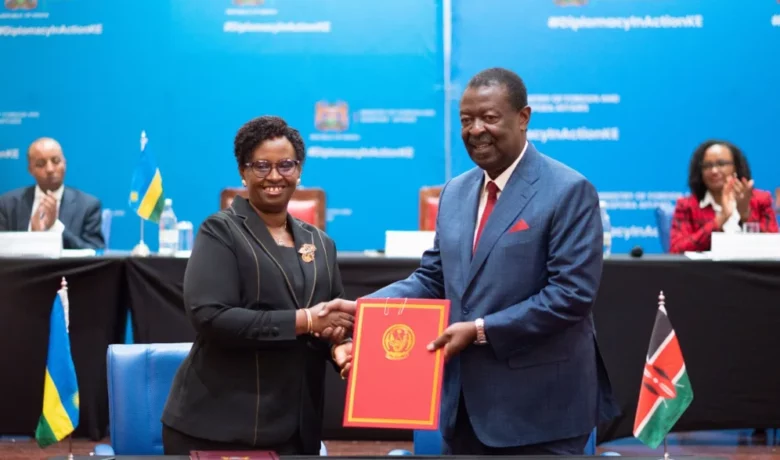
Regional Corridors — Kenya and Rwanda are seeking to strengthen trade and logistics cooperation through 11 bilateral agreements signed in Nairobi on October 5–6, 2026. The commitments cover regional connectivity, transport infrastructure and the security of Rwanda’s petroleum supplies through the port of Mombasa.
Northern Corridor: A Strategic Logistics Route for Rwanda
At the end of the 10th session of the Joint Permanent Commission for Cooperation (JPCC), the two countries signed two agreements and nine memoranda of understanding. The texts cover several areas, including security, immigration and water resource management. On the economic front, both governments also pledged to facilitate the movement of goods and services and encourage cross-border investment.
For landlocked Rwanda, the Northern Corridor remains essential for transporting imports through Kenya’s port of Mombasa. The reliability of this route directly affects delivery times, transport costs and the availability of goods on the Rwandan market.
Both governments agreed to continue working together on infrastructure, regional connectivity and transport logistics. Port and logistics facilities, including arrangements linked to the Naivasha inland dry port, are part of this cooperation.
However, the announcements do not specify planned investment amounts or quantified targets for reducing transit times. Operational gains will therefore depend on the effective implementation of the commitments.
Petroleum Products: A 40,000-Tonne Shipment Through Mombasa
Energy supply is another key component of this cooperation. On September 29, 2026, a shipment of 40,000 tonnes of refined petroleum products destined for Rwanda arrived at the port of Mombasa, according to Rwanda’s The New Times newspaper.
The delivery forms part of a joint petroleum procurement arrangement using the Northern Corridor. For Kigali, securing this logistics route is intended to make fuel imports more reliable and reduce the risk of supply disruptions.
Performance across the supply chain will depend on coordination between port operations, storage facilities, inland transportation and distribution networks. Available information does not specify the frequency of future shipments or the annual volumes covered by the arrangement.
Air Transport: Nairobi–Kigali and Kigali–Mombasa Connections
Air connectivity complements road and maritime transport. According to the information provided, Kenya Airways operates two daily flights between Nairobi and Kigali. RwandAir resumed its Kigali–Mombasa service in December 2025, with four flights per week.
These routes facilitate business travel and commercial exchanges between the two economies. They can also support activities requiring rapid movement, although air freight has not been identified as the main focus of this logistics cooperation.
Why It Matters
- Supply security: The Northern Corridor supports the movement of fuel and other imported goods into Rwanda.
- Costs and transit times: Better logistics coordination could reduce delays and disruptions across the supply chain.
- Bilateral trade: Both countries aim to expand commercial exchanges and encourage cross-border investment.
Trade Between the Two Countries Remains Uneven
According to figures presented by Rwanda’s Minister of State for Foreign Affairs, Usta Kaitesi, Rwanda imported more than $398 million worth of goods from Kenya in 2025, while Rwandan exports to the Kenyan market amounted to $5.3 million.
This gap highlights the challenge of diversifying Rwanda’s exports. Better transport connections alone will not be sufficient. Businesses will also need stronger capacity to access the Kenyan market and compete effectively.
The next session of the joint commission is scheduled to take place in Rwanda in 2028. Until then, the priority will be to turn the 11 signed instruments into practical measures that improve Northern Corridor efficiency, secure supply chains and strengthen trade between Kenya and Rwanda.