
Kenya: Century-Old Railway Line Reborn with KSh 5.5 Billion to Transform Regional Trade
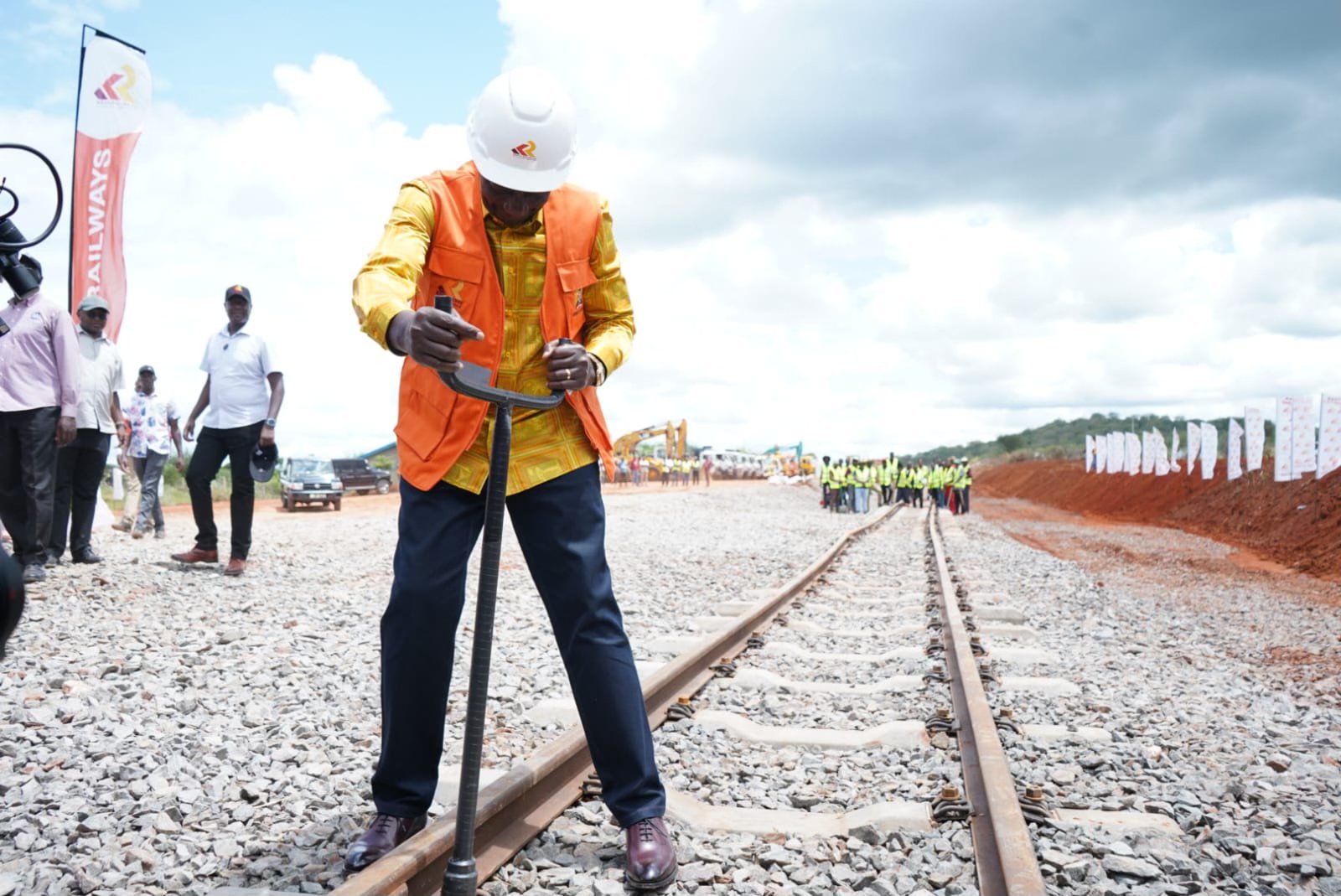
Kenya is actively pursuing the modernization of its transport infrastructure with the official launch of rehabilitation works on the Voi–Taveta railway line. Chaired by Head of State William Samoei Ruto, the groundbreaking ceremony marks the rebirth of a historic railway axis over 100 years old, set to play a key role in East Africa’s logistical integration.
Built between 1915 and 1916 during the First World War, the Voi–Taveta line originally served a military purpose before being gradually integrated into the regional commercial network. After decades of use for passenger and freight transport, it fell into disuse nearly twenty years ago due to declining rail traffic. Its current rehabilitation illustrates a commitment to reconnecting historical infrastructure with contemporary challenges of logistical competitiveness.
A KSh 5.5 Billion Investment for a Strategic Corridor
The project, estimated at 5.5 billion Kenyan shillings (approximately $40 million), involves upgrading the meter-gauge line and constructing a dry port in Voi. The objective is clear: to transform Voi into a strategic logistics hub connecting the Port of Mombasa to the Taveta-Holili One-Stop Border Post on the Tanzanian border.
Ultimately, this infrastructure will revive a historic corridor linking Mombasa to the continent’s interior via Voi, Taveta, Moshi, Arusha, and Singida, stretching all the way to Bujumbura. One of the project’s primary advantages lies in distance optimization. The rail line will reduce the journey between Mombasa and Bujumbura by 358 kilometers, a significant gain expected to translate into lower transport costs and improved delivery times.
In a context where the competitiveness of African corridors increasingly relies on speed and flow reliability, this reduction serves as a major lever to attract higher trade volumes and streamline regional exchanges.
A Catalyst for Trade, Industry, Tourism, and Employment
Beyond logistics, the revival of the Voi–Taveta line is expected to generate structural economic impacts:
-
Cross-border Trade: Facilitating exchanges between Kenya, Tanzania, and Burundi.
-
Agriculture: Improving the transport of agricultural products to regional markets and ports.
-
Mining: Unlocking the mineral potential of Taita Taveta County.
-
Employment: Creating opportunities, particularly for the youth.
By offering a more reliable and potentially cheaper alternative to road transport, rail could also help decongest road networks and reduce overall logistical costs. The tourism dimension is also significant; the line traverses a region rich in natural landscapes and historical sites, particularly those linked to WWI battles. Its return to service could thus foster the development of railway and heritage tourism, which remains largely untapped.
Toward Strengthened Regional Integration
Beyond its local impact, the project is part of a broader strategy to develop multimodal corridors in East Africa. By reconnecting railway axes to seaports and land borders, Kenya reinforces its position as a regional logistics hub.
The relaunch of the Voi–Taveta line is far more than a simple infrastructure project: it symbolizes the transformation of a historical legacy into a lever for economic competitiveness, serving increased regional integration and more efficient logistics. A corridor is reborn, with the clear ambition to reduce costs, shorten lead times, and stimulate trade on a regional scale.