Guinea: Compagnie du TransGuinéen Launches Its First Passenger Train on the Morébaya-Mamou Axis
Rail freight traffic reaches a major operational milestone in Guinea with the official launch of a passenger service operated by Compagnie du TransGuinéen.
CTG Inaugurates First Passenger Run Connecting Morébaya to Mamou
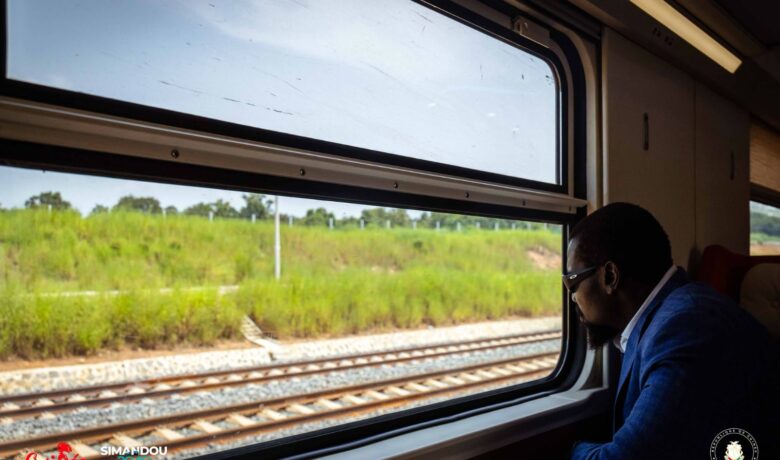
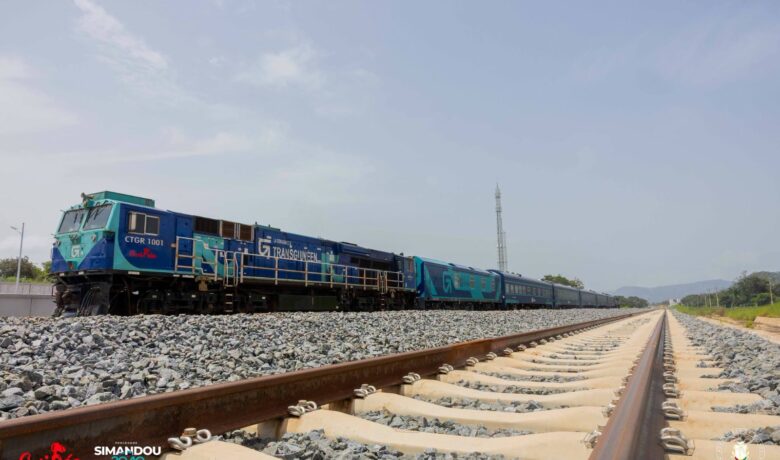
The Rail & freight sector in Guinea has reached a decisive milestone. On Monday, October 12, 2026, President Mamadi Doumbouya inaugurated the first passenger train operated by Compagnie du TransGuinéen (CTG). Departing from the port city of Morébaya, the convoy hauled by the “KOMA” locomotive covered 148 km to reach Kassa, in the Mamou prefecture. This line is part of the Simandou 2040 megaproject and features a major engineering structure: an 11.6 km tunnel between Koriba and Kassa, noted as West Africa’s longest rail tunnel.
Heavy Infrastructure to Structure the Mining and Logistics Corridor
The railway network deployed by CTG implements heavy industrial standards to interconnect the southern mining hub with coastal port infrastructure.
-
Linear infrastructure and civil works: The main line integrates 205 bridges (including 49 exceeding 500 meters) and complex viaducts, such as the Colomo II viaduct spanning 2,115 meters.
-
Signaling and telecom: The corridor is equipped with 139 pylons along the main line to secure traffic flows and automate operations.
-
Multimodality: The project aims to interconnect heavy freight transport, mining operations, and future passenger circulation along a modern dual-track system.
Why It Matters
Territorial opening: The rail link directly connects the coast to interior zones across four natural regions, reducing total dependence on the road network.
Logistics scaling: The line integrates the foundational elements of a high-performance multimodal corridor tied to the Simandou mega-mining project.
Flow standardization: Modern rolling stock and outfitted stations formalize a regular transport service meeting international standards.
Regional Perspective
Across West Africa, integrating mega-mining infrastructure with national transport networks remains a critical challenge for supply chain fluidity. By pooling railway investments between mineral extraction and civil transit, Guinea positions itself as a benchmark for large-scale logistics integration.
With this initial official run, the TransGuinéen shifts from a massive construction site to an operational asset, initiating a sustainable transformation of Guinea’s supply chain.