DRC: Kasumbalesa’s $600 Million Logistics Bet to Ease Southern Africa’s Key Trade Bottleneck
After nearly two decades of delays, the Kasumbalesa dry port project is finally moving into its implementation phase. On 1 December in Kinshasa, the Democratic Republic of Congo signed a strategic concession agreement between the Office de Gestion du Fret Multimodal (Ogefrem) and South Africa’s Yellowstone Consortium, for an investment estimated at nearly $600 million. The project is expected to transform one of Southern Africa’s most congested border crossings.
A Long-Awaited Signature
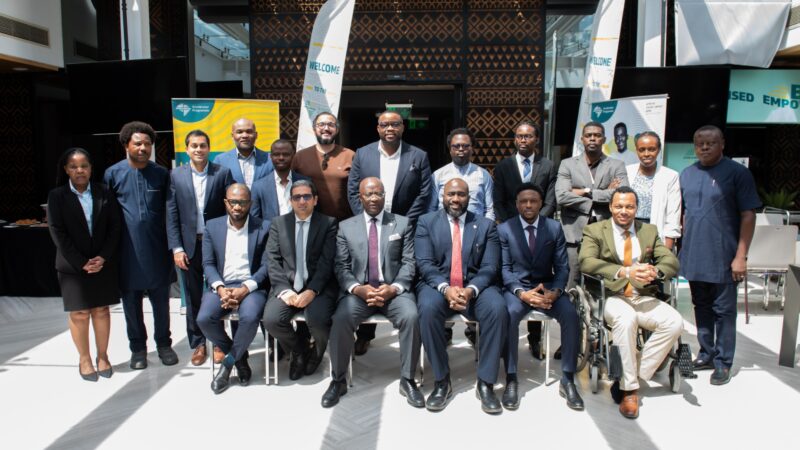
The signing ceremony, chaired by Vice Prime Minister and Minister of Transport Jean-Pierre Bemba, marks the culmination of a lengthy institutional process. As far back as 2004, the Congolese state had acquired the land concession for the project in Haut-Katanga. A foundation stone was laid in 2018, but construction never followed.
It was under the leadership of Ogefrem’s 14th Director General, William Kazumba Mayombo, that the project was revived and brought to fruition. Authorities emphasize that the concession contract complies fully with all legal requirements governing public-private partnerships (PPPs), a critical factor in a country where the credibility of major infrastructure projects is closely scrutinized.
Kasumbalesa: A Regional Trade Hub—and a Breaking Point
Kasumbalesa is no ordinary border post. It is the main gateway between Zambia’s Copperbelt and the former Katanga mining region in the DRC, handling a significant share of the country’s mineral exports, notably copper and cobalt. The crossing sits at the intersection of several strategic corridors linking the DRC to at least seven major seaports: Durban, Dar es Salaam, Beira, Nacala, Walvis Bay, Lobito and Luanda.
Yet this strategic position comes with chronic logistical chaos. Truck queues regularly stretch for more than 10 kilometres, with waiting times exceeding five days. These delays are costly for operators, risky from a security standpoint, and damaging to the competitiveness of regional supply chains.
A Dry Port to Rationalise Cross-Border Supply Chains
The future Kasumbalesa dry port is designed as a structural response to these inefficiencies. Conceived as an integrated logistics platform, it aims to centralise currently fragmented operations: customs clearance, truck parking, cargo storage, traffic management and administrative services.
Under the 23-year concession agreement, Yellowstone Consortium will finance, build, equip and operate the facility. The project includes:
-
up to 34,000 square metres of expandable warehouse space;
-
two container handling areas;
-
truck parking capacity for at least 1,800 vehicles;
-
a fuel storage depot;
-
administrative buildings for customs and border services;
-
a fire station, as well as power and water infrastructure.
A land reserve is also planned to accommodate ancillary services such as fuel stations, maintenance workshops, retail outlets and additional logistics services.
Jobs, Corridors and Logistics Credibility
Authorities project the creation of around 2,000 direct jobs and 5,000 indirect jobs, alongside a structural impact on the Southern Corridor, a vital artery for trade with Southern Africa. In the long term, the goal is to reduce transit times, lower logistics costs and improve the reliability of the DRC’s mining and commercial supply chains.
A critical issue remains execution. Many experts note that studies and announcements around the Kasumbalesa dry port date back nearly 20 years. In one of the continent’s most heavily trafficked logistics environments, Yellowstone’s ability to deliver the project on time and operate it efficiently will be decisive.
For the DRC, Kasumbalesa is more than an infrastructure project—it is a test of regional logistics credibility.