DRC: “Infrastructure Talent” — A Strategic Lever to Secure Logistics Investments

The Democratic Republic of the Congo is taking a new step in its transport modernization strategy. On April 14, the think tank RDC_STRATEGIE officially launched the “Infrastructure Talent” program, alongside its sub-program “Port Talent”, with a clear objective: closing the skills gap that continues to limit the performance of infrastructure projects.
An operational reality: infrastructure without skills does not deliver sustainable value
Ports, logistics corridors, roads, airports… the DRC is attracting major investments across its transport value chain. Yet one constraint remains on the ground: the lack of qualified local talent.
Without local expertise:
- projects remain dependent on foreign engineering
- operating costs increase
- execution timelines and quality are at risk
In short, logistics performance is not only built on infrastructure—but on the capabilities that run it.
High-level political backing
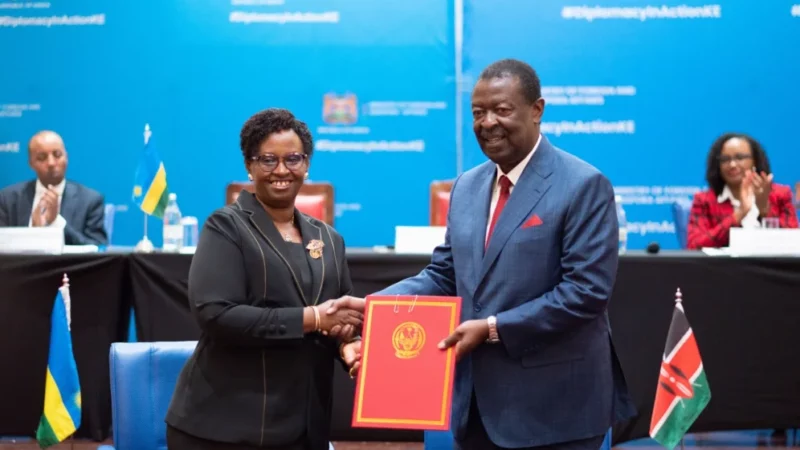
The launch took place in the presence of key government figures, including Jean-Pierre Bemba, Vice Prime Minister in charge of Transport, and Marc Ekila Likombo, Minister of State for Vocational Training.
Their presence signals strong political alignment: positioning human capital as a core pillar of the country’s logistics strategy.
“Infrastructure Talent”: building a transport skills pipeline
The program targets critical segments across the infrastructure supply chain:
- Port
- Rail
- Road
- Airport
Through “Port Talent”, a strategic focus is placed on port-related professions, covering the full value chain:
- port civil engineering
- terminal operations management
- logistics and supply chain
- maritime safety
- digitalization and smart ports
A field-oriented approach
The program is built on a practical, execution-driven model:
- academic training (theoretical and hands-on)
- high-level seminars led by industry experts
- professional internships in the DRC and internationally
The goal is to rapidly develop job-ready professionals who can be deployed across ongoing and upcoming projects.
A matter of logistics sovereignty
Beyond training, the initiative addresses four structural challenges for the DRC:
- reducing dependence on foreign expertise
- strengthening infrastructure project governance
- improving operational performance
- positioning the DRC as a regional logistics hub in Central Africa
As African trade corridors gain momentum, the ability to efficiently operate infrastructure becomes a key competitive advantage.
A call to partners and investors
The program is open to private sector players, financial institutions, and technical partners. For logistics operators, port authorities, and infrastructure developers, the challenge is clear: secure access to skilled talent in a fast-growing market.
LogistAfrica insight:
With “Infrastructure Talent,” the DRC is tackling a frequently overlooked dimension of infrastructure development in Africa: execution capacity. If the program successfully aligns training with industry needs, it could become a replicable model for other African markets facing similar talent constraints.