

African Air Cargo: Rising Volumes Push Hubs to Expand Capacity
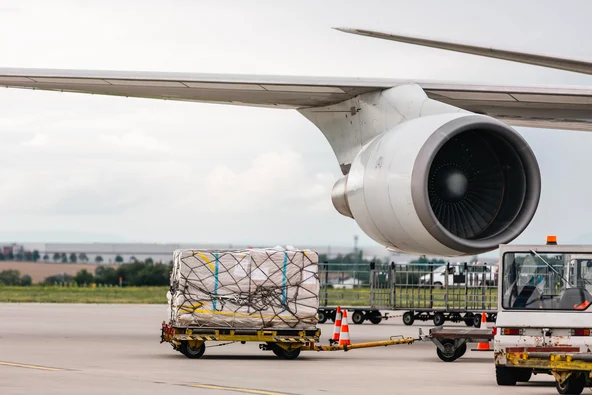
Aviation: across Africa, rising air cargo demand is increasing the need for capacity to move high-value and time-sensitive goods. Airlines and logistics hubs in both the Gulf and Africa are responding with additional freighters, airport infrastructure and integrated storage and distribution facilities.
African Air Cargo Demand Continues to Rise
The African air cargo market is attracting growing attention from international operators as trade volumes increase. In February 2026, demand reported by African airlines rose 21% year-on-year, while capacity increased by 17.3%, according to the International Air Transport Association (IATA).
The gap between demand growth and available capacity is creating additional requirements for cargo aircraft and ground-handling infrastructure. The trend is particularly relevant for goods where delivery time and product value justify air transport.
Against this backdrop, flydubai plans to add three Boeing 737-800 freighters to its cargo operation from 1 October 2026. Each aircraft has a cargo capacity of up to 23 tonnes per flight.
The aircraft will operate from Al Maktoum International Airport (DWC) in Dubai under a turnkey lease arrangement with SolitAir. They will complement cargo capacity available in the belly holds of the airline’s 98 passenger aircraft.
Gulf Hubs Expand Their African Cargo Capacity
Gulf-based logistics hubs are seeking to capture a larger share of cargo flows between Africa and major global consumer markets.
Emirates SkyCargo was transporting around 3,820 tonnes of cargo per week to and from Africa in early 2025. The carrier also plans to expand its freighter fleet to at least 21 aircraft.
Qatar Airways Cargo operates cargo services to more than 70 destinations from Doha and reports a 12% share of the global air freight market. Etihad Cargo, meanwhile, plans to add six African destinations by March 2027, including Lagos, Accra and Kinshasa.
The competition is therefore extending beyond aircraft capacity to the infrastructure required to process, store and redistribute cargo.
African Hubs Face a Supply Chain Capacity Challenge
Dubai illustrates the integrated hub model. The development of Al Maktoum International Airport is linked to Dubai South, an economic zone focused on logistics and trade, with warehousing, distribution facilities and connections to the port of Jebel Ali.
The wider complex is designed to eventually handle up to 12 million tonnes of cargo per year.
In Africa, Ethiopian Airlines is pursuing a similar hub strategy. The carrier handled 897,000 tonnes of cargo during its 2025-2026 financial year, an increase of 16% year-on-year.
Its fleet includes 12 Boeing 777F freighters, while the airline is considering the acquisition of up to 10 additional freighter aircraft.
The planned new airport at Bishoftu, near Addis Ababa, is expected to eventually handle up to 3.7 million tonnes of cargo annually.
Why It Matters
- Capacity: A 21% increase in African airline cargo demand creates pressure for additional aircraft capacity and handling infrastructure.
- Cost and lead times: Integrated hubs combining air transport, storage and distribution can improve the handling of time-sensitive cargo and reduce supply chain disruptions.
- Value capture: African hubs that provide transit, warehousing and redistribution services can retain a larger share of the economic value generated by international cargo flows.
A Regional Competition for International Cargo Flows
The growth of African air cargo does not automatically mean that an equivalent share of logistics value will be captured on the continent.
The focus is increasingly shifting toward hub infrastructure. African airports need sufficient cargo capacity, ground-handling systems, warehouses and distribution networks to process growing volumes and connect them efficiently with regional and international markets.
Ethiopia is seeking to position Addis Ababa as a redistribution hub linking African cargo with Europe, Asia, the Middle East and the Americas. Gulf hubs are simultaneously expanding their own capacity on many of the same trade routes.
The African air cargo market is entering a period of capacity expansion involving freighter fleets, airports and integrated logistics platforms. For African operators, the challenge is not only to move more cargo, but also to capture a larger share of the transit, warehousing and redistribution activities generated by international trade.