
Urban Mobility in Gabon: 6.5 km Cable Car Project Planned Between Nzeng-Ayong and Cité Émeraude
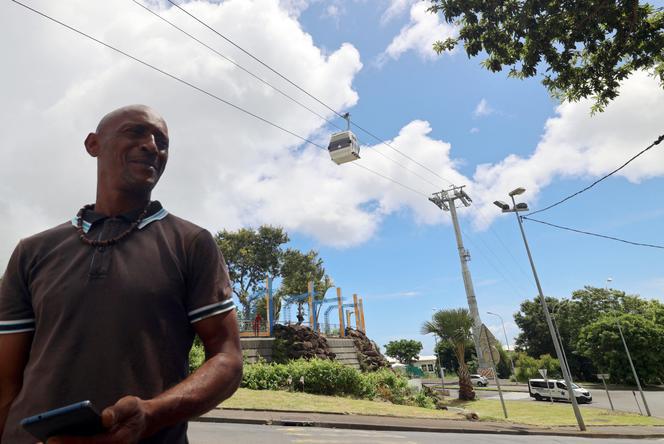
Gabon is studying a cable car project to improve urban mobility in Libreville. The 6.5 km OGÓLI link could connect Nzeng-Ayong to the Emerald City in approximately 14 minutes.
An aerial link for travel in Libreville
Urban Mobility — Gabon. The OGÓLI project envisions the creation of a cable car line between Nzeng-Ayong and the Emerald City in Libreville. The project, led by Ingénierie du Rail and OGÓLI SA, includes six stations along a route of approximately 6.5 km.
The operational objective is to offer an alternative to road travel on a route subject to the city’s traffic congestion. The projected travel time is approximately 14 minutes, compared to potentially longer journeys by road depending on traffic conditions.
The proposed route is intended to serve several areas of Libreville, including the Cité de la Démocratie (City of Democracy), Omar Bongo University, and Arambo. The network would thus be positioned as a public transportation infrastructure complementary to existing road transport options.
Cable cars in Gabon: a projected capacity of 4,000 passengers per hour
Initial projections for the project suggest a capacity of up to 4,000 passengers per hour in each direction. This capacity should allow for the handling of significant traffic flows along an urban corridor without being directly dependent on the availability of the road network.
For urban mobility in Gabon, the challenge is also linked to land use. An aerial infrastructure can cross certain urban areas without requiring the creation of new road infrastructure at ground level.
However, several parameters still need to be established before any potential implementation. Studies must specify the project’s cost, financing, economic viability, operating conditions, and maintenance requirements.
Why it matters
* Potential reduction in travel times: A journey time advertised as 14 minutes can improve the reliability of travel on the route in question.
* Transport capacity: Projections of 4,000 passengers per hour in each direction offer additional capacity for urban travel.
* Road congestion relief: Some traffic could be transferred to cable transport, provided that good connections with other modes are ensured.
A challenge of integration into the transport network
The project’s effectiveness will, however, depend on its integration with other modes of transport in Libreville. Connections with taxis, minibuses, and other public transport services will be crucial for ensuring the last mile.
The economic model will also be a key factor. The cost of transport, the necessary investments, and operating expenses must be compatible with local demand and available financing.
A trend already observed in Africa and Latin America
Cable transport is already being used as an urban mobility solution in several cities facing topographical constraints or heavy congestion. La Paz, Bolivia, and Medellín, Colombia, in particular, have cable car networks integrated into their public transportation systems.
For Libreville, the challenge will be to adapt this model to local urban traffic patterns and integrate it with existing infrastructure.
The OGÓLI cable car project in Gabon represents an additional option for managing mobility flows in Libreville. With 6.5 km of line, six stations, and a projected capacity of 4,000 passengers per hour in each direction, its viability will now depend on technical studies, financing, and its integration into the urban transportation network.