Female Leadership: Nancy Bagniakana, from a Port Child to Managing Director of Hapag-Lloyd Congo
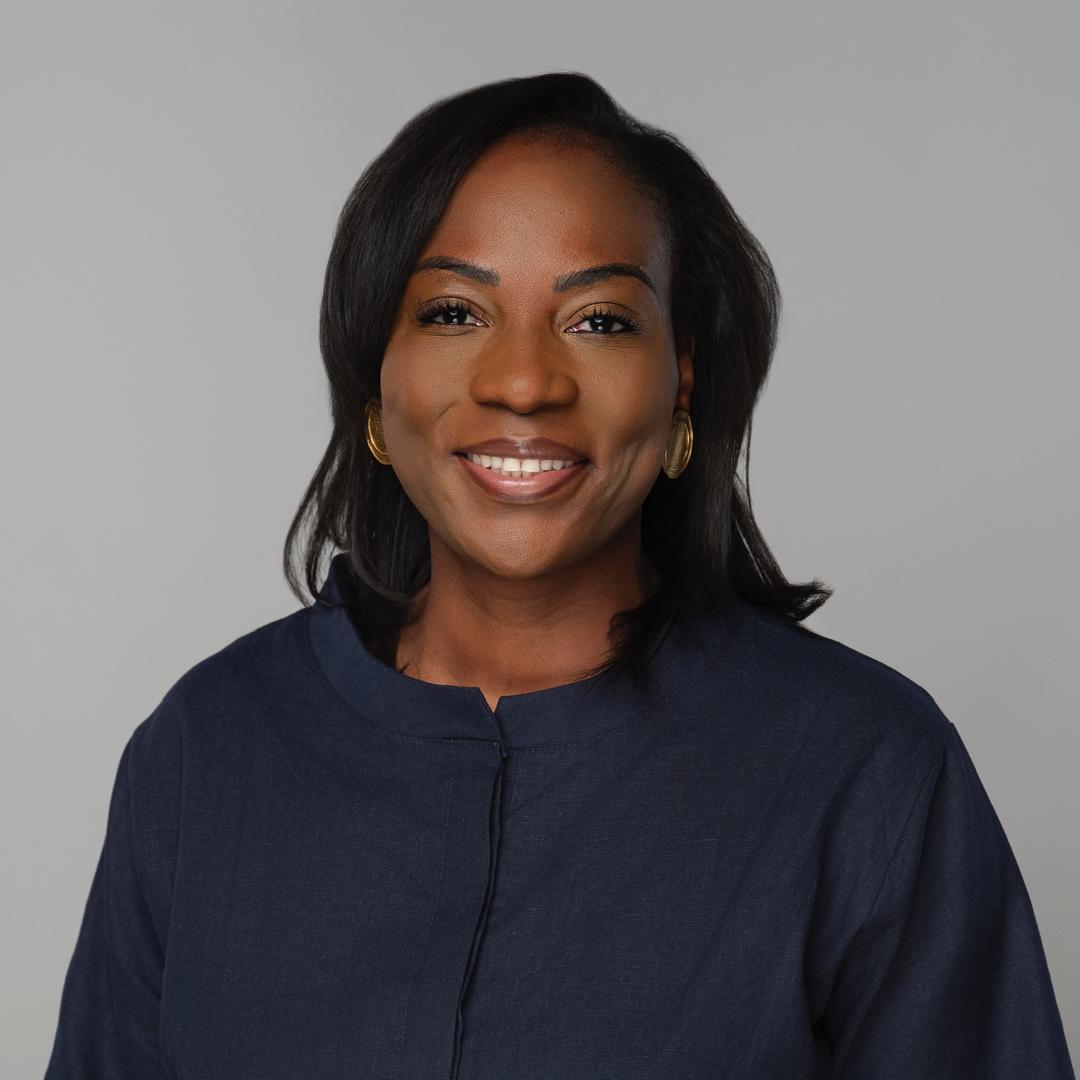
From the docks of the Port of Pointe-Noire, where she accompanied her father during her childhood, to the professional experiences that took her beyond Africa, and ultimately to the executive offices of Hapag-Lloyd Congo, Nancy Bagniakana’s journey is a story of passion, transmission, and rigor. Appointed in July 2025 as the head of the Congolese subsidiary of the world’s 5th largest shipping company, she embodies a new generation of African leaders capable of combining international standards of excellence with the agility required by local market realities.
A hands-on professional and committed leader—both in the maritime economy and in her work with children at the Cœur Céleste orphanage—she advocates for an ambitious vision of port development and regional interconnectivity as key drivers of growth for Central Africa.
In this interview with LogistAfrica, she reflects on her journey, the challenges of female leadership in the maritime sector, and the transformations needed to build a more competitive, inclusive, and globally connected industry.
Interview by Carlos Kpodiefin
1. Could you introduce yourself to our readers and walk us through your career path, highlighting the key milestones that led you to leadership positions?
My name is Nancy Bagniakana, I am Congolese, based in Pointe-Noire. Today, I am a company executive, leading Hapag-Lloyd Congo, the world’s 5th largest shipping company. I have been working for 15 years to connect cities and capitals of Central Africa with the rest of the world.
If I had to highlight three key moments in my career, I would first say that one of the foundational elements dates back to my childhood. I was fortunate to have a father who worked throughout his career in the maritime world, both at sea and in port operations, and a mother who also built her career in the logistics sector. From a very young age, I stepped aboard different types of ships with my siblings and discovered the world of maritime transport through a child’s eyes. By taking me to the Port of Pointe-Noire where he worked, my father clearly planted a seed in me.
The second key moment was in 2012, marking my professional return to Pointe-Noire. After completing my studies in logistics and maritime transport in France, I joined the Dutch shipping company Niledutch in Antwerp. I quickly had the opportunity to join the Pointe-Noire office at a time when the then Managing Director was building his team and was keen to recruit Congolese talent. There, I met the General Manager, who became a role model and mentor, and who trusted me. With him, I learned to operate in an international environment, meeting the standards and expectations of a large group while understanding the realities on the ground and the specific challenges of the Congolese context. He also encouraged me to step خارج my comfort zone. He emphasized the importance of deeply understanding operations: going into the field, to the port, and engaging with operational teams. This experience profoundly shaped the way I manage today.
The third key moment came in July 2025, when I was appointed to lead Hapag-Lloyd Congo. It is a challenge that crowns 15 years of experience in the field. It is both a major responsibility and a recognition of the work accomplished over the years.
2. From Pointe-Noire, you manage the operations of one of the world’s leading shipping companies. What are your main responsibilities today, and how do you balance global standards with the realities of the African market?
As the head of Hapag-Lloyd Congo, my responsibility is to lead my teams in achieving our strategic objectives. My role requires finding the right balance between the standards of an international group and the realities on the ground, which are unique to each market. Like everywhere else, this demands agility and adaptability—without ever compromising the quality of our work or a value that is very important to me: integrity.
It also requires a strong ability to communicate and educate all my stakeholders, both locally and internationally. On a daily basis, I advise and support our clients. My actions must help us increase our market share and, above all, accelerate the development of the maritime transport sector in Congo, contributing to the influence of the Port of Pointe-Noire.
3. You advocate for port modernization and regional interconnectivity as key priorities for Central Africa. Why are these levers so important?
Port modernization and the development of regional interconnections help reduce logistics costs, integrate markets, open up landlocked areas, and stimulate economic growth in Central Africa. Modernizing and digitizing our processes allow us to reduce transport costs and delays, making us more competitive and more attractive to foreign investment.
In Central Africa, several countries do not have direct access to the sea. Regional interconnections (roads, railways, logistics corridors) help link ports to inland capitals and industrial zones, facilitate the export of natural resources, and reduce the economic isolation of landlocked regions.
I believe that both maritime and land routes are essential to accelerating the development of our region.
4. If you had to summarize your vision for logistics development in Central Africa in one sentence, what would it be?
Diversifying routes, interconnecting cities, and building national and then regional champions will enable us to increase our weight in global trade.
5. As a female leader in the maritime sector, what specific challenges have you faced throughout your career? Did you ever have to prove yourself more to establish your legitimacy?
I have been fortunate that my skills and experience have always earned me the trust of my clients, partners, and supervisors. We are in a sector where performance is easily measurable and where there is no room for pretense. My legitimacy is built on my 15 years of experience.
6. Do you think the role of women is truly evolving in the African maritime sector today? What concrete actions can international companies take to promote women’s access to leadership positions?
I am seeing more and more women with well-built career paths and strong experience. They are often discreet, but they contribute daily to the sector’s development. I believe they should speak up more about their journeys to inspire others.
Companies should highlight these profiles and competencies to attract new talent.
7. What advice would you give to a young African woman who wants to build a career in logistics or maritime transport?
Go into the field from the very beginning to master the fundamentals of the profession. Before leading, you must have solid grounding and a strong understanding of each step in the value chain. If the field holds no secrets for you, you will be better equipped to think strategically.
8. You are also involved in social initiatives through the Cœur Céleste orphanage. How does this commitment complement your professional journey?
I am aware that I have been fortunate to have access to opportunities. I am convinced that talent exists everywhere and that life paths are shaped by encounters and opportunities—something that some people lack.
I have had the privilege to study and discover the world, and I cannot think about my journey without giving back and opening doors for others. The Cœur Céleste orphanage, founded by my mother and of which I am very proud, is my way of positively impacting other life paths. This involves giving two precious things: time and love to children who will become the future builders of our country and continent.