Suez Canal Economic Zone: Egypt plays its logistics card on the global stage
Traffic through the Suez Canal is recovering after a period of major disruption. Cairo is now positioning the SCZONE as its primary lever for integration into global value chains.
At a high-level roundtable held on April 21, 2026 in Cairo — attended by an OECD delegation, government officials and private sector partners — Egypt’s Minister of Planning and Economic Development Ahmed Rostom reaffirmed the strategic role of the Suez Canal Economic Zone (SCZONE) as an integrated platform combining trade, logistics and industrial production.
Infrastructure & capacity
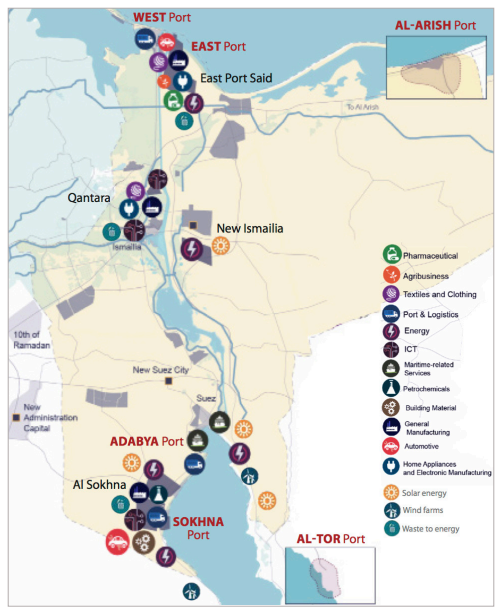
The SCZONE operates six ports, four industrial zones, multimodal transport links and advanced digital systems. It sits on a corridor handling roughly 30% of global trade and 20% of international container traffic — giving it a pivotal role in the movement of goods between Asia, Europe and Africa. The zone’s value, officials stressed, lies not only in its location but in its ability to connect production, logistics and exports within a single integrated system.
Traffic recovery
Following disruptions driven by Red Sea geopolitical tensions, traffic figures show a clear recovery trajectory: +8.6% in Q1, +24.2% in Q2, and +25.6% in the most recent period. This rebound is already translating into lower transaction costs, reduced supply chain bottlenecks and improved investor confidence.
Over the first half of the year, container volumes rose 19% year-on-year while vessel traffic climbed 16%. These figures support the ramp-up expected across SCZONE industrial zones and their integration into global supply chain networks.
Why it matters
- The traffic recovery concretely reduces transit times and surcharges linked to Cape of Good Hope rerouting — costs that weighed heavily on African and European operators throughout the disruption period.
- With six ports and connected industrial zones, the SCZONE offers investors a rare window to combine local production with direct access to global shipping lanes.
- For African regional supply chains, the restoration of Suez Canal capacity sends a positive signal on import lead times and costs from Southeast Asia.
Regional outlook
The normalisation of Suez Canal traffic eases pressure on several African logistics corridors, particularly Asia–East Africa flows that had shifted to longer maritime routes. For countries such as Djibouti, Kenya and Ethiopia, the effective reopening of the Suez corridor lowers freight costs and shortens industrial supply lead times. Within the AfCFTA framework, the SCZONE could also emerge as a regional hub for African exports to Europe and Asia.
The SCZONE is no longer playing solely on geography. It is betting on vertical integration — production, logistics, export — at a time when supply chain resilience has become a commercial argument in its own right. The recovery figures validate the strategy. The next step: converting this traffic momentum into lasting industrial anchorage.