Togo Plans 2027 Launch of Railway Link Between Lomé Port and Adétikopé Industrial Platform
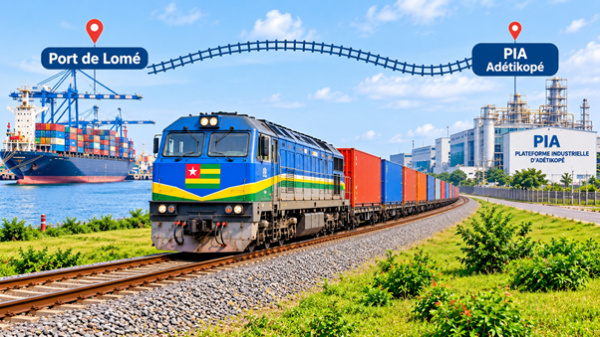
Togo plans to launch a railway connection between the Port of Lomé and the Adétikopé Industrial Platform (PIA) in 2027. The project is expected to facilitate container transfers, reduce reliance on road transport and improve cargo evacuation. It is part of a logistics development programme backed by US$200 million in funding from the World Bank Group.
A Railway Connection to Improve Freight Flows Between Lomé and Adétikopé
Rail & Freight Transport – Togo. The Togolese government has included the start of the railway link between the Port of Lomé and the Adétikopé Industrial Platform in its 2027–2029 budget programme.
The project falls under the Transport and Logistics Services Improvement Programme (PASLT). Its objective is to improve coordination between port operations and the storage, cargo handling and industrial activities carried out at the PIA.
The Port of Lomé currently handles vessel arrivals, cargo unloading and port operations. The Adétikopé platform, meanwhile, provides storage and cargo-handling facilities, including infrastructure for receiving containers and helping ease congestion at port facilities.
The planned railway connection is intended to transfer part of these cargo volumes by rail, complementing existing road transport services.
Port of Lomé–PIA: Reducing Road Transport Costs and Pressure
The main operational objective is to improve container movements between the two facilities. A railway connection could reduce the number of truck trips required to move containers and ease pressure on road routes linking the port to the industrial zone.
For road transport operators, this development could reshape freight distribution patterns and demand along the route. For port operators and logistics companies, it would provide an additional option for coordinating cargo unloading, storage and onward transportation.
Companies based at the PIA could also benefit from improved access to supply chains. Raw materials, industrial equipment and production inputs could be transported more directly from the port. Finished products could then be integrated into domestic and regional distribution networks.
The US$200 million financing provided by the World Bank Group is part of the PASLT, which aims to strengthen Togo’s logistics competitiveness.
Port Competitiveness: Lomé Faces Growing Regional Competition
The railway project comes as West African ports face increasing competition to attract shipping lines, terminal operators and cargo owners.
The Port of Lomé ranks 91st in the global container port ranking cited in the source, while Ghana’s Port of Tema occupies 94th position. The proximity of the two ports in the ranking highlights the growing importance of inland logistics performance in regional port competition.
Cargo evacuation times, storage capacity and transit costs are becoming increasingly important factors for shipping companies, freight forwarders and importers.
Beyond the Togolese market, the Port of Lomé also serves landlocked countries, including Burkina Faso, Niger and Mali. Better coordination between the port and the PIA could improve cargo handling and onward transportation towards these hinterland markets.
Why This Matters
– Reduced dependence on road transport: Rail could limit truck movements between Lomé and Adétikopé, potentially lowering cargo transfer costs.
– Improved supply chain coordination: A direct connection would facilitate coordination between port handling, storage and industrial operations.
– Stronger regional transit capacity: More efficient cargo movements could support freight distribution towards landlocked West African markets.
2027 Timeline Still Depends on Key Project Details
Including the project in the 2027 programme marks progress in the government’s planning process. However, several important details remain to be clarified, including the railway alignment, route distance, construction costs, detailed implementation schedule, operating arrangements and expected freight volumes.
The procurement and contract award process is also expected to be announced at a later stage. The project’s inclusion in the budget programme therefore does not mean that construction contracts have already been awarded.
For Togo, the challenge will be to turn the railway connection into an effective tool for improving port and industrial competitiveness. Its impact will depend on competitive freight rates, appropriate service frequencies and efficient connections with regional distribution networks.