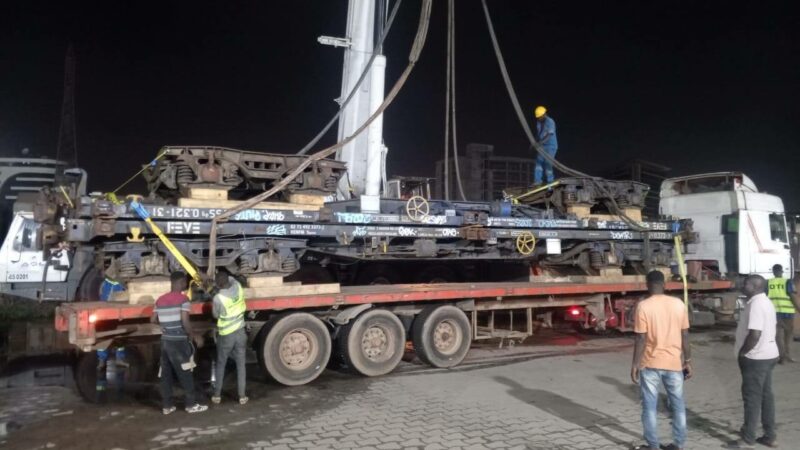

Road Transport in Benin: End of the Awareness Phase, Zero Tolerance for Truck Overloading
The Beninese government has moved to enforce a systematic crackdown on overloaded trucks in Benin and the circulation of oversized vehicles nationwide. Following an awareness phase in 2025, security forces are now instructed to apply sanctions strictly under existing regulations.
Full Enforcement of Axle Load Regulations
In a joint statement, the Minister of Living Environment and Transport for Sustainable Development and the Minister of the Interior and Public Security reiterated that truck overloading and oversized vehicle operations are strictly prohibited across the national territory communique-mcvt-interdiction-pr….
The measure is grounded in Decree No. 2011-713 of 21 October 2011, which sets loading conditions and applicable penalties.
Under Article 12, offenders face:
- Financial fines
- Vehicle impoundment
- Judicial prosecution in case of repeat offences
Units of the Republican Police have been formally instructed to carry out systematic enforcement against violators, with no additional grace period communique-mcvt-interdiction-pr….
From Awareness to Enforcement
Between July and October 2025, awareness campaigns were conducted by the Agence nationale des Transports terrestres (ANaTT), in collaboration with the Centre national de la Sécurité routière (CNSR) and the Directorate General of the Republican Police communique-mcvt-interdiction-pr….
Despite these preventive measures, authorities reported a resurgence of violations.
The policy shift is clear: moving from education to immediate sanction.
Operational Impact on Logistics and Regional Corridors
The enforcement drive will have direct implications for transport operators:
- Lower payloads per truck
- Potential increase in trip frequency
- Short-term adjustment in freight costs
For operators active along key corridors toward Niger, Burkina Faso and Nigeria, compliance with axle load and dimension standards becomes non-negotiable.
In the medium term, authorities aim to:
- Reduce premature road degradation
- Lower accident risks linked to overloading
- Protect public investments in road infrastructure
As Benin continues upgrading strategic road axes and handling growing transit flows, axle load control becomes both a fiscal and supply chain sustainability issue.
Why It Matters
- Infrastructure protection: Overloading accelerates pavement deterioration.
- Road safety: Oversized and overloaded trucks increase accident risks.
- Long-term competitiveness: A degraded road network structurally raises logistics costs.
Regional Perspective: Toward Stricter Corridor Compliance in West Africa?
Overloading remains a structural challenge across several West African corridors, despite regional axle load standards.
Benin’s stricter enforcement could strengthen regulatory credibility and encourage better harmonisation across neighboring countries, reducing competitive distortions between strict and permissive regimes.
With the systematic enforcement of rules against overloaded trucks in Benin, authorities have shifted from awareness to action. Transport operators must immediately adjust loading practices. Beyond penalties, the objective is to secure the national road network and safeguard long-term logistics performance.