Rail Transport: Traxtion Invests R3.4 Billion in the Modernisation of Freight Rail in South Africa
Traxtion, a major freight rail player on the continent, has confirmed a massive investment programme of 3.4 billion rand (around 178 million dollars) for the acquisition and modernisation of rolling stock. This commitment—the largest ever made by a private actor in South Africa’s freight rail sector—aims to cover roughly 5% of the national capacity shortfall while prioritising local industrialisation and job creation.
A Historic Investment Focused on Local Content
The programme is split into two components: 1.8 billion rand for locomotives and 1.6 billion rand for wagons. According to Traxtion CEO James Holley, this represents a clear vote of confidence in South Africa’s rail reform.
The initiative has been structured to maximise local value:
-
Local Content: A minimum target of 60% local content has been set for the entire programme.
-
Jobs: At least 662 permanent direct jobs are expected to be created during manufacturing, assembly, and commissioning phases.
-
Wagons: All wagons for this project are expected to be manufactured by domestic suppliers.
“This investment is our vote of confidence in South African rail and in the momentum of reform we are witnessing,” said James Holley.
Modernisation and Accelerated Deployment of Rolling Stock
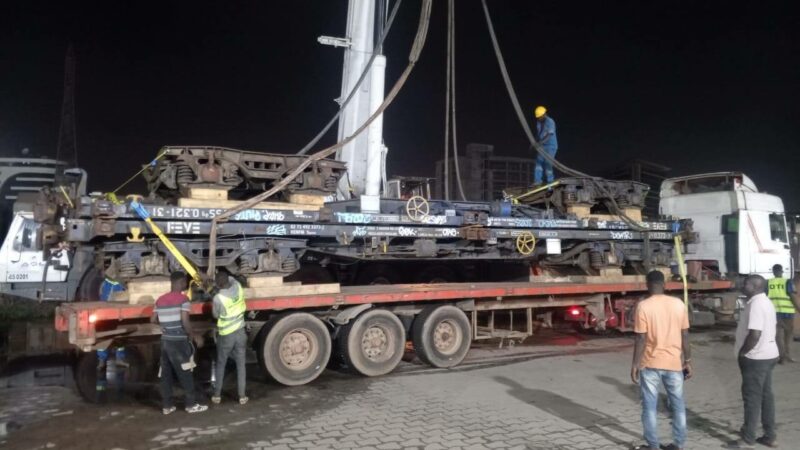
The investment covers, among other elements, the acquisition of 46 Wabtec diesel-electric locomotives from KiwiRail in New Zealand.
-
Locomotives: The batch includes 42 U26C locomotives (partially modernised) and four C30-8MMI locomotives (fully modernised).
-
Upgrades: The 42 U26C units will be transformed to C30MEI specification, integrating new, more fuel-efficient 7FDL-EFI engines and advanced Brightstar control systems, thus improving traction performance and reliability.
All modernisation work will be carried out at Traxtion’s Rail Services Hub in Rosslyn, reinforcing local manufacturing and skills transfer.
Deployment will take place in four phases between April 2026 and August 2027. The first modernised units are expected to enter service as early as the third quarter of 2026, marking the historic entry of Traxtion trains onto South Africa’s mainline network.
Supporting Reform and Demanding Certainty
Traxtion’s announcement comes as South Africa implements its rail reform framework, which includes the separation of infrastructure and operations.
James Holley welcomed the progress but also set clear conditions for unlocking future investment:
“The next Rail Access Agreement must be fully bankable, with service level guarantees for allocated slots, balanced legal protections, and a clear recognition of lenders’ rights.”
This investment is viewed by Harith—an investor in Traxtion for many years—as “a new benchmark for how private investment, aligned with policy certainty and local value creation, can deliver transformative outcomes for South Africa and the continent,” according to Harith CEO Sipho Makhubela.
A Replicable African Model
Traxtion, which already operates in 10 African countries with a fleet of more than 50 locomotives, is building on its success in third-party access regimes on regional corridors such as TAZARA and in the DRC, where rail volumes have increased significantly.
“When trains run efficiently, the whole economy moves,” Holley concluded. This programme aims to demonstrate that private-sector investment, when aligned with reform, can deliver rapid and measurable gains for South Africa’s freight sector and generate multiplier effects across the mining, agriculture, and manufacturing industries.