Algeria: GENERAL PROCUREMENT NOTICE for the Laghouat–Ghardaïa–El Menéa railway line, 495 km serving the logistics competitiveness of the Grand South
Algeria is entering a new major phase in the modernization of its transport infrastructure with the launch of a General Procurement Notice (GPN) for the construction of the Laghouat–Ghardaïa–El Menéa railway line, spanning 495 kilometers. Financed with the support of the African Development Bank (AfDB) and the Asian Infrastructure Investment Bank (AIIB), this flagship railway project lies at the heart of the country’s national strategy to open up the Grand South and strengthen its overall logistics competitiveness.
A railway project with strong territorial and economic impact
Designed as a strategic corridor, the future railway line aims to sustainably connect the wilayas of Laghouat, Ghardaïa and El Menéa to Algeria’s main national transport corridors. These regions, which host significant agricultural, mining and energy production basins, continue to be constrained by high logistics costs and a heavy reliance on road transport.
Through this project, Algerian authorities seek to reduce transport times and costs along the Algiers–El Menéa corridor, while improving the fluidity of freight flows and population mobility. Rail is thus being repositioned as a key instrument of territorial development, as well as a long-term driver of economic competitiveness.
Rail at the core of the logistics and environmental strategy
Against a backdrop of rising environmental requirements and the search for more sustainable supply chains, the Laghouat–Ghardaïa–El Menéa project also addresses key objectives related to energy transition and greenhouse gas emission reduction. The modal shift from road to rail is expected to limit the carbon footprint of domestic transport, while offering a safer, higher-capacity solution better suited to mass freight flows.
For Algeria, the project also represents an opportunity to modernize its railway infrastructure and enhance the attractiveness of rail freight, a segment that remains underdeveloped despite its strategic potential for the national supply chain.
An integrated and multisectoral project architecture
The project is structured around three complementary core components.
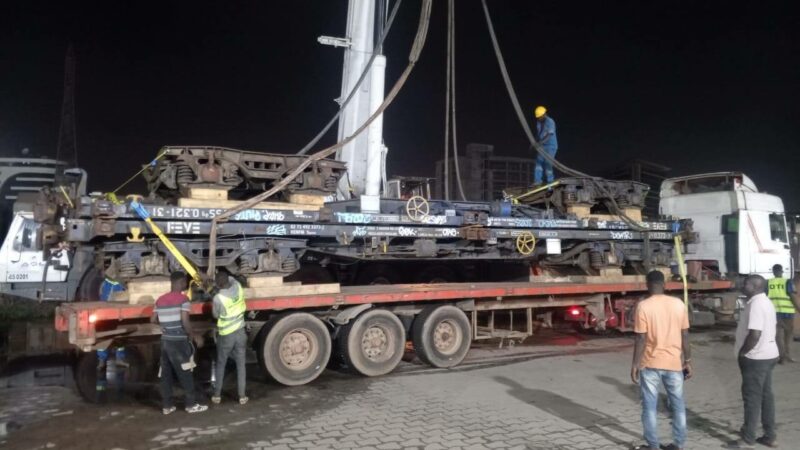
Component A focuses on the construction and upgrading of the railway line, including civil engineering works, relocation of technical constraints, implementation of environmental and social measures, and the acquisition of rolling stock (locomotives, wagons and passenger coaches). It also covers works supervision, monitoring and land acquisition operations.
Component B, dedicated to integrated developments, aims to maximize the project’s local economic impact. It includes the development of ancillary infrastructure along the corridor, the implementation of training programs for railway-related professions, particularly targeting young people and women, as well as targeted local economic development initiatives.
Component C is devoted to program management and institutional support. It covers project management assistance, multisectoral studies, socio-economic impact monitoring and evaluation, technical, financial, environmental and social audits, as well as communication and project governance activities.
A strong signal to companies and investors
With the publication of the General Procurement Notice, Algeria is officially opening the door to the mobilization of national and international companies specializing in construction, railways, logistics, multimodal transport and related services. Procurement procedures will be conducted in accordance with African Development Bank rules, ensuring transparency and competition.
Tender documents are expected to be available from January 2026, a timeline now closely monitored by sector operators. Beyond construction works, the project also offers opportunities in agribusiness, logistics services and the development of economic activities along the railway corridor.
National integration and social inclusion
Beyond its infrastructure dimension, the Laghouat–Ghardaïa–El Menéa railway line is intended as a tool for national integration. It is expected to help bridge the gap between northern Algeria and the Grand South, improve accessibility to remote areas and strengthen social cohesion. The project also aims to generate sustainable employment, both during the construction phase and throughout the operation of the line.
For logistics and supply chain stakeholders in Africa, this project illustrates Algeria’s determination to be part of a broader continental dynamic aimed at developing resilient, sustainable and competitive transport corridors, capable of supporting trade growth and Africa’s industrialization.