Côte d’Ivoire: Abidjan Metro and BRT Projects Advance to Transform Urban Mobility
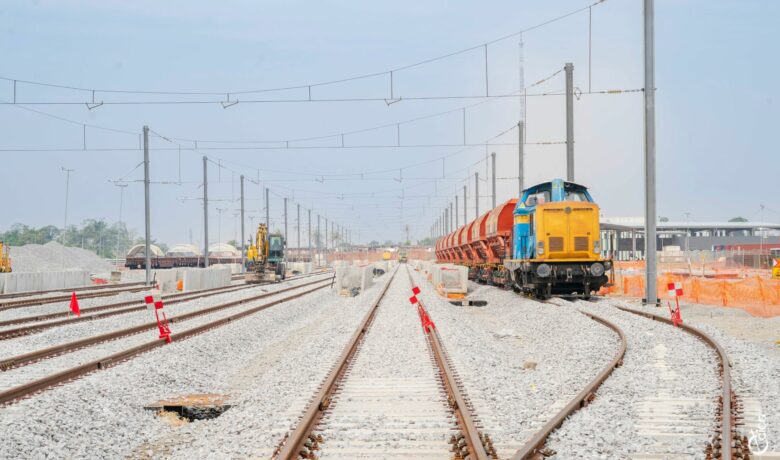
Urban Mobility – Côte d’Ivoire. Construction of Abidjan’s Metro Line 1 and the Yopougon–Bingerville Bus Rapid Transit (BRT) system is progressing, with both projects expected to reshape passenger transport across the economic capital. Together, they are designed to increase public transport capacity, reduce travel times and improve connections between major urban areas.
Metro Line 1 reaches 66% completion
As of November 11, 2026, construction of Abidjan Metro Line 1 had reached an overall completion rate of 66%. Civil engineering works were approximately 80% complete, while track installation and systems deployment stood at 55%.
The 37.4-kilometre line will connect Anyama to Port-Bouët, crossing seven municipalities: Anyama, Abobo, Adjamé, Plateau, Treichville, Marcory and Port-Bouët. The project includes 18 stations and is intended to provide a major alternative to road transport in an urban area with more than six million inhabitants.
The planned service will operate with a fleet of 25 to 30 trains, each capable of carrying approximately 1,300 passengers. Once fully operational, the line is expected to handle around 540,000 passengers per day.
Technical testing of the trains is scheduled for late 2028, ahead of commercial operations planned for January 2029.
The construction project also has a significant local employment dimension. More than 2,000 Ivorians are working on the site, including approximately 200 engineers and nearly 150 young women.
Yopougon–Bingerville BRT project progresses
The second major project is the Yopougon–Bingerville BRT corridor, which is designed to strengthen public transport connections across Abidjan.
As of November 9, 2026, construction had reached 35% completion. The 20-kilometre route will include 20 stations and use high-capacity electric buses.
The BRT system aims to reduce journey times to less than 30 minutes, compared with the current one to one-and-a-half hours on some journeys.
Its planned capacity is approximately 500,000 passengers per day. The project, valued at CFAF 316 billion, includes 11 engineering structures, pedestrian bridges and transport interchange facilities designed to connect passengers with taxis, shared minibuses known locally as gbakas, and the future metro network.
Infrastructure works are expected to be completed by the end of 2028, with passenger services scheduled to begin in 2029.
Why these projects matter for Abidjan’s transport system
The Metro Line 1 and BRT projects are intended to address three major challenges:
– Reducing road congestion: Shifting a significant share of daily passenger journeys to mass transit could ease pressure on Abidjan’s road network.
– Improving urban connectivity: Interchange facilities between the metro, BRT, taxis and gbakas should make journeys across the metropolitan area more integrated.
– Supporting economic activity: More reliable travel times could improve access to employment areas, commercial centres and logistics-related activities.
A combined capacity approaching one million passengers per day
With a projected capacity of approximately 540,000 passengers per day for the metro and 500,000 for the BRT, the two systems could offer a combined transport capacity of around one million passenger journeys daily.
However, achieving this target will depend on operational reliability, service frequency, network integration and the ability to attract passengers away from private vehicles and informal transport services.
For Abidjan, the challenge will therefore extend beyond completing construction. The long-term impact of these investments will depend on how effectively the two networks are integrated into the city’s wider transport system.