Côte d’Ivoire: Abidjan Metro Line 1 Reaches 66% Completion, Operations Expected in January 2029
Urban Mobility – Côte d’Ivoire. Construction of Abidjan Metro Line 1 was estimated to be 66% complete as of 11 November 2026. The project is scheduled to enter service in January 2029, with a target capacity of 540,000 passengers per day along a 37.4-kilometre north-south route.
Construction reaches 66% as 2029 commissioning target approaches
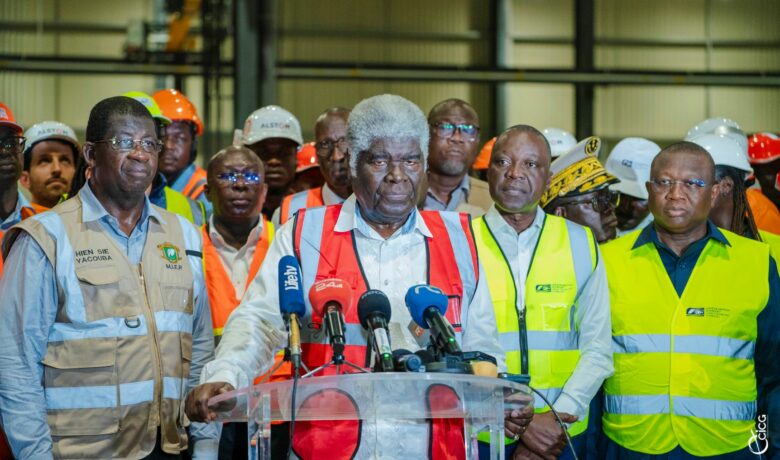
Ivorian Prime Minister Robert Beugré Mambé visited the Abidjan Metro construction site on Wednesday, 11 November 2026. During the visit, he announced that the project had reached an estimated 66% completion rate, with commercial operations expected to begin in January 2029.
The project is designed to address growing congestion on the road network of Côte d’Ivoire’s economic capital. It will provide a north-south rail connection between Anyama and Port-Bouët, serving several densely populated residential and commercial areas.
The line will cover 37.4 kilometres and include 18 stations. It will pass through seven municipalities: Anyama, Abobo, Adjamé, Plateau, Treichville, Marcory and Port-Bouët.
Daily capacity targeted at 540,000 passengers
The operational plan предусматриes a fleet of 25 to 30 trains, each with a capacity of up to 1,300 passengers.
The system is expected to handle approximately 540,000 passengers daily. This capacity is intended to reduce pressure on Abidjan’s road network, particularly during peak commuting hours, while improving travel reliability between major residential and economic centres.
For businesses, the project could improve employee mobility, access to commercial districts and connections between key economic areas. Better transport links are also expected to facilitate daily movements between residential neighbourhoods, administrative centres and business districts.
Construction generates jobs and commercial opportunities
According to figures released by the government, more than 2,000 Ivorians are already employed on the construction project. The authorities expect the development to generate more than 5,000 jobs in total, including 2,000 permanent positions.
Beyond passenger transport, the government also intends to develop commercial activities around major stations. Private-sector operators are being encouraged to invest in commercial spaces integrated into the railway infrastructure.
This approach could create opportunities in retail, distribution, food services and station-area commercial operations.
Why it matters
-
Urban traffic management: The metro is expected to reduce dependence on road transport along one of Abidjan’s busiest north-south corridors.
-
Economic competitiveness: Improved employee mobility could strengthen business accessibility and reduce the operational constraints associated with urban congestion.
-
Private investment: The 18 stations could become new commercial hubs, creating opportunities for local businesses and service providers.
A strategic urban transport project for West Africa
Abidjan Metro Line 1 is part of a broader effort to develop high-capacity public transport systems in West African cities. Across the region, rapid urbanisation and growing road congestion are increasing the need for integrated transport infrastructure.
For Abidjan, the project’s long-term impact will depend on adherence to the construction schedule, the availability of rolling stock, operational reliability and integration with existing public transport services.
With construction estimated at 66% and commissioning scheduled for January 2029, Abidjan Metro Line 1 is approaching a critical stage of development. Its target capacity of 540,000 passengers per day could significantly reshape urban mobility in Côte d’Ivoire and improve the economic attractiveness of the municipalities along its route.