Tunisia Plans to Acquire 621 New Buses to Strengthen Public Transport and Connect Underserved Regions
ROAD TRANSPORT | TUNISIA
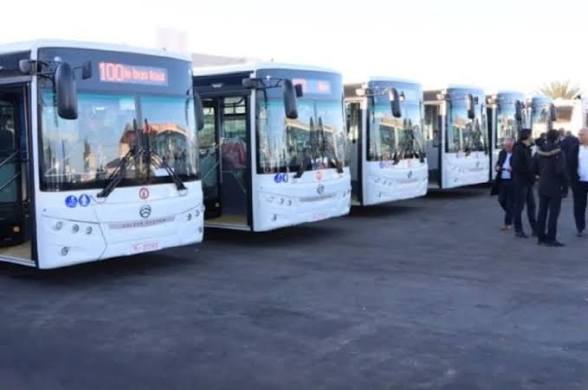
Tunisia plans to acquire 621 new buses in 2026 as part of a public transport fleet renewal programme. The initiative combines investment in rolling stock, preventive maintenance and digitalisation to improve urban, regional and intercity transport services.
621 new buses to strengthen transport capacity
Road Transport — Tunisia.The Tunisian government has authorised the acquisition of 621 new buses for regional transport companies and the National Intercity Transport Company (SNTRI).
The procurement will be conducted through an international tender as part of the 2026 programme. It aims to address persistent mobility challenges linked to an ageing fleet, insufficient vehicle availability and weaknesses in the country’s public transport infrastructure.
The programme covers four categories of vehicles designed to meet different transport requirements:
– Standard buses: for urban and regional transport services.
– Articulated buses: primarily for school, university and vocational transport.
– Minibuses: to improve access to underserved and geographically isolated regions.
– Air-conditioned buses: for intercity services, strengthening connections between regions and districts.
The government intends to distribute the vehicles equitably across the country’s regions, based on clearly defined allocation criteria. The immediate operational objective is to increase service availability and improve passenger connections between urban centres.
Maintenance and digitalisation to improve fleet performance
Beyond vehicle procurement, the government plans to introduce a dedicated maintenance programme covering both newly acquired buses and vehicles already in operation.
This measure addresses a structural challenge facing Tunisia’s public transport system: the limited availability of part of the fleet and rising costs associated with repairs and vehicle maintenance.
The programme will include regular monitoring of maintenance operations and compliance with scheduled servicing requirements. For transport operators, the objective is to reduce vehicle downtime, control operating costs and improve service continuity.
A second component focuses on the digitalisation of transport operations.
The authorities plan to adjust service schedules according to actual passenger demand and introduce digital applications to improve fuel consumption management, maintenance planning and inventory control.
Passenger information systems will also be upgraded through three main tools:
– Information screens at major bus stations.
– Smartphone applications.
– An online portal providing real-time arrival information and transport schedules.
These systems are expected to improve service visibility and help passengers plan their journeys more efficiently.
Tunisia’s public transport reform goes beyond bus procurement
The government’s strategy extends beyond road transport. The Head of Government has also highlighted the need to restructure public transport companies, strengthen corporate governance and upgrade supporting infrastructure.
Rail transport, particularly urban and intercity services, remains a strategic component of this reform.
The authorities intend to improve coordination between road and rail networks, recognising the potential economic advantages of rail transport for certain passenger flows.
This approach will require better integration between bus routes, railway services and passenger interchange infrastructure.
Why this matters
Transport capacity: The additional 621 buses are expected to expand available capacity and improve connections to underserved areas.
Operational efficiency: Preventive maintenance and digital management systems could reduce vehicle downtime, improve fuel management and increase service reliability.
Regional economic connectivity: Better intercity transport can facilitate access to employment centres, educational institutions and commercial activities.
Regional perspective: A wider North African mobility challenge
Across North Africa, public transport fleet renewal is becoming an important issue for urban mobility, regional connectivity and economic competitiveness.
For Tunisia, the success of this programme will depend on procurement timelines, financing availability, maintenance capacity and the ability of public transport companies to operate the additional vehicles efficiently.
Coordination between road and rail services will also be essential to avoid fragmented investment and improve the overall performance of the transport network.
Tunisia is therefore combining the acquisition of 621 new buses with broader operational reforms aimed at improving public transport capacity, regional accessibility and fleet performance.