Ghana Rail Freight Shift: 3,198 Containers Railed to Kpone Terminal as Fleet Expansion Accelerates
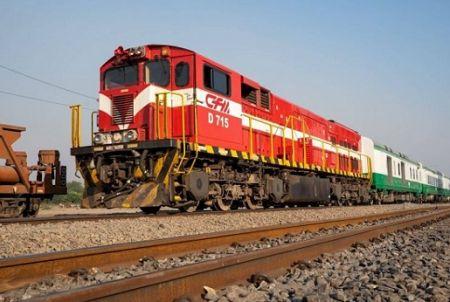
Ghana’s rail freight segment is gaining operational traction following the movement of over 3,100 containers to the Kpone Unity Terminal. This logistics shift is being backed by targeted rolling stock acquisitions aimed at clearing port congestion around Tema.
Ghana Rail Freight Accelerates Container Evacuation from Tema Port
WHAT: The newly introduced freight rail service has moved 3,198 containers from the Port of Tema to the Kpone Unity Terminal (KUT).
WHERE: Ghana, along the critical logistics corridor connecting the Tema port complex to the Kpone inland terminal, as well as the Tema–Mpakadan line.
WHEN: Cumulative volumes were recorded from the formal rollout of freight operations in September 2026 through early November 2026.
WHO: The operation is spearheaded by the Ghana Railway Development Authority (GRDA), headed by CEO Dr. Frederick Appoh, in coordination with freight forwarders and the Importers and Exporters Association of Ghana (IEAG).
Supply Chain & Freight Logistics: Ramping Up Network Capacity
Since freight operations officially launched in September 2026, the GRDA has maintained a steady ramp-up in haulage capacity. The service initially established a daily throughput of approximately 220 containers, primarily transferring empty units out of Tema Port to KUT to relieve yard congestion.
On the infrastructure front, the 97-kilometer standard-gauge railway between Tema and Mpakadan—built at a cost of $447 million through a credit facility from the Export-Import Bank of India—serves as the backbone of this multimodal setup. To operate the corridor, the GRDA initially deployed two locomotives and 20 flatbed wagons acquired under its budgetary allocation.
To secure commercial cargo volumes, the authority signed off-take agreements with logistics providers, including International Service Solution. Under these arrangements, containers are railed to Mpakadan on Lake Volta, where Ivorian trucking fleets take over long-haul road transport for cross-border delivery.
Fleet Expansion and Corridor Outlook
To reduce reliance on heavy road transport, the GRDA’s procurement pipeline includes one additional locomotive scheduled for delivery by December 2026, alongside plans for two more locomotives and 30 wagons assigned to the Tema–Mpakadan route and the Western Line.
The planned Western Line extension aims to transport manganese from Nsuta directly to Takoradi Port while establishing a transit corridor via Hamile toward landlocked markets like Burkina Faso. Infrastructure planning for the Boankra Inland Port in the Ashanti region is also advancing to support inland cargo distribution.
Why It Matters
Port Decongestion: Shifting container transfers from road to rail directly reduces traffic bottlenecks surrounding the Port of Tema and nearby off-dock terminals.
Supply Chain Cost Efficiency: Integrating rail off-take agreements with inland water and cross-border road transport creates a structured, cost-effective multimodal route.
Infrastructure Preservation: Diverting heavy container traffic onto rail reduces wear and tear on Ghana’s primary highway corridors and lowers highway accident risks.
Regional Logistics Dynamics
This operational shift aligns with broader West African efforts to optimize trade corridors and lower land transport costs. As Ghana’s freight system has historically over-relied on trucking, establishing functional rail links between sea ports and inland hubs provides a scalable competitive edge for regional supply chains operating under the AfCFTA framework.
The expansion of rail freight in Ghana offers a concrete proof-of-concept for modal shift strategies designed to secure supply chain flow. Long-term efficiency for the GRDA will now depend on scheduled rolling stock deliveries and tight operational alignment between customs, port authorities, and private logistics operators.