Minister of Transport Participates in the “Urban Development and Planning” Session at Egypt Forum 2026
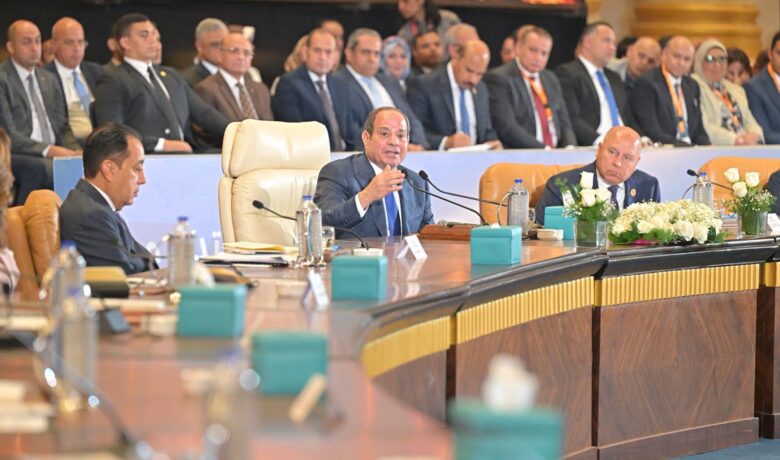
Under the auspices of His Excellency Abdel Fattah El-Sisi, President of the Arab Republic of Egypt, the Minister of Transport participates in the “Urban Development and Planning” session at Egypt Forum 2026.
The Minister emphasized that:
Transport projects are not limited to roads, bridges, railway lines and ports. They are major drivers of economic, urban and social development, as well as improvements in citizens’ quality of life.
Transport has become an essential component of urban planning, as it makes new cities viable, attractive to investment and capable of attracting residents and economic activities.
The provision of modern, safe and reliable public transport services with high service standards has successfully attracted passengers while reducing dependence on private cars and traditional means of transport.
Under the auspices of His Excellency Abdel Fattah El-Sisi, President of the Republic, and in the presence of Dr Mostafa Madbouly, Prime Minister, Lieutenant General Engineer Kamel El-Wazir, Minister of Transport, participated in the “Urban Development and Planning” session at Egypt Forum 2026.
The session also brought together Dr Manal Awad, Minister of Local Development and Environment; Engineer Randa El-Menshawy, Minister of Housing, Utilities and Urban Communities; as well as several members of the House of Representatives, experts, university professors and students.
Transport as a Driver of Economic and Urban Development
At the beginning of his address, the Minister emphasized a fundamental principle: the State does not view transport projects as merely road, bridge, railway or port infrastructure, but rather as drivers of economic, urban and social development.
These infrastructures are also essential tools for redistributing economic activities and population across the country, connecting production centres with markets and ports, and improving citizens’ quality of life.
The Minister then outlined the main challenges facing the various transport sectors before the launch of the comprehensive modernisation programme.
In the railway sector, these challenges included ageing rolling stock, deteriorating infrastructure and stations, outdated signalling and control systems, and poorly maintained level crossings. Workshops and maintenance equipment were also inadequate. Furthermore, the metro network remained limited to its first two lines, despite continuous population growth, while its equipment and systems had become outdated.
Egyptian ports were also experiencing deteriorating infrastructure, particularly quays and port yards. The accumulation of submerged objects and shipwrecks had reduced water depths alongside some quays, limiting the ports’ ability to accommodate large vessels. These challenges were compounded by the absence of an integrated master plan for Egyptian ports, a lack of expansion plans for areas behind the ports, and the limited capacity of the national maritime fleet.
In response to these challenges, the State launched an unprecedented urban development programme in 2014, alongside a new approach to the transport sector.
The objective was no longer simply to build additional roads in already congested areas. Instead, the strategy focused on several parallel priorities: modernising the transport network, expanding public transport, opening up new development corridors, and connecting new cities with employment centres, services, educational institutions and production areas.
Development of the Road and Bridge Network
Regarding roads and bridges, the Minister explained that the challenges facing the sector were addressed through the planning and construction of an integrated network of roads, transport corridors and bridges.
The programme includes:
31,000 km of roads;
73 transport corridors and bridges crossing the Nile;
54 bridges constructed over railway level crossings;
2,500 bridges and tunnels at intersections along major roads.
These projects have helped improve traffic flow and road quality. According to figures presented by the Minister, they have also contributed to Egypt’s improvement in the global road quality ranking, with the country moving up 100 places, from 118th to 18th.
For the next phase, the objectives are to:
Continue modernising and upgrading the main road network, expressways and highways;
Improve local roads across the governorates;
Continue maintaining the existing road network according to a defined schedule;
Enforce axle-load and vehicle-weight regulations across roads and bridges;
Complete the programme for constructing bridges over railway level crossings;
Develop a programme for constructing pedestrian footbridges over major roads and expressways.
Metro, Electric Transport and Sustainable Urban Mobility
The Minister stressed that the State’s strategy extends beyond road modernisation to the development of an integrated network of sustainable, environmentally friendly public transport systems.
Achievements include:
The completion of three metro lines;
The completion of the first and second phases, as well as part of the third phase, of the Light Rail Transit (LRT) system;
The construction of the East Nile Monorail;
The completion of the first and second phases of the Bus Rapid Transit (BRT) project along the Cairo Ring Road.
Work is continuing on urban transport projects in Cairo and Alexandria. These include the completion of the first phase of Metro Line 4, the West Nile Monorail, the Alexandria Metro and the Raml Tram.
At the same time, the State is developing a high-speed electric train network with a planned total length of 2,250 km, designed to transport both passengers and freight. According to the Minister, once completed, this network would position Egypt as the fifth-largest country in the world in this field.
Three lines of the network, covering a total of 2,000 km, are currently under construction.
For the next phase, the objective is to complete the strategic plan for sustainable, environmentally friendly public transport through the continuation of several projects, including:
Metro Lines 4 and 6;
The West Nile Monorail;
The third and fourth phases of the Light Rail Transit system;
The second and third lines of the high-speed electric train network;
Other projects included in the national strategic plan.
Modernisation of the Railway Network
The Minister explained that the objective of the railway programme was not simply to increase the number of trains, but to modernise the entire system comprehensively and in an integrated manner.
The progress achieved results from the implementation of a railway modernisation programme based on six components:
Renewing rolling stock, including locomotives and passenger coaches;
Modernising infrastructure, including railway stations;
Constructing new railway lines and doubling existing tracks;
Renewing railway tracks;
Modernising level crossings, signalling systems and railway control systems;
Developing and constructing production workshops, strengthening human resources, and implementing financial and administrative restructuring.
For the next phase, the objective is to complete the modernisation of the existing railway network, which extends over 10,000 km, as well as the new railway lines being developed to serve industrial areas.
These projects include the following lines:
Robeiki – Tenth of Ramadan – Belbeis;
Manashi – 6th of October City;
Bir al-Abed – Al-Arish – Taba.
Other new lines are also planned under the programme.
The Minister highlighted the cities of Tenth of Ramadan and 6th of October as prominent examples of the importance of integrating transport infrastructure with urban development.
He emphasised the strategic role of the Robeiki – Tenth of Ramadan – Belbeis railway line, the Light Rail Transit system, the high-speed electric train network, the West Nile Monorail and the expansion of the metro network, particularly Metro Line 4.
These projects aim to connect new cities with existing urban centres, industrial areas and export ports. According to the Minister, completing these projects is expected to accelerate population growth and industrial development in these new urban communities.
Development of Maritime Transport and Port Logistics
The Minister also presented the maritime transport and logistics development programme, which focuses on modernising Egyptian ports along the Red Sea and Mediterranean coasts and constructing five new ports.
The strategy is expected to increase the total number of Egyptian commercial ports to 19.
The programme includes:
Expanding total port areas to 100 million square metres;
Constructing new berths with a combined length of 70 km and depths ranging from 18 to 25 metres;
Increasing the total length of port berths to more than 100 km;
Constructing 35 km of breakwaters, bringing their total length to 50 km;
Deepening navigation channels;
Developing and expanding the marine tugboat fleet to reach 80 vessels.
These projects aim to increase the total annual handling capacity of Egyptian ports to 40 million TEUs (twenty-foot equivalent units) for containers and 400 million tonnes of miscellaneous cargo.
The maritime development programme also includes strengthening the Egyptian maritime fleet, with a target of 40 vessels by 2030. These vessels will be fully owned by companies affiliated with the Ministry of Transport.
The objective is to increase the fleet’s capacity to transport 25 million tonnes of various goods annually, corresponding to Egypt’s needs for strategic commodities.
During the next phase, the State intends to continue implementing port construction and modernisation projects, including the ports of El-Meks, Gargoub, Al-Arish and Taba, alongside other planned port infrastructure projects.
Land Ports, Dry Ports and Logistics Zones
In the field of land ports, dry ports and logistics zones, the Minister stated that two land ports had been completed, bringing the total number of land ports in Egypt to nine.
Meanwhile, a programme to establish 33 dry ports and logistics zones is currently underway.
The objective for the next phase is to complete the remaining dry port and logistics zone projects to strengthen the integration of the transport system and facilitate the movement and handling of goods.
The Minister also recalled that the State had planned and begun implementing eight integrated international development and logistics corridors.
These corridors connect ports along the Red Sea and Mediterranean coasts with dry ports, logistics zones, industrial areas, agricultural regions and mining areas through highways, the railway network and high-speed electric train lines.
They are designed to provide more efficient freight transport routes and strengthen connections with the Gulf countries, the Levant, North Africa, East Africa and Central Africa, as well as European and Asian markets. These connections will be supported in particular by the Northern and Southern Arab Trade Corridors.
The Economic, Social and Environmental Benefits of Transport Projects
Addressing the economic, social and environmental impact of transport projects, the Minister emphasised that their value should not be measured solely by the number of kilometres of infrastructure constructed.
Instead, their assessment should be based on three complementary categories of benefits:
Economic benefits:supporting investment, production and the development of value-added activities.
Social benefits:creating jobs, reducing travel times, improving accessibility and enhancing service quality.
Environmental benefits:reducing fuel consumption and emissions, improving air quality and protecting citizens’ health.
The Minister presented several projects illustrating these benefits.
The Kalabsha Corridor across the Nile
This development corridor was constructed to reduce travel time between the eastern and western banks of the Nile and provide an alternative to ferry crossings.
It also helps reduce the distance between Nile crossing points to 25 km, compared with 100 km previously.
The Robeiki – Tenth of Ramadan – Belbeis Railway Line
This new railway line is intended to serve the industrial and residential areas of Tenth of Ramadan and Robeiki, while connecting them to the New Administrative Capital.
The Light Rail Transit (LRT) System
Presented as an environmentally friendly public transport system introduced in Egypt for the first time, the LRT connects several new urban communities and industrial areas.
It serves El-Obour, Mostakbal City, El-Shorouk, New Heliopolis, Badr, Robeiki, Capital Gardens, Zahra of the Capital, the New Administrative Capital and Tenth of Ramadan City, while providing connections to Cairo.
The Greater Alexandria Port Project
This project is an example of port modernisation aimed at transforming Egypt into a regional hub for transport, logistics and transit trade.
The Dry Port and Logistics Zone in 6th of October City
These facilities illustrate the State’s new approach to developing dry ports and logistics zones.
Their purpose is to reduce congestion at maritime ports, improve cargo handling and facilitate customs clearance.
The Dabaa Corridor: An Integrated Model of Economic, Social and Environmental Benefits
The Minister provided a detailed overview of the economic, social and environmental impact of the Dabaa Corridor, which directly connects Cairo to Egypt’s northern coast over a distance of 300 km and reduces travel time to approximately two and a half hours.
According to the Minister, the corridor is an example of infrastructure that supports both agricultural and urban development.
Studies presented during the session indicate that development associated with the corridor has enabled the reclamation of approximately 200,000 feddans of agricultural land and attracted investments estimated at around EGP 8 billion between 2014 and 2025.
The urban development sector accounted for approximately 87% of these investments, while the agricultural sector represented around 13%.
Development associated with the corridor also reportedly generated 381,000 jobs, with the agricultural sector accounting for the largest share.
Furthermore, annual fuel savings are estimated at approximately EGP 2 billion.
These indicators demonstrate that the corridor’s role extends beyond facilitating transport. It supports agricultural and urban expansion, reduces travel costs and fuel consumption, and illustrates the integrated development impact of transport infrastructure projects.
Prioritising Transport Projects
The Minister explained that the State does not assign the same priority to all transport projects. Instead, projects are prioritised according to a set of objective criteria, including:
Economic returns and development benefits;
Population size and density;
The project’s ability to connect cities and production centres with ports, markets and export centres;
Its integration with other components of the transport network;
Its impact on travel time, transport costs and safety levels;
Its social and environmental impact.
He stressed that project assessments should not focus exclusively on construction costs. They should also address a broader question: “What is the cost of not implementing the project?”
Delaying road modernisation projects can lead to continued infrastructure deterioration, higher maintenance and operating costs, and missed economic opportunities. It can also delay other investments that depend on the completion of the transport network.
Similarly, postponing public transport network projects can prolong traffic congestion and result in losses of time, fuel and productivity. Delaying a development corridor can also postpone land development, the expansion of production areas and job creation.
In the railway sector, postponing projects means allowing rolling stock and infrastructure to deteriorate further, increasing the risk of accidents and limiting the network’s ability to accommodate population growth and the needs of consumption centres, industrial zones and export areas.
In maritime transport and logistics, failure to modernise ports would result in continued deterioration of quays and infrastructure, limited capacity to accommodate very large vessels, and cargo congestion caused by insufficient port space. It would also contribute to the ageing of the Egyptian maritime fleet and undermine its capacity to transport the country’s strategic commodities.
Strengthening Local Manufacturing for the Transport Sector
Finally, the Minister stated that the State was expanding domestic manufacturing of equipment and components required for railways, metro systems and electric traction through several specialised factories and industrial complexes.
These industrial projects form part of the State’s strategy to establish a national industrial base capable of meeting the needs of the transport system, reducing dependence on imported components and increasing value added within the Egyptian economy.