Comoros Maritime Transport: 70.9% of Planned Activities Completed.
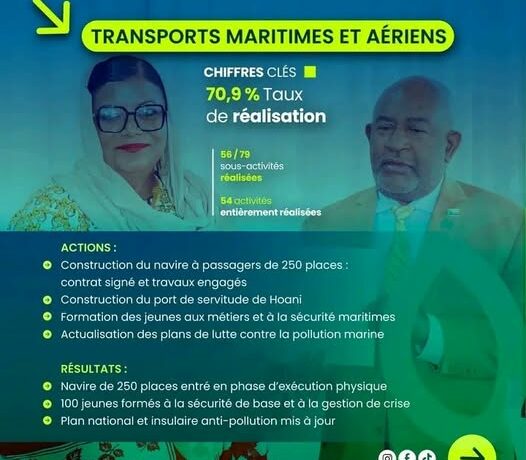
Ports & Maritime — Comoros: the maritime and air transport sector has achieved a 70.9% implementation rate, with 56 of the 79 planned sub-activities completed. The programme focuses on port infrastructure, inter-island transport, maritime safety and workforce training.
Maritime Programme Reaches 70.9% Implementation
Ports & Maritime — Comoros: the latest government assessment shows that 56 out of 79 planned sub-activities have been implemented, including 54 fully completed. The programme covers several areas of maritime and air transport, with infrastructure and safety among the main priorities.
One of the key projects is the construction of a 250-passenger vessel. The contract has been signed and physical work has now started.
The vessel is expected to strengthen passenger transport capacity between the islands. In an island country where maritime transport is essential for inter-island mobility, additional vessel capacity could help improve service availability and facilitate passenger movements.
Port Infrastructure and Maritime Capacity
The Hoani service port is another major project included in the programme. Its construction is intended to strengthen port capacity and improve maritime operating conditions.
For operators, the issue is mainly one of capacity and the ability to handle maritime flows more efficiently. Improved infrastructure could also reduce operational constraints affecting services between the islands.
These investments are taking place in a market where the movement of passengers and goods depends heavily on the reliability and capacity of maritime connections.
Maritime Safety and Training for 100 Young People
The programme also includes a workforce development component. One hundred young people have been trained in basic safety and crisis management, strengthening the pool of personnel available for maritime activities.
The training addresses an operational requirement: having workers capable of responding to incidents and applying safety procedures in maritime operations.
Authorities have also updated the national and island-level marine pollution response plans. The updated mechanisms are designed to improve preparedness and coordination in the event of pollution incidents affecting maritime areas and infrastructure.
Why It Matters
- Maritime capacity: the 250-passenger vessel could increase available inter-island transport capacity.
- Port performance: the Hoani service port is expected to improve maritime operating capacity and infrastructure.
- Safety: training for 100 young people and updated pollution response plans strengthen operational preparedness.
Regional Perspective in the Indian Ocean
Comoros operates within a regional maritime environment where port infrastructure and reliable shipping connections influence the movement of people and goods. Improving maritime capacity could therefore strengthen the connectivity of the islands and their links with regional markets across the Indian Ocean.
With 70.9% of planned activities completed, Comoros is advancing several projects related to maritime transport, port infrastructure and safety. The construction of the 250-passenger vessel and progress on the Hoani port will be key indicators of whether these investments translate into greater maritime capacity and more reliable inter-island services.