Kano-Maradi: Nigeria-Niger Railway Project Targets 2026 Completion
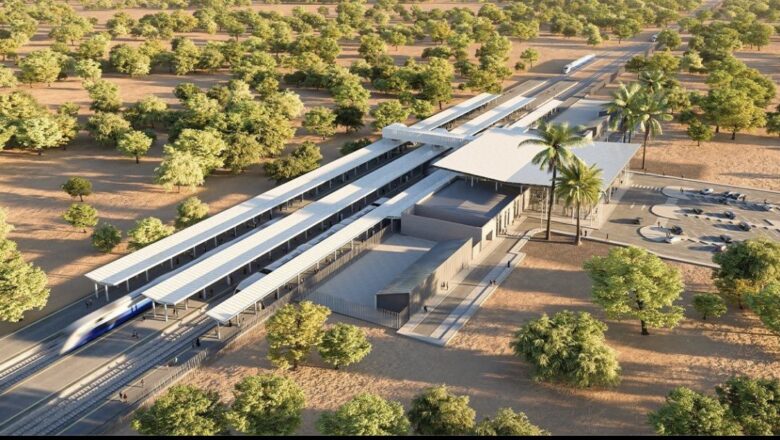
Rail & Freight — Nigeria and Niger: the Kano-Maradi railway project, valued at $1.9 billion, is designed to strengthen transport links between northern Nigeria and southern Niger. As of January 16, 2025, around 35% of the works had reportedly been completed, with completion targeted for 2026.
502-km railway corridor between Kano and Maradi
The Kano-Maradi railway project covers approximately 502 kilometres, linking Kano to Katsina in Nigeria, with an extension to Maradi in Niger. The project includes 19 railway stations, six maintenance facilities and 52 bridges.
The operational objective is to establish an additional rail connection for freight and passenger movements between the two countries. For freight operators, the line could provide an alternative to road transport on selected routes and improve the regularity of cross-border shipments.
The project is being developed in an area where road transport currently plays a major role in moving goods. A direct railway connection could gradually shift part of these flows from road to rail, particularly for commodities suitable for long-distance rail transport.
$1.9 billion investment in the Kano-Maradi railway project
The Kano-Maradi railway project has an announced investment value of $1.9 billion. Its financing includes a $350 million loan from the African Development Bank (AfDB).
Nigeria has also signed a contract reportedly valued at $1.8 billion with Mota-Engil for the design and construction of the railway.
The project still faces several implementation challenges. Long-term financing, security along the construction areas and compliance with environmental requirements remain important factors for the delivery schedule.
Why it matters
- Freight flows: The railway could provide additional freight capacity between northern Nigeria and Niger.
- Costs and transit times: Shifting part of the freight from road to rail could reduce pressure on certain road routes and improve transport predictability.
- Cross-border trade: The Kano-Katsina-Maradi connection could facilitate trade between the two neighbouring markets and strengthen regional logistics links.
A railway link within the wider West African corridor network
The Kano-Maradi railway corridor forms part of a broader effort to develop transport infrastructure across West Africa. For logistics operators, the key challenge will be to connect the railway efficiently with road networks, warehouses, logistics platforms and border posts.
The line’s actual logistics performance will therefore depend not only on the railway infrastructure itself, but also on how freight operations are organised at connecting points. Customs coordination and the efficiency of cross-border procedures will also be critical.
With an announced investment of $1.9 billion, the Kano-Maradi railway project is intended to establish a new transport link between Nigeria and Niger. Its impact on freight flows, logistics costs and cross-border trade will depend on the completion of the works and the railway’s integration into the wider regional transport network.