

Angola: a 7.9-hectare logistics platform planned in Luau on the Lobito corridor
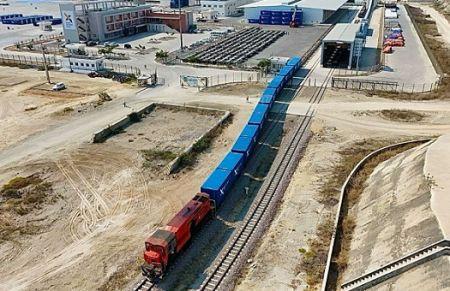 Regional Corridors — Angola. A 7.9-hectare logistics platform is planned for Luau, in Moxico province, at the eastern end of the Lobito Corridor. The project aims to strengthen storage, transshipment, and distribution capacities along this rail line connecting the port of Lobito to the border with the Democratic Republic of Congo (DRC).
A Logistics Platform at the End of the Lobito Corridor
The project is included in the Lobito Corridor Master Plan, developed by the IDOM/Globaltec consortium for the Angolan authorities. The information was reported by the Angolan news agency ANGOP on August 19, 2026.
According to data published on the official Lobito Corridor website, the construction, equipping, and initial infrastructure of the Luau Logistics Platform represent an estimated investment of $17.4 million.

The complex is expected to integrate several logistics functions. It includes ambient temperature storage facilities, with an initial announced capacity of approximately 583 tons, as well as a fuel terminal and a minerals terminal.
Industrial spaces are also planned for activities related to grain milling and precast concrete production, as well as for the agricultural, livestock, forestry, and mining sectors.
New infrastructure for the Lobito corridor
Luau’s location is strategic. The city is situated at the eastern end of the Benguela railway line and serves as a transit point to the DRC. The corridor connects the mining areas of Central Africa to the port of Lobito on Angola’s Atlantic coast.
The platform is designed to bring storage, transshipment, and distribution operations closer to the border areas. For operators, the goal is to reduce disruptions in the supply chain and better manage the transition between rail transport, road transport, and local logistics operations.
The project also includes connections to several modes of transport, notably road, with a possible link to rail.
Why it matters:
Logistics capacity: The facility adds storage and processing capacity to the eastern end of the corridor.
Streamlined flows: Bringing logistics operations closer to the border can reduce some transshipment and improve the organization of shipments.
Regional integration: Luau can serve as a hub for trade between Angola, the DRC, and, eventually, Zambia.
A corridor seeking to diversify its flows
The Lobito corridor has historically been associated with the transport of copper and cobalt ores from the DRC and Zambia to the Atlantic. But the development of logistics platforms along the corridor also aims to increase agricultural, industrial, and general merchandise flows.
To the west, the port of Lobito serves as the maritime gateway to the corridor. The corridor’s official website indicates that the port is connected to inland cities by the Benguela railway and serves as a gateway to the markets of the DRC and Zambia.
The Angolan government plans to launch a public tender for the concession of the Luau platform, covering its design, construction, operation, and commercial management. The envisaged contract would be for a period of 30 years, following the completion of initial studies and projects.
For transport and supply chain stakeholders, the next step will therefore be the transition from the master plan to the actual implementation of the infrastructure. The Luau logistics platform will primarily need to demonstrate its capacity to handle regular volumes and to effectively connect the rail, road, and cross-border flows of the Lobito corridor.