South Africa: Western Cape Pilots Free Digital Toolkit to Professionalise Road Freight Operations
Western Cape moves to make RTMS more accessible to freight operators
The Western Cape Department of Mobility has launched a fully funded pilot of a digital toolkit designed to help freight operators improve road safety, compliance and operational management. Up to 10 companies will be able to participate in the pilot at no cost.
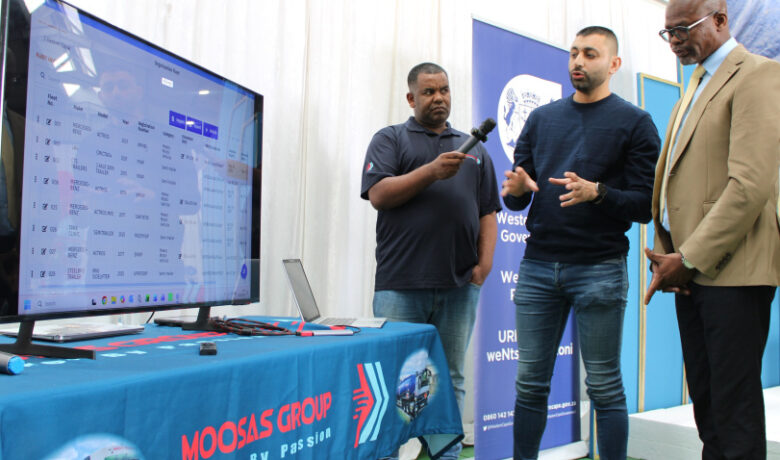
The initiative was presented on 20 August 2026 during Western Cape Mobility Minister Isaac Sileku’s visit to Moosa’s Group in Milnerton, one of the first companies to test the toolkit in its day-to-day operations.
The programme is particularly aimed at small and medium-sized freight operators, for whom preparing for the Road Transport Management System (RTMS) can be time-consuming and difficult to navigate.
Bringing RTMS preparation tools into one platform
The RTMS digital toolkit brings together practical guidance, templates, self-assessment tools, training resources and improvement-planning support.
Rather than requiring operators to identify and organise different resources themselves, the toolkit provides them with a single framework to assess their current systems and identify areas requiring improvement.
The areas covered include vehicle maintenance, driver management, road safety, record-keeping, fleet management and regulatory compliance.
Importantly, the toolkit does not replace RTMS certification. It is intended as a practical support mechanism to help operators prepare for RTMS requirements and progressively strengthen their management systems.
Moosa’s Group provides a real-world test environment
Moosa’s Group is among the first freight companies participating in the pilot. Its day-to-day use of the toolkit will provide the Western Cape Department of Mobility with practical feedback on its usability and relevance to freight operations.
For the operator, the initiative provides a structured approach to strengthening vehicle inspections, driver management, maintenance procedures and record-keeping, while helping identify operational gaps.
The experience will also help determine what adjustments may be needed before the toolkit is potentially rolled out more widely across the freight industry.
A support programme, not an enforcement exercise
The Western Cape government has stressed that the pilot is not an audit or enforcement exercise.
Participating companies will instead work directly with the Department to understand their existing systems, identify areas for improvement and provide feedback on the digital tool.
The pilot can accommodate up to 10 freight operators, with the toolkit and initial support fully funded during the testing phase.
This approach could be particularly relevant for smaller operators that may lack dedicated compliance or fleet-management teams.
Why the initiative matters for African road freight
1. Supporting SME professionalisation
Digital management tools can help smaller transport companies adopt more structured approaches to safety, maintenance, documentation and compliance.
2. Improving fleet and safety management
Better monitoring of vehicle maintenance and driver-management processes can help reduce operational risks, unplanned downtime and compliance gaps.
3. A model with potential beyond the Western Cape
The pilot raises a broader question for road transport in Africa: how can governments and industry make safety and operational management frameworks easier and less costly for small and medium-sized freight operators to adopt?
Digitalisation is becoming an operational issue
For shippers and supply chain managers, road freight performance is not determined solely by truck availability. Vehicle condition, driver management, documentation, compliance and the ability to maintain consistent operating procedures are increasingly important factors in supply chain reliability.
This is particularly relevant in African markets, where road transport remains a critical link between ports, production centres, distribution hubs and regional trade corridors.
Against this backdrop, the Western Cape initiative goes beyond the introduction of another digital tool. It is an experiment in using digital resources to lower the barriers to better management practices among freight operators.
If successful, the lessons from the pilot could provide useful insights for other African markets seeking to improve road freight safety, fleet efficiency and supply chain reliability without imposing disproportionate compliance costs on smaller operators.
Western Cape invites freight operators to participate
The Department of Mobility is inviting interested freight and transport operators to participate in the pilot and test the toolkit in real operating conditions.
Companies interested in improving their safety systems, compliance readiness, record-keeping, fleet management and operational processes can register their interest through the Western Cape freight information platform.