Mozambique: ten Indian locomotives to power Southern Africa’s rail corridors
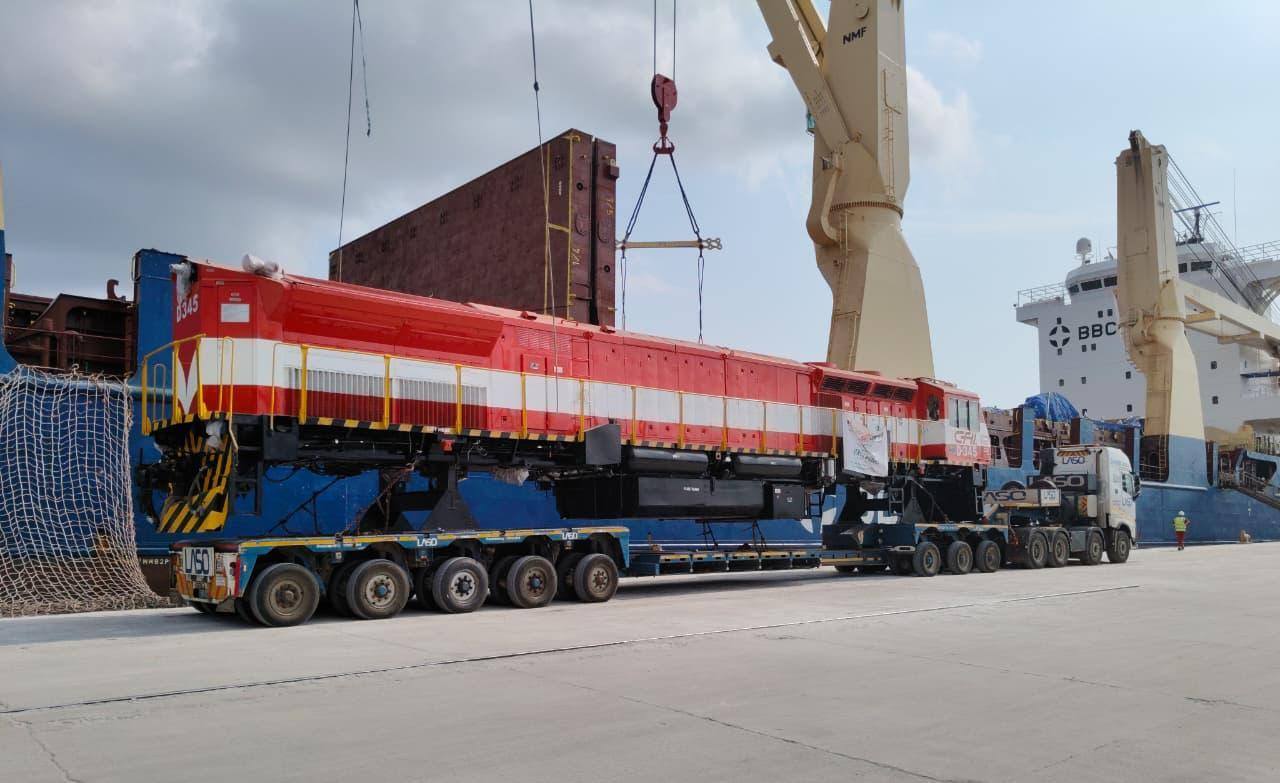
State rail operator Caminhos de Ferro de Moçambique has completed the delivery of ten diesel-electric engines built in India. The acquisition is part of a $219 million national rail investment programme running to 2030.
State-owned Caminhos de Ferro de Moçambique (CFM) has taken delivery of the final two units in a ten-locomotive order, produced by Banaras Locomotive Works (BLW) in Varanasi, India. The contract, managed by export agency RITES, was completed in April 2026, with initial deliveries dating back to mid-2025. The engines run on Cape Gauge track (1,067 mm), the dominant standard across Southern Africa, and are rated at 3,300 horsepower with a top speed of 100 km/h.
Operational context
CFM operates three strategic rail corridors linking the ports of Maputo, Beira and Nacala to the interior of the continent. These routes carry mining and agricultural flows from Zimbabwe, Malawi and Zambia — landlocked countries whose export capacity depends directly on the performance of Mozambique’s rail network.
Corridors served
The added traction capacity addresses rising cross-border freight demand, as regional supply chains actively seek to reduce dependence on South African logistics platforms — themselves subject to persistent infrastructure reliability issues.
2030 investment programme
This locomotive order is one component of a 14-billion meticais programme — approximately $219 million — announced in April 2025 and co-financed by the African Development Bank. The broader plan also covers the procurement of 250 additional freight wagons and 30 passenger coaches, alongside continued upgrades to the Ressano Garcia line.
Why it matters
- For landlocked neighbours — Zimbabwe, Malawi, Zambia — greater traction capacity on Mozambican corridors directly shortens export transit times and lowers port handling costs.
- India’s entry as a rail supplier via BLW and RITES offers African Cape Gauge networks a credible alternative to European or Chinese rolling stock.
- AfDB co-financing validates the regional dimension of the project and may accelerate similar procurement programmes elsewhere on the continent.
Regional outlook
Mozambique is gradually emerging as a logistics alternative to South African ports Durban and Richards Bay, both facing recurring congestion and reliability challenges. CFM’s strengthened freight capacity enhances the competitiveness of Beira and Nacala, already targets of significant port investment in recent years. Within the AfCFTA framework, a more capable Mozambican rail network stands to improve the fluidity of intra-regional trade flows across Southern Africa.
Ten locomotives is a concrete operational signal in a region where the rail link remains the bottleneck in many supply chains. Mozambique is not playing a one-off hand: the 2030 programme commits the country to a sustained trajectory as a regional logistics hub — provided execution matches ambition.