Lobito Corridor: The United States Formalizes a USD 553 Million Loan for the Lobito Atlantic Railway
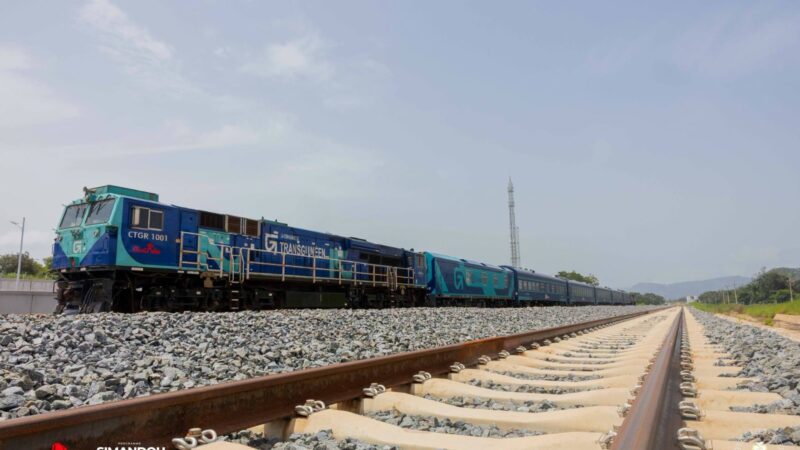
The U.S. International Development Finance Corporation (DFC) has signed a USD 553 million loan agreement in support of the Lobito Atlantic Railway (LAR), a major investment aimed at rehabilitating 1,300 kilometers of railway infrastructure to strengthen logistics competitiveness in Central Africa and reduce reliance on existing monopolies.
The signing ceremony was held in Washington, in the presence of Ben Black, CEO of the DFC, Caleb Orr, Assistant Secretary of State for Economic, Energy, and Business Affairs, along with several senior African and industry leaders, including Angolan Minister of Transport Ricardo D’Abreu, Mpho Mokwele, CEO of the Development Bank of Southern Africa (DBSA), Richard Holtum, CEO of Trafigura, and Manuel Mota, Deputy CEO of Mota-Engil.
A Strategic Logistics Corridor at the Heart of Southern Africa
The financing will enable the rehabilitation of the now-defunct Lobito mineral port, as well as an approximately 1,300-kilometer railway line linking Lobito to Luau, on Angola’s eastern border. This corridor represents a key logistics artery for the export of critical minerals not only from Angola, but also from the Democratic Republic of the Congo (DRC) and Zambia, two countries endowed with strategic mineral resources.
According to estimates, the joint investment by the DFC and the DBSA is expected to increase the corridor’s transport capacity tenfold, reaching 4.6 million tonnes per year, while reducing logistics costs for critical mineral transport by up to 30%.
A Lever for Regional Logistics Competitiveness
For Angolan authorities, the project represents a structural turning point. Minister of Transport Ricardo Viegas D’Abreu emphasized the historic nature of the agreement, both in terms of its financial scale and its strategic impact.
“This financing sets a major benchmark for access to U.S. capital. It will enable Lobito Atlantic Railway to strengthen its operational capabilities and operate the corridor at full potential, supporting sustainable economic growth in Angola and across the wider region,” he said.
The project is part of a broader multimodal infrastructure development strategy, combining rail and port assets to streamline logistics flows and strengthen regional integration in Southern Africa.
A Major Geopolitical and Industrial Stake
Beyond its local economic impact, the Lobito Corridor holds strategic importance for the United States. Central Africa concentrates a significant share of critical minerals essential to technology and defense industries, including copper, cobalt, and other strategic metals.
For Ben Black, CEO of the DFC, the investment illustrates the U.S. commitment to building long-term partnerships across the African continent:
“The signing of this loan agreement demonstrates the United States’ commitment to strengthening strategic infrastructure, supporting sustainable economic growth, and securing reliable supply chains in the mutual interest of the United States and Africa.”
The DFC also notes that such investments help prevent the monopolization of strategic resources by competing actors, notably China, while reinforcing the resilience of global supply chains.