Ghana Opens Three Railway Corridors Covering 3,205 km to Private Investors Under PPP Framework
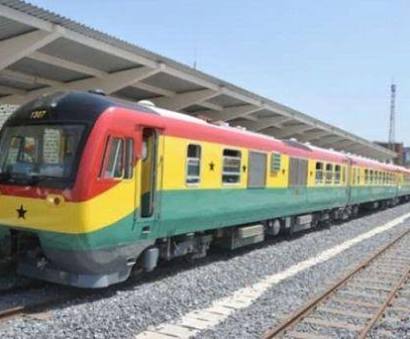
Rail & Freight – Ghana. The Ghana Railway Development Authority (GRDA) is inviting local and international investors to develop three standard-gauge railway corridors covering a combined 3,205 km under public-private partnerships (PPPs). The programme aims to connect seaports, economic centres and inland production areas, with potential extensions towards Burkina Faso.
Three railway corridors to shape Ghana’s national network
The expression of interest launched by the GRDA covers three separate lots under the proposed PPP framework.
– Western Corridor – 1,228 km: Connecting Hamile to the Port of Takoradi, this route is intended to facilitate freight movements between inland regions, production areas and the country’s western maritime gateway.
– Central Corridor – 1,262 km: Linking Accra, Boankra, Kumasi and northern Ghana, this route is expected to strengthen connections between major economic centres and logistics hubs.
– Eastern Corridor – 715 km: Connecting Tema and Keta to Paga, this route aims to improve links between eastern port facilities and inland regions.
Together, the three corridors are expected to form the backbone of Ghana’s future national railway network. They are designed to serve ports, urban centres, mining areas and agricultural production zones.
The proposed extensions towards Burkina Faso could also strengthen trade connections between Ghana’s coastline and landlocked Sahelian markets.
Long-term concessions without sovereign guarantees
Each corridor will be developed under a long-term concession based on the F-DBEOT model: Financing, Design, Build, Equip, Operate and Transfer.
The projects will rely on non-recourse project financing. The Ghanaian government has stated that it will not provide sovereign guarantees or mineral resources as security for the investments.
However, the government will facilitate the acquisition of the required rights of way, with the associated costs to be financed by the projects themselves.
Companies and consortia may submit expressions of interest for one, two or all three lots. Each proposal will be assessed separately, and shortlisted candidates will subsequently be invited to participate in a lot-specific tendering process.
At this initial stage, applicants are not required to submit detailed final designs, tariff structures, financial models or secured financing arrangements.
The process is being conducted under Ghana’s Public Private Partnership Act, 2020 (Act 1039), and the Railways Act, 2008 (Act 779).
Expressions of interest must be submitted electronically, together with signed hard copies, no later than January 24, 2027, at 4:00 p.m.
Official source: Ghana Railway Development Authority – Expression of Interest
Why this matters
An alternative to road freight: An operational railway network could reduce reliance on trucks for long-distance freight movements and diversify transport options.
Improved port connectivity: Links to Takoradi and Tema could facilitate the movement of mining, agricultural and industrial products towards maritime terminals.
Mobilising private investment: The concession model places a significant share of project financing and development risks on private investors, without announced sovereign guarantees.
A strategic opportunity for trade corridors towards the Sahel
The proposed connection to Burkina Faso gives the programme a regional dimension. A railway linking northern Ghana to ports along the Gulf of Guinea could provide an alternative freight route for landlocked countries seeking access to maritime trade.
However, this potential will depend on infrastructure delivery, cross-border railway connectivity and the competitiveness of rail transport costs compared with road haulage.
The development of Ghana’s three railway corridors therefore represents a major undertaking for national logistics and regional trade. The next step will be to identify investors capable of financing and delivering these large-scale concessions.