Guinea: Simandou 2040 Targets Investment Reforms and Economic Corridor Development
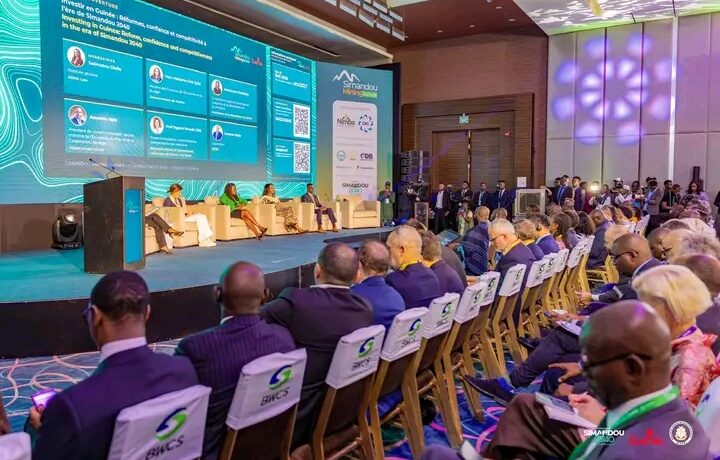
Guinea is seeking to strengthen its investment attractiveness through economic reforms and infrastructure development under the Simandou 2040 programme. Presented at the Simandou Mining Summit, the strategy places mining corridors, industrial parks and local value addition at the centre of the country’s economic transformation agenda.
A New Investment Framework to Support Simandou 2040
Trade & AfCFTA – Guinea. The Guinean government has outlined its priorities for improving the business environment during the opening panel of the Simandou Mining Summit, held in Conakry from 11 to 14 November 2026.
The panel, themed “Investing in Guinea: Reforms, Confidence and Competitiveness in the Era of Simandou 2040”, brought together Mariama Ciré Sylla, Minister of Economy, Finance and Budget, alongside economic policymakers and international experts.
A key focus of the discussions was the planned reform of Guinea’s Investment Code. The proposed framework is built around three main pillars: establishing clear and predictable regulations, introducing targeted incentives for priority sectors, and simplifying administrative procedures.
The objective is to reduce investment barriers and facilitate the financing of projects in agriculture, energy, education, tourism and financial services.
Mining Corridors and Infrastructure: An Operational Priority for Guinea
Beyond the mining sector, the Simandou 2040 programme aims to strengthen economic infrastructure and mining corridors to support the country’s industrial development.
This strategy addresses a major logistics challenge: ensuring the efficient movement of raw materials, improving freight circulation and connecting production areas to transport infrastructure and commercial markets.
The development of industrial parks is also expected to bring processing activities closer to production centres. For logistics operators, these investments could generate additional demand for freight transport, cargo handling, warehousing and transit services.
Agriculture is another priority sector. Identified as Guinea’s largest employment sector, it benefits from significant agricultural land and access to domestic and regional markets. However, its economic contribution will depend partly on improvements to collection, storage and distribution infrastructure.
Proposed Sovereign Wealth Fund to Finance Productive Investment
Another initiative presented during the summit is the proposed establishment of a sovereign wealth fund.
The fund would aim to finance productive investments, strengthen the economy’s resilience to external shocks and ensure the long-term management of national resources.
In the context of Simandou, this mechanism could help finance infrastructure and economic development projects extending beyond mining operations.
However, its effectiveness will depend on governance arrangements, investment allocation rules and the ability to convert mining revenues into sustainable economic assets.
Why This Matters
For logistics operators: Mining corridors and industrial parks could create new business opportunities in freight transport, warehousing and cargo handling.
For investors: The proposed Investment Code reform aims to improve regulatory predictability and reduce administrative constraints.
For Guinea’s economy: Local processing and agricultural development could diversify trade flows and strengthen national revenue sources.
Regional Implications for West African Trade Corridors
Guinea’s strategy also has implications for regional trade across West Africa. Improved mining and industrial infrastructure could reshape commercial flows between Guinea and neighbouring countries, particularly in supply chains, transit operations and exports.
Against the backdrop of the African Continental Free Trade Area (AfCFTA), corridor performance will depend on connectivity with regional transport networks, efficient customs procedures and competitive freight costs.
Logistics Infrastructure Will Determine Simandou’s Long-Term Impact
The success of Simandou 2040 will depend on more than mining investment alone. Guinea will also need to develop efficient transport infrastructure, strengthen its logistics chains and encourage local processing.
The competitiveness of Guinean mining corridors will therefore be a determining factor in converting planned investments into sustainable economic activity.