Trans-African Rail Freight: Tanzania and Angola Plan to Connect the Indian Ocean to the Atlantic
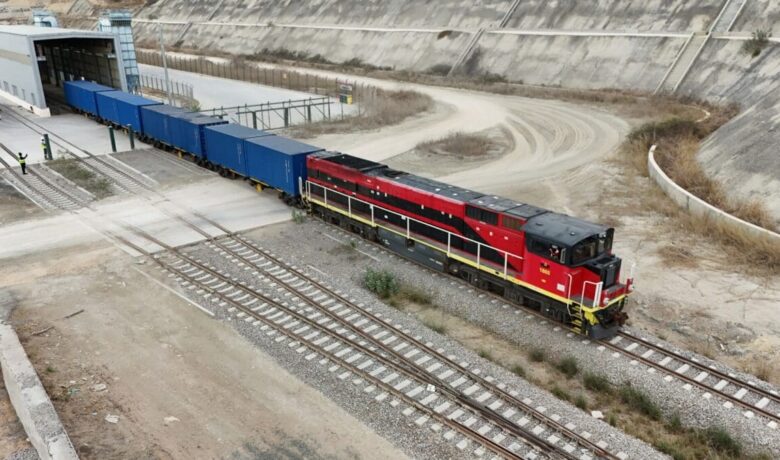
Dar es Salaam and Luanda aim to link their rail networks to establish a bi-oceanic corridor connecting the Port of Dar es Salaam to the Port of Lobito. This transcontinental axis cuts directly through the mining hubs of Zambia and the Democratic Republic of the Congo (DRC).
Tanzanian President Samia Suluhu Hassan formalized an agreement in principle with Angola in late October 2026 to interconnect their respective rail infrastructure across the continent. The project builds on joining the Tanzanian Central Corridor with the Lobito Corridor via the Zambian network and eastern DRC. While no timeline or global budget has yet been established, the initiative sits at the heart of geo-economic rivalries to secure critical mineral supply chains.
TAZARA-Benguela Interconnection: A Major Capacity Booster for Mining Freight
The projected logistics architecture relies on connecting two key lines: the TAZARA (1,860 km between Dar es Salaam and Kapiri Mposhi in Zambia) and the Benguela Railway (connecting the Angolan port of Lobito to the DRC border). The primary objective is to offer a continuous rail alternative for copper and cobalt exporters in Katanga and the Zambian Copperbelt, whose flows currently rely heavily on saturated and higher-cost road freight.
┌─────────────────┐       ┌─────────────────┐       ┌─────────────────┐
│ Port of Lobito  │ ◄───► │  Copperbelt /   │ ◄───► │   Port of Dar   │
│   (Atlantic)    │       │  Katanga (DRC)  │       │   es Salaam     │
└─────────────────┘       └─────────────────┘       └─────────────────┘
 (Lobito Corridor)          (Mining Sector)          (Central Corridor / TAZARA)
Bringing the project to fruition relies on two competing yet complementary investment dynamics on the ground:
-
East Axis (TAZARA): Beijing finalized a $1.4 billion agreement with Tanzania and Zambia for the full modernization of the TAZARA, paired with a 30-year concession and rolling stock upgrades.
-
West Axis (Lobito Corridor): Supported by the AFC, the United States, and the European Union, an international consortium is pushing forward on the western network. Italian infrastructure group Webuild was named preferred bidder for Lot 1B (517 km of new track between Angola and Chingola in Zambia). Shifting to rail is projected to reduce mineral transit times to the Atlantic from 16 to 7 days.
Why It Matters
-
Massive Modal Shift: Direct transfer of mining freight from road to rail, reducing highway congestion at the Tunduma and Kasumbalesa border crossings.
-
Secured Transit Delays: Reduction in evacuation timelines for copper exports to the Atlantic, combined with direct, alternative access to the Indian Ocean.
-
Logistics Arbitrage for Shippers: Flexibility to route export cargo based on port congestion, transit costs, and final destinations in Asia or the West.
In parallel with the rail development, regional energy cooperation is advancing: the Tanzania Petroleum Development Corporation (TPDC) is evaluating an equity stake in Angola’s Lobito refinery project, while the region restructures downstream petroleum supplies.
The East-West rail link repositions Southern and Central Africa as a strategic multimodal hub. Its operational viability, however, will depend on harmonizing rail gauges and streamlining cross-border customs procedures.