

South Africa: Transnet Commits R8.9 Billion to Boost Capacity on the Sishen–Saldanha Rail Corridor
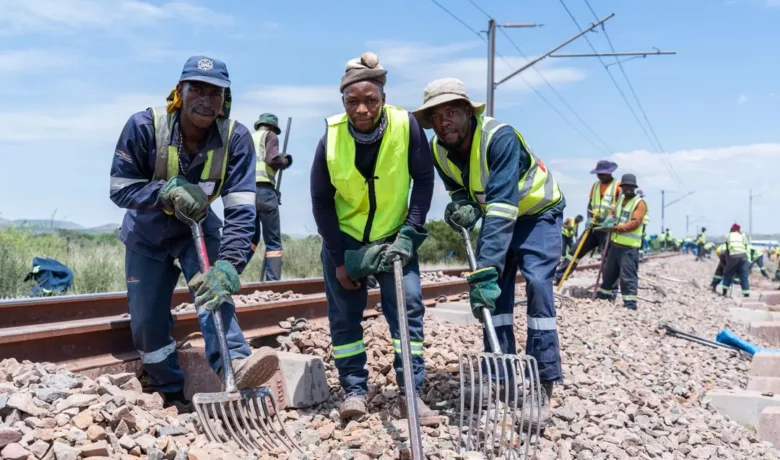
Rail & Freight Rail — In South Africa, Transnet Rail Infrastructure Manager is undertaking an R8.9 billion rail infrastructure enhancement programme on the Sishen–Saldanha corridor, extending through to 2030. The investment aims to improve the movement of export commodities, including iron ore and manganese, along a key mining freight route.
R8.9 Billion Rail Upgrade Programme Runs Through 2030
Transnet Rail Infrastructure Manager, which oversees the country’s rail infrastructure, is implementing the programme on the Sishen–Saldanha line. The route is dedicated to heavy-haul freight and plays a strategic role in moving South Africa’s mineral exports to international markets.
The programme is valued at R8.9 billion, with implementation extending to 2030. However, the available information does not specify the annual investment breakdown, the infrastructure sections targeted for upgrades or the expected increase in freight capacity, measured in tonnes per year.
The project comes as rail performance remains a critical factor in the competitiveness of South Africa’s mining exports. Locomotive and wagon availability alone cannot guarantee higher throughput. Track capacity, operating reliability and coordination with port facilities also determine how much cargo can reach export terminals on schedule.
Sishen–Saldanha Rail Corridor: Capacity and Export Reliability at Stake
The line connects the Sishen mining area in the Northern Cape with Saldanha on South Africa’s west coast. It is a key logistics link for transporting bulk minerals to maritime export facilities.
The immediate operational objective is to address infrastructure constraints that could limit freight volumes. If the programme delivers additional usable capacity, mining companies and exporters could benefit from more reliable train operations, improved shipment planning and reduced pressure to use alternative, potentially more expensive transport solutions.
For mining operators and cargo owners, the value of the investment will depend on measurable results: track availability, train frequency, loading capacity and coordination between rail services and port operations. No quantified targets for additional volumes, shorter transit times or lower logistics costs have yet been specified in the available information.
Why It Matters
- Export capacity: Improved rail infrastructure could support higher volumes of iron ore and manganese moving from mining areas to export terminals.
- Logistics costs: More reliable rail operations could reduce supply chain disruptions and improve shipment predictability for mining companies and exporters.
- Rail-port integration: The corridor’s performance will also depend on the ability of port facilities to handle the volumes delivered by rail.
Regional Implications for African Mining Corridors
South Africa’s investment highlights the importance of dedicated heavy-haul rail infrastructure in resource-exporting economies. Across Africa, the competitiveness of mineral exports depends on efficient connections between production sites, rail networks and maritime terminals.
The Sishen–Saldanha upgrade will therefore remain a project to monitor through 2030. Key indicators will include the additional capacity brought into service, train operating reliability and changes in export volumes.
Conclusion: With R8.9 billion earmarked for improvements through 2030, Transnet is targeting the capacity of the Sishen–Saldanha rail corridor as a key component of South Africa’s mining logistics network. The investment’s commercial impact will depend on its ability to deliver measurable gains in freight capacity and operational reliability.