Trade & AfCFTA — Africa: Free training on international trade in services statistics starts October 19
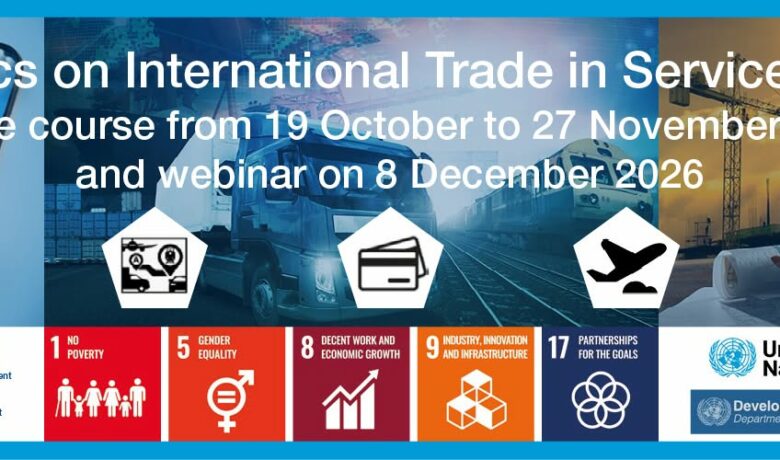
African administrations responsible for trade, statistics and customs will have access to free international training on statistics of trade in services. The programme runs from October 19 to December 8, 2026, in English and French.
International trade in services statistics at the centre of the training
Trade & AfCFTA — Africa: the Statistics of International Trade in Services 2026 (SITS) programme targets statisticians, trade-data compilers and public officials involved in measuring international trade in services.
The online course will run from October 19 to December 8, 2026. It will be offered free of charge in English and French.
The programme is co-organised by UN Trade and Development (UNCTAD/TrainForTrade), the World Trade Organization (WTO) and the United Nations Statistics Division (UNSD).
For national administrations, the operational objective is to improve the production and use of data on international trade in services. These statistics cover flows linked to transport, tourism, financial services, telecommunications and other service activities.
Trade in services statistics matter for African trade
The availability of comparable data is important for measuring regional trade and tracking its evolution. It also enables governments, companies and investors to better identify sectors generating cross-border service flows.
For African countries implementing the African Continental Free Trade Area (AfCFTA), improved trade statistics can help measure intra-African services trade and identify sectors where trade barriers remain significant.
Such data can also support assessments of how trade policies affect service companies and regional value chains.
Why it matters
- Better measurement of trade flows: reliable statistics make it easier to track services exchanged between countries.
- Support for trade policy: governments can use better data to guide international trade decisions.
- Regional integration: harmonised statistics facilitate comparisons of trade performance and help monitor African economic integration.
A programme with regional relevance
The course is aimed directly at national statistical offices, central banks, ministries of trade and customs administrations. For African countries, the issue goes beyond data collection: data quality also affects their ability to measure regional trade and assess the impact of economic integration.
The training therefore provides a capacity-building opportunity for administrations responsible for producing or using international trade in services statistics.
The Statistics of International Trade in Services 2026 course will run from October 19 to December 8, 2026, and will be free of charge. For African administrations, strengthening trade in services statistics is an operational priority for improving the measurement of trade flows and supporting the implementation of the AfCFTA.