Port of San Pedro Upgrades Cargo Handling Capacity with New Generation Crane
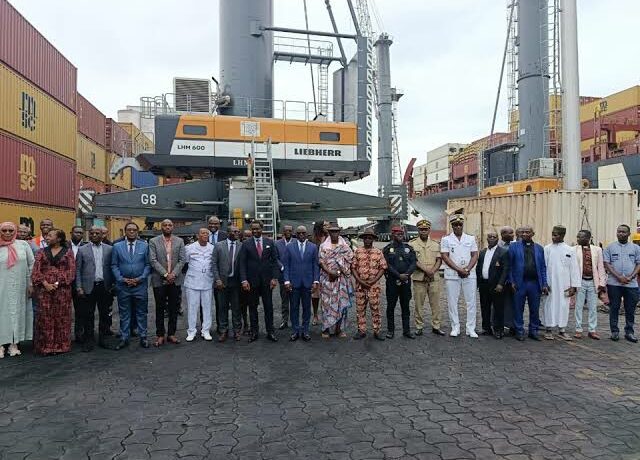
The Port of San Pedro has taken another step in its modernization strategy with the commissioning of a new-generation cargo handling crane acquired by the San Pedro Terminal (TSP). The investment is expected to improve vessel turnaround times, increase cargo-handling productivity and strengthen the competitiveness of Côte d’Ivoire’s second-largest port along West Africa’s strategic trade corridors.
Modern Equipment to Meet Growing Maritime Demand
The Port Autonome de San Pedro (PASP) officially received the new mobile harbour crane on 30 July 2026, reinforcing its efforts to modernize port infrastructure and enhance operational performance.
The handover ceremony, led by PASP Director General Pascal José Dally, brought together representatives of the port community, terminal operators, institutional partners and local authorities.

According to the port authority, the investment reflects the ongoing transformation of global shipping, where larger vessels and increasing cargo volumes require ports to deploy more advanced and efficient handling equipment.
Faster Cargo Operations and Improved Port Productivity
Equipped with the latest handling technologies, the new crane is expected to significantly improve operational efficiency at the San Pedro Terminal.
The investment is designed to deliver several operational benefits, including:
Faster loading and unloading operations;
Reduced vessel turnaround times;
Higher terminal productivity;
Improved operational safety;
Greater equipment availability and service reliability.
These improvements are expected to enhance cargo flow efficiency while providing shipping lines, freight forwarders and cargo owners with more reliable port services.
Strengthening a Strategic Gateway for West African Trade
Located in Côte d’Ivoire’s main agricultural and mining export region, the Port of San Pedro plays a strategic role in handling cocoa, mining products and other export commodities, while serving domestic markets and neighbouring landlocked countries.
As competition intensifies among ports across the Gulf of Guinea, operational performance has become a key factor in attracting shipping lines and regional cargo flows.
By investing in modern cargo-handling equipment, the port aims to improve its capacity to accommodate larger vessels and strengthen its position as a competitive logistics hub within West Africa.
Public-Private Investment Driving Port Modernization
PASP reaffirmed its commitment to supporting investments by private terminal operators as part of its broader strategy to enhance the port’s competitiveness.
The port authority praised San Pedro Terminal (TSP) for undertaking the investment, emphasizing that close cooperation between public authorities and private operators is essential to developing efficient, resilient and globally competitive port infrastructure.
Why It Matters
Modern cargo-handling equipment has become a critical driver of port performance and maritime logistics efficiency. Faster cargo operations reduce vessel waiting times, lower shipping costs and improve the reliability of regional supply chains.