
UNCHECKED AI BIAS THREATENS GENDER DIVERSITY PROGRESS
While AI’s tendency to “hallucinate” – which is when it confidently invents facts, cites non-existent sources or produces inaccurate answers – makes frequent headlines, another flaw poses a risk: gender bias.
Supply chain industry body SAPICS is putting the spotlight on this issue this Women’s Month. “While AI itself isn’t biased, it’s a mirror. When trained on historical data, AI tools reflect the gender prejudices that already exist. It’s the classic rule of supply chain: garbage in, garbage out. If left unchecked, AI won’t just mirror past inequities, it will amplify and accelerate them at scale,” SAPICS warns. The organisation stresses that tackling AI gender bias is not an IT issue; it’s a cultural and leadership priority.
A recent study of 133 AI systems found that 44% of these demonstrate clear gender bias. Large language models have repeatedly associated women with domesticity and childcare, while linking men to business, leadership and career success. According to UN Women, when researchers asked large language models to simply complete a sentence that began with a person’s gender, about one in five responses came back sexist or misogynistic.
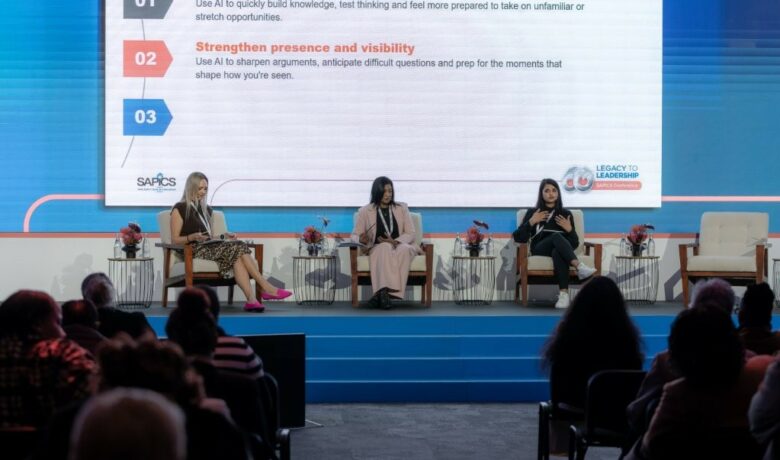
This was one of the compelling topics explored in a panel discussion on Women in Supply Chain Leadership at the recent 2026 SAPICS Conference, Africa’s leading event for the supply chain profession. This year’s 48th annual conference saw 600 supply chain professionals from across Africa and beyond convene in Cape Town to upskill, share knowledge and network.
SAPICS attendees learnt in this session that many recruitment algorithms favour male candidates because they have been trained on decades of historical data that reflects and amplifies inequalities that already exist. While algorithms don’t create bias, their input shapes the output, and this issue could stem from the fact that only 22% of AI and data science professionals are women, the panellists said.
Entry-level role automation as a result of AI adoption is another threat to women in supply chain. Gartner reports that 55% of supply chain leaders expect AI advancements to decrease entry-level hiring over the coming years. Because entry-level roles are the primary pipeline entry point for women, shrinking this layer reduces future female leadership pools before they can even grow.
In a profession like supply chain management, which is being reshaped by AI at an extraordinary pace, the technology’s impact on gender equity is a threat that industry leaders cannot ignore. While AI is becoming integral to how modern supply chains operate – including in demand forecasting, inventory optimisation, warehouse automation and predictive analytics – it could also have a negative impact on how women enter and progress in the supply chain profession. The ultimate risk, the SAPICS panellists agreed, is that by overlaying AI onto the existing gender equity landscape, we don’t just stall or fail to make progress, we go backward.
To change how AI affects their careers, they urged women in the supply chain industry to take the helm and be the people deciding how it works. They were also advised to evaluate their own biases and those of their team members and to protect their judgement. Don’t outsource your thinking; AI informs decisions, but you make them, was the message.
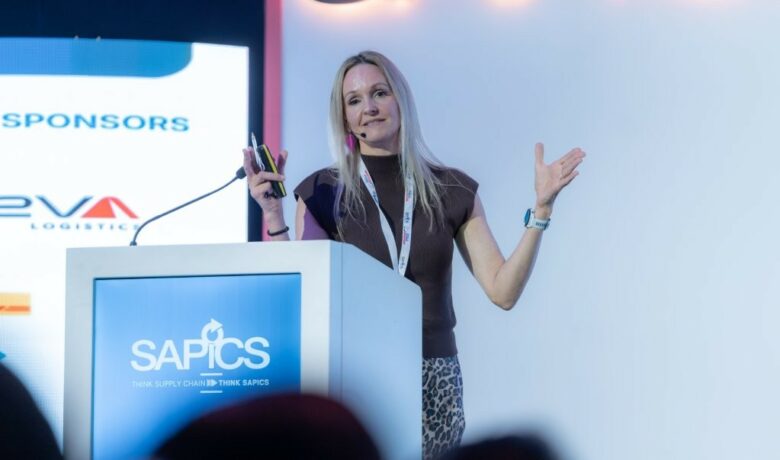
Supply chain specialist Katrina Tyson who moderated the SAPICS panel discussion comments: “This is such an important conversation. The true value of AI isn’t headcount or cost reduction, it’s elevating and strengthening our existing people. When routine tasks are automated, leaders reclaim their most valuable asset: time to think, reflect and approach complex problems with creativity and nuance. Used intentionally as a thought partner to augment our thinking rather than outsourcing it, AI strengthens existing leaders by pairing deeply human qualities like empathy, intuition and consensus with the scale, speed and power of technology. A good AI strategy doesn’t look to replace talent, but to give exceptional leaders the space to actually lead. Crucially, that includes ensuring women are actively involved in selecting, testing and evaluating these AI tools to catch hidden biases before they are amplified.”
During this panel discussion, the latest results of the ongoing 2026 SAPICS Women in Supply Chain Leadership Survey were also shared. An encouraging shift in the interim data was a significant drop in women witnessing discrimination. This figure went down from 62% in 2025 to 44% this year.
There has also been an encouraging year on year improvement around perceived resistance when women are leading men. In 2024, the survey found that 70% of the women respondents had experienced resistance when leading men. In 2025, this concerning number dropped to 59% and in the latest survey, it is down to 48%.
Still concerning in the latest survey results, however, is the number of women filling senior supply chain leadership roles. It was found that 73% of the organisations represented in this 2026 survey are led by a male executive at the highest tier. True executive parity is still a long-term goal rather than a current reality, SAPICS says.
The SAPICS Women in Supply Chain Leadership panel discussion was moderated by Katrina Tyson from Proqurable and featured panellists Regina Naicker (SAPICS director), Sheetal Patel (Accenture), Karishma Singh and Elizabeth Llewelyn (both from Health 4 Development).
For more information:
Email: info@sapics.org.za
ABOUT SAPICS: http://www.sapics.org
Since 1966, SAPICS has worked to elevate, educate and empower the community of supply chain professionals in South Africa and across the continent. This is done via membership, events, the annual conference and education courses and workshops through Authorised Education Providers and others.
SAPICS is registered in South Africa as a not-for-profit company. Its mandate is to ensure that any profits made are used towards the continual development and overall benefit of individuals and organisations in the supply chain management profession.
The annual SAPICS Conference is the leading event in Africa for supply chain professionals and is now in its 49th year