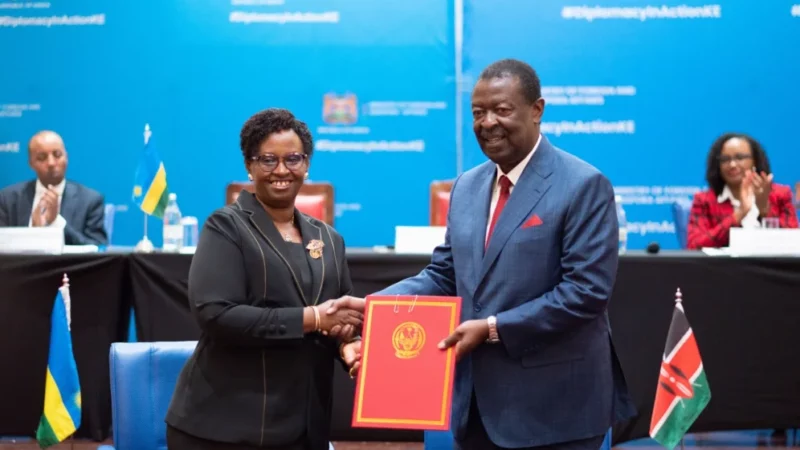

AfCFTA: Kenya launches digital trade hubs to accelerate deal execution across Africa
Kenya has introduced two digital trade platforms, BiasharaLink and Deal House, to be deployed across its embassies in support of AfCFTA implementation. The move aims to convert diplomatic missions into structured trade execution hubs and increase deal closure rates across the continent.
Kenya operationalises AfCFTA with digital trade infrastructure
At a high-level event in Addis Ababa, Kenyan authorities unveiled BiasharaLink and Deal House, two integrated platforms designed to originate, structure and execute intra-African trade and investment deals under the African Continental Free Trade Area framework.
The initiative targets a critical bottleneck: trade enquiries that fail to convert into bankable transactions.
According to project data shared at the launch, Kenyan embassies receive around 3,500 trade enquiries per month, yet less than 1% translate into closed deals. The new system aims to reverse that ratio.
How the Kenya AfCFTA digital trade hubs work
BiasharaLink functions as a structured opportunity capture system. It allows:
- Diplomatic missions
- Exporters
- Investors
- Market intermediaries
to formally log, qualify and track trade and investment leads aligned with AfCFTA priorities.
Deal House acts as the execution layer. Opportunities generated through BiasharaLink are:
- Validated
- Matched with verified counterparties
- Connected to financing
- Progressed toward contract signature
The platforms were developed by Real Sources Africa, which serves as Kenya’s AfCFTA trading company.
The objective is clear: move from policy alignment to transaction execution, particularly in sectors where cross-border value chains remain fragmented.
Immediate operational impact for Kenya’s trade ecosystem
Kenya is positioning its diplomatic network as a continental trade origination infrastructure.
Operational implications include:
- Centralised tracking of trade leads across missions
- Reduced time from enquiry to deal structuring
- Improved transparency on pipeline conversion
- Structured access to trade finance
In the current environment of global supply chain disruptions and rising protectionism, Kenya is prioritising intra-African market deepening. The strategy aligns with President William Samoei Ruto’s role as Chair of the AU Assembly Committee on AfCFTA implementation and co-champion of the Digital Trade Protocol.
The announcement was made ahead of an AU pre-summit committee reviewing AfCFTA milestones, with trade execution identified as a priority gap five years after the agreement’s launch.
Why this matters
- Execution gap addressed: Embassies shift from information desks to deal facilitation nodes.
- Financing integration: Structured linkage between trade leads and capital providers.
- Continental scale potential: If replicated, the model could standardise trade origination across AU member states.
Regional perspective: a digital trade corridor model for Africa
The AfCFTA has established tariff frameworks and rules of origin, but execution remains uneven. Kenya’s digital trade hub model could serve as a blueprint for other member states seeking to operationalise commercial diplomacy.
By digitising trade lead management and linking it to financing ecosystems, the system attempts to build what private sector leaders describe as a “trade superhighway” across African markets.
If effective, the model could accelerate intra-African trade flows, currently estimated at around 15–18% of total African trade, significantly below EU or ASEAN levels.
With BiasharaLink and Deal House, Kenya is embedding digital infrastructure into AfCFTA implementation. The focus shifts from trade policy to measurable deal execution. The success of this model will depend on conversion rates, financing mobilisation and replication across the continent.